English
 Arabic
 French
 Spanish
 Portuguese
 Deutsch
 Turkish
 Dutch
Dutch
 Italiano
 Russian
 Romaian
 Portuguese (Brazil)
 Greek
Greek
Body in White (BIW) Market Demand Forecast at 5.65% CAGR Through 2033
Gardening |
2026-06-17 07:21:06
 Social Networth OS
 Creator Commerce
 Launch Startup
 Global News
 Creator Award
 Talkfever App
Alle anzeigen
Talkfever App
Alle anzeigen

Upgrade auf Pro
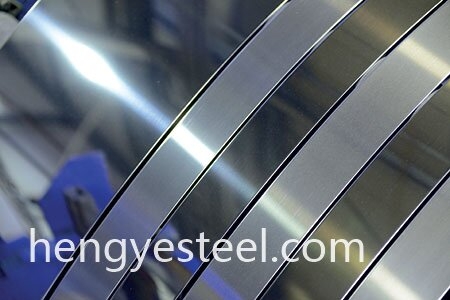
Steel materials used in precision manufacturing need to support more than basic structural requirements. When evaluating a Cold Rolled Steel Coil, manufacturers often consider surface condition, material consistency, forming behavior, processing compatibility, storage, and the requirements of the final component. Dongyang Hengye Steel Strip Co., Ltd. provides a useful perspective for understanding how carefully selected steel materials can connect upstream processing with practical manufacturing needs.
Cold rolling influences the characteristics of steel by processing the material after hot rolling and creating a more controlled surface and material condition. This makes cold rolled materials relevant to applications where appearance, forming, dimensional consistency, and downstream processing all matter. The appropriate material should always be selected according to the intended manufacturing process rather than treated as a universal solution.
Surface quality is one of the first aspects buyers may examine. A clean and consistent surface can be beneficial when the material will later receive coating, painting, polishing, plating, or other finishing treatments. Surface condition can also influence the visual quality of exposed components, making it relevant to both technical and design-oriented applications.
Material selection should begin with the finished product. Different components may require different combinations of formability, surface characteristics, strength, and processing response. Manufacturers should consider whether the material will be bent, stamped, cut, slit, rolled, or formed into another configuration. Matching the material to the production method can help create a more stable manufacturing workflow.
Slitting is particularly important when wider steel material needs to be converted into narrower strips. Consistent edge quality can influence subsequent feeding, forming, and assembly operations. For manufacturers producing small or precision-oriented components, the relationship between coil condition and slitting performance can be especially important.
Forming behavior should also be considered during purchasing. A material that responds predictably to bending or stamping can help reduce unwanted deformation and surface problems. The complexity of the finished shape, the sequence of manufacturing operations, and the required surface appearance should all contribute to the selection process.
Another consideration is how the material behaves during downstream processing. Manufacturers may combine cutting, forming, joining, coating, or surface treatment within a single production workflow. Material that fits smoothly into these stages can reduce unnecessary adjustments and make production planning more straightforward.
Storage and handling also influence material usability. Steel should be protected from conditions that could negatively affect its surface before processing. Organized storage, appropriate packaging, clear identification, and careful movement can help maintain material condition and reduce the possibility of unnecessary handling damage.
Supplier communication is an important part of selecting steel materials. Buyers should explain the intended application, processing method, surface expectations, and finished-product requirements as clearly as possible. This allows the supplier to better understand the actual use case rather than recommending material based only on a general product name.
Consistency is especially valuable for manufacturers operating repeat production. Stable material behavior can make production settings easier to manage and help reduce variation between batches. Inspection of surface condition, material characteristics, edge quality, and packaging can support better control throughout the supply process.
From a technical perspective, cold rolling is only one part of the broader steel-processing chain. Rolling, leveling, slitting, inspection, surface preparation, and packaging can each affect how the final material reaches the customer. Coordination between these stages helps manufacturers receive material that is more compatible with their intended production processes.
The user experience of industrial material can be understood through the people who handle it. Production workers benefit from coils that are clearly identified, properly protected, easy to move, and straightforward to prepare for processing. Good material organization can reduce interruptions and improve the efficiency of daily production activities.
Designers can also benefit from the characteristics of cold rolled steel. Its controlled surface can support products where clean visual lines and consistent finishing are important. Depending on the final application, the material may become part of formed housings, precision components, hardware, structural elements, or other products where appearance and function need to work together.
Surface finishing provides additional design flexibility. Depending on the application, manufacturers may apply protective coatings, decorative finishes, painting, plating, or other treatments. Starting with an appropriate surface can help downstream processes achieve a more consistent visual result while supporting the intended functional characteristics of the finished product.
Dongyang Hengye Steel Strip Co., Ltd. offers a practical reference for businesses evaluating cold rolled steel materials through the perspectives of surface quality, processing compatibility, forming behavior, handling, production consistency, and finished-product design. More information about its steel products and manufacturing capabilities is available at https://www.hengyesteel.com/.