English
 Arabic
 French
 Spanish
 Portuguese
 Deutsch
 Turkish
 Dutch
Dutch
 Italiano
 Russian
 Romaian
 Portuguese (Brazil)
 Greek
Greek
Beyond The Bottle: Strengthen Your Hair Naturally With These Biotin Foods
Fitness |
2026-02-11 05:20:44
 Social Networth OS
 Creator Commerce
 Launch Startup
 Global News
 Creator Award
 Talkfever App
Mostra tutti i risultati
Talkfever App
Mostra tutti i risultati

Passa a Pro
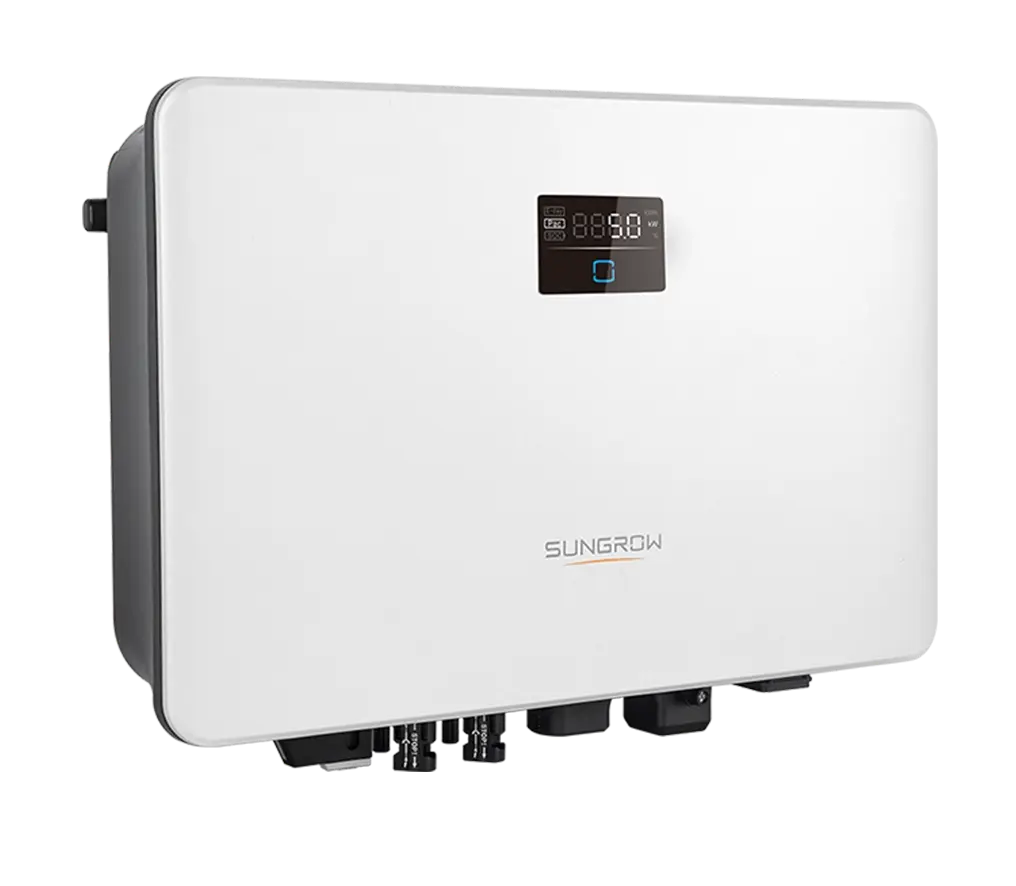
The finest solar inverters for Perth's hot, sunny climate in 2026 are those with excellent MPPT tracking for fluctuating panel conditions, true high-temperature tolerance, and 10-year warranties from reputable brands. Sungrow, Growatt, GoodWe, Deye, SAJ, FoxESS, Sigenergy, and SolaX are some of the widely accessible local options that offer hybrid, battery-ready setups that meet WA's export regulations and models rated up to 98–99% efficiency. The best option is determined more by matching capacity, battery plans, and thermal rating to your particular roof and home than by brand hype.
National "best of" rankings for inverters are frequently created with warmer east coast climes in mind. Perth, on the other hand, is the sunniest capital city in the nation, with lengthy summer days of 35°C or above and an average of about 3,200 hours of sunshine annually. Every inverter has an ideal operating temperature range, and exceeding it causes automatic "derating"—the inverter silently lowering its own output to safeguard its internal components—which is why that heat load is important. A machine that operates flawlessly in Hobart or Melbourne might spend heat afternoons in Perth operating below its rated capacity.
Thus, "best for Perth" refers to more than just efficiency figures on a specification sheet. It concerns how effectively an inverter complies with WA's unique export and rebate system and how long it can withstand prolonged heat, hour after hour, day after day.
Not just maximum efficiency but also thermal resilience. A headline efficiency of 98–99% is determined in a laboratory, not on a February afternoon at 42°C. Instead of depending just on efficiency figures, look for inverters with a broad rated operating temperature range and integrated cooling design (heat sinks, smart fans, or natural convection).
MPPT flexibility and count. An inverter can independently control panels facing different directions or partially shaded thanks to Multiple Maximum Power Point Tracking (MPPT) inputs, which helps extract more useful energy from Perth's long but occasionally cloudy summer days.
Compatibility with batteries and VPP. An inverter that works well with battery storage allows you to move self-generated solar into that high-value evening window rather than exporting it at noon since WA's Distributed Energy Buyback Scheme (DEBS) pays a significantly higher rate for exports between 3 and 9 p.m. than at other times.
Adjust size in accordance with DEBS regulations. Currently, systems with a 5kW inverter (or a 6.6kW panel array on a 5kW inverter) are eligible for standard residential DEBS. Your feed-in return may be impacted by oversizing or undersizing in relation to this criterion, therefore this should influence your shortlist just as much as brand preference.
Local support and guarantee. Most respectable brands now offer a 5–10 year manufacturer's guarantee; however, local parts availability and installation knowledge vary greatly, both of which have an impact on how quickly problems are actually fixed.
A number of producers, each with somewhat distinct advantages, have established a strong reputation in the WA market:
Sungrow is well-known for its sophisticated multi-MPPT technology and extremely high peak efficiency (up to about 99%), making it ideal for larger residential and commercial arrays.
Growatt: with efficiency up to ~98.8% and smart app-based monitoring, it is extensively utilized in on-grid, hybrid, and battery-ready configurations.
GoodWe provides one of the widest capacity ranges (5kW to 200kW+), making it beneficial for huge commercial installations considering future growth as well as homes.
For houses seeking options for battery independence, Deye's versatility in on-grid, hybrid, and off-grid configurations makes it appealing.
Offering dual/multi-MPPT hybrid solutions in the 5–150kW range, SAJ, FoxESS, and SolaX are typically positioned as excellent value-for-efficiency options.
Sigenergy is a more recent addition to the market, but it stands out for its close integration with its own battery ecosystem and AI-driven energy management.
The "best" option actually varies depending on whether you're prioritizing raw efficiency, battery flexibility, or budget, so it's worthwhile to compare efficiency, MPPT counts, and warranty terms for these brands side by side before making a decision. This includes a more thorough comparison of Perth solar inverters.
Instead of pursuing a single "best overall" label, follow this sequence: verify your household's present and future battery plans; determine which inverters suit your roof's MPPT requirements (particularly if it has multiple roof faces); explicitly confirm the unit's thermal rating rather than relying solely on efficiency; and, lastly, compare warranty and local support. Instead of using a generic specification sheet, a skilled WA-based installer can verify all four elements against your actual roof and usage pattern.
Which solar inverter is ideal for the sweltering summers in Perth? There isn't a single, all-encompassing solution, but inverters with robust cooling designs and a broad, well-stated high-temperature operating range, like those from Sungrow, Growatt, GoodWe, and Deye, typically withstand Perth's summer heat better than models that are only optimized for efficiency on a spec sheet.
Given DEBS rates, do hybrid inverters make sense in Perth? In most cases, yes, as a hybrid inverter with battery storage allows you to move self-generated solar into that window rather than exporting it at the cheaper rate, and DEBS pays a greater rate for exports between 3 and 9 p.m. than off-peak hours.
Which inverter size is eligible for the regular DEBS feed-in tariff? According to standard DEBS regulations, the majority of residential Synergy clients must have a 5kW inverter capacity or less, including a 6.6kW panel array coupled with a 5kW inverter.
Do homes in Perth always benefit from increased efficiency percentages? Not always. Since efficiency ratings are determined under ideal laboratory settings, a model's thermal derating behavior during prolonged heat may be more important for actual Perth performance than a mere percent variation in peak efficiency.