English
 Arabic
 French
 Spanish
 Portuguese
 Deutsch
 Turkish
 Dutch
Dutch
 Italiano
 Russian
 Romaian
 Portuguese (Brazil)
 Greek
Greek
Winbuzz: The Ultimate Platform for Online Sports Betting and Casino Games
Sports |
2025-03-24 08:17:21
 Social Networth OS
 Creator Commerce
 Launch Startup
 Global News
 Creator Award
 Talkfever App
Mostra tutti i risultati
Talkfever App
Mostra tutti i risultati

Passa a Pro
In the quest for strong, resilient hair, the supplement aisle is often the first stop. Countless bottles of biotin pills promise faster growth and renewed vitality from the outside in. Yet, the most profound and sustainable nourishment for your hair doesn't come in a capsule. It comes from your plate. True hair strength is built not through isolated, high-dose supplementation, but through a holistic diet rich in whole, biotin-abundant foods and their powerful co-nutrients. This is the philosophy of moving "beyond the bottle"—harnessing the synergistic power of nature's bounty to fortify your hair from its very foundation.
Why Food Becomes Your Hair's Best Foundation
Biotin, or vitamin B7, is a water-soluble vitamin that acts as a critical coenzyme in the body. It plays a starring role in the metabolism of amino acids, the building blocks of the keratin protein that constitutes over 95% of your hair strand. Without adequate biotin, your body's keratin production can falter, potentially leading to brittle, lackluster hair that is prone to breakage.
While biotin supplements have their place for addressing a clinical deficiency—often characterized by significant hair thinning—they represent a singular, narrow approach. Whole foods offer a masterfully balanced complex of biotin alongside other hair-essential nutrients: protein for structure, iron for oxygen delivery, zinc for tissue growth and repair, and vitamins A, C, and E for scalp health and antioxidant protection. This nutritional symphony, conducted by a diverse diet, supports the entire hair growth cycle and the health of the follicle itself in a way a solo supplement cannot replicate.
Your Pantry Prescription: Top Biotin-Rich Foods for Hair Strength
Integrating these foods into your regular diet creates a consistent, bioavailable stream of hair-fortifying nutrients.
1. The Legume Powerhouses: Eggs & Lentils
Eggs: Nature's multivitamin, particularly the yolk, is one of the richest and most bioavailable sources of biotin. They also provide complete protein, choline, and other B vitamins. For optimal nutrient retention, opt for soft-boiled or poached over high-heat scrambling.
Lentils & Legumes: A staple for plant-based diets, lentils, chickpeas, and kidney beans are excellent sources of biotin, plant-based protein, and iron—a crucial combo for preventing hair loss associated with anemia. A hearty lentil soup or a hummus bowl is a direct investment in your hair's resilience.
2. The Seed & Nut Nucleus
Sunflower Seeds & Almonds: These portable snacks are biotin treasures. Just a quarter-cup of sunflower seeds provides a significant portion of your daily needs, plus vitamin E, a potent antioxidant that protects hair follicles from oxidative stress. Almonds add magnesium and healthy fats to the mix, supporting scalp circulation and hair shine.
3. The Organ Meat Advantage
Liver (Beef or Chicken): For the non-vegetarian seeking the most concentrated source, liver reigns supreme. A single 3-ounce serving can exceed your daily biotin requirement many times over. It's also loaded with iron, B12, and vitamin A. If the taste is challenging, try blending small amounts into a rich, savory pâté or incorporating ground liver into meatballs.
4. The Vibrant Vegetable Cohort
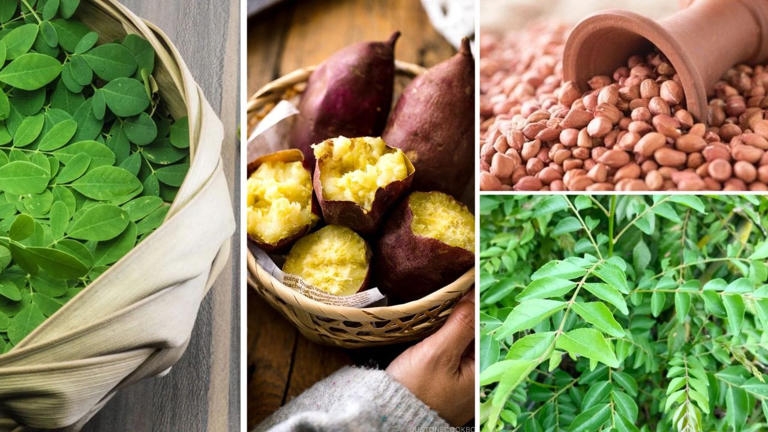
Sweet Potatoes: Their vibrant orange color signals a wealth of beta-carotene, which your body converts to vitamin A. This vitamin is essential for sebum production, your scalp's natural moisturizer. Sweet potatoes also contain a respectable amount of biotin, making them a dual-action hair food.
Spinach & Broccoli: These leafy greens may not be the highest in biotin, but they are critical supporting actors. They are rich in folate, iron, and vitamins A and C, which aid in collagen production and iron absorption—creating an optimal environment for strong hair growth.
5. The Whole Grain Foundation
Oats & Barley: Switching refined grains for whole grains like oats, barley, and brown rice introduces more biotin into your diet while providing hair-friendly minerals like zinc and silicon. A bowl of oatmeal topped with almonds and seeds is a powerhouse breakfast for hair health.
6. The Fungal & Dairy Contributors
Mushrooms: Certain varieties, like portobello and button mushrooms, are a unique plant-based source of biotin and contain antioxidants that support overall cellular health, including that of hair follicles.
Full-Fat Dairy: Milk, cheese, and yogurt contain modest amounts of biotin alongside whey and casein proteins, supporting keratin synthesis.
Building a "Hair-Strong" Plate: Practical Integration
The goal is not to obsess over single foods but to create a recurring pattern of nutrient-dense meals. Here’s what a day of hair-focused eating could look like:
Breakfast: A spinach and mushroom omelet (using the whole egg) with a slice of whole-grain toast.
Lunch: A large salad with mixed greens, chickpeas, sunflower seeds, sliced almonds, and a hard-boiled egg, dressed with an olive oil-based vinaigrette.
Snack: Full-fat Greek yogurt with a handful of berries or a small apple with almond butter.
Dinner: Pan-seared salmon (for omega-3s) with a side of roasted sweet potatoes and steamed broccoli, or a hearty lentil and barley stew.
A Critical Caveat: The "Biotin Paradox" and Balanced Approach
It is possible to have too much of a good thing. Megadoses of biotin from supplements—often in the 5,000-10,000 mcg range—can interfere with common laboratory tests, including those for thyroid function and troponin (a marker for heart attacks), leading to dangerously inaccurate results. Furthermore, the body efficiently excretes excess water-soluble vitamins, making extremely high doses largely wasteful when consumed without a true deficiency.
This underscores the safety and intelligence of the food-first approach. It is virtually impossible to reach excessive, problematic levels of biotin through diet alone. Food provides a self-regulating, balanced dose alongside its cofactor nutrients.
Strengthening your hair naturally is an act of nourishing the entire ecosystem from which it grows. It moves beyond the quick-fix promise of a bottle and into the enduring, holistic practice of feeding your body with intention. By consistently choosing biotin-rich whole foods—the eggs, seeds, legumes, and vibrant vegetables—you are doing more than just targeting a single vitamin. You are supplying the comprehensive nutritional matrix required for robust keratin production, healthy follicle function, and a resilient scalp.
This approach fosters patience and acknowledges that real change happens at the cellular level, on the timeline of the hair growth cycle. You may not see results overnight, but with sustained commitment, you will be building hair that is fundamentally stronger, more elastic, and better equipped to withstand environmental and styling stress. The proof will not be in a emptier supplement bottle, but in the thicker ponytail, the reduced breakage on your hairbrush, and the natural, healthy shine that emanates from well-nourished roots. Your journey to stronger hair begins not in the pharmacy, but in your kitchen.