English
 Arabic
 French
 Spanish
 Portuguese
 Deutsch
 Turkish
 Dutch
Dutch
 Italiano
 Russian
 Romaian
 Portuguese (Brazil)
 Greek
Greek
Raw Pecan Market Opportunity Analysis Report 2025: Regional Markets and Segments
Other |
2025-08-23 07:49:11
 Social Networth OS
 Creator Commerce
 Launch Startup
 Global News
 Creator Award
 Talkfever App
عرض كل النتائج
Talkfever App
عرض كل النتائج

ترقية الحساب

A business degree is your chance or ticket to a career that is thrilling, inspiring, and, most of all, it is an ever-growing career.
It is a university-level qualification where you learn about business. It also covers other areas pertinent to business, such as HR, marketing, accounting, and management.
Plus, it gives you extensive knowledge of business processes and practical skills that help you thrive in enterprise environments.
Additionally, business careers create a diverse range of doors, and pursuing a business-related degree will provide you with many choices after you complete your bachelor's degree.
Whether you are at the undergraduate or postgraduate level, choosing the right career path can be challenging.
So, if you do not know what to do or are not sure, you can study business management. Or studying a more specialized area like marketing or supply chain management can be the best choice for you.
Business education is often traced back to the University of Pennsylvania, which established a bachelor's degree in business in 1881, largely thanks to the hard work of businessman Joseph Wharton.
A business degree has a unique place in higher education because it is meant to provide practical employment, managerial skill, organizational judgement, and broader societal accountability in one.
It teaches accounting, finance, marketing, operations, strategy, entrepreneurship, leadership, ethics, analytics, and organizational behavior.
However, none of these can explain its identity. Its core concern is more long-term: how societies organize the learning required to participate ethically and effectively in economic life.
Guilds and apprenticeships: They involve supervised trade practice and skill mastery.
Commerce schools- These proprietary institutions taught practical clerical and accounting skills in the mid-19th century.
University Integration: The late nineteenth-century rise of undergraduate business programs (e.g., Wharton).
Scientific Management: In the mid-20th century, the focus shifted to quantitative research, strategy, and the MBA degree.
Digital and Global Era: Lastly, a modern emphasis on technology, global markets, and corporate social responsibility.
In 2026, traditional business degrees are transforming. They are shifting away from purely theoretical management studies to a more practical approach that combines data analytics, AI, and real-world problem-solving.
Moreover, this evolution reflects the need to adapt to a dynamic and digital economy that requires innovative approaches to sustainability and other issues.
Here are the tons of benefits of doing an MBA degree.
Business graduates gain transferable skills such as communication, leadership, problem-solving, and financial literacy.
These skills also help you manage teams better and adapt to different industries.
Strong business acumen is highly valued in industries including banking, health care, technology, and retail, all of which can be entered with a business degree.
Alumni, instructors, and business executives can provide business graduates with invaluable career connections and mentorship.
After graduation, students find new employment prospects, grow their professional network, and receive individualized assistance.
Graduates now prepare to change careers and adjust to technological advancements. They have the flexibility to switch between companies and deal with changing market trends.
To improve professional opportunities, an MBA degree lays the groundwork for additional certifications or graduate degrees like a Master of Business Administration (MBA).
On the flip side, leadership positions and better earning potential are possible outcomes of this foundation.
To enroll in online classes or write quality MBA assignments and obtain good scores, connect with a reliable CIPD Assignment Help Dubai. A good writing agency works with certified and experienced MBA writers who will help you write superior assignments.
You can find opportunities in a variety of areas if you are wondering what you can do with a business degree.
Graduates in business are working in specialized positions as opposed to those that are merely classified as business.
Common entry-level professions consist of:
Financial Analyst
Accountant or Auditor
Market Research Analyst
Human Resources Specialist
Project Coordinator
Some of the top career opportunities for 2026 are shown below.
Financial analysts assess business performance, project future expansion, evaluate investments, and help organisations make sound financial decisions.
Median salary: $101,910
Estimated Growth: 6%
Moreover, you will need proficiency in Excel, financial modelling, accounting, and valuation. These are highly regarded financial skills
By resolving operational issues, cutting expenses, and streamlining procedures, management analysts, also known as consultants, improve corporate efficiency.
Salary Median: $101,190
Estimated Growth: 9%
Before going into consulting, many professionals start as business or operations analysts.
One of the best responses to the question, What Can You Do with a Business Degree? is still accounting.
While auditors assess internal controls and financial accuracy, accountants prepare financial reports, handle taxes, and ensure regulatory compliance.
Median salary: $81,680
Estimated Growth: 5%
Earning a CPA qualification can further improve employment prospects.
In a variety of industries, including technology, healthcare, construction, and manufacturing, project managers supervise budgets, timetables, teams, vendors, and project deliverables.
Median salary: $100,750
Estimated Growth: 6%
Most graduates start as operations or project coordinators.
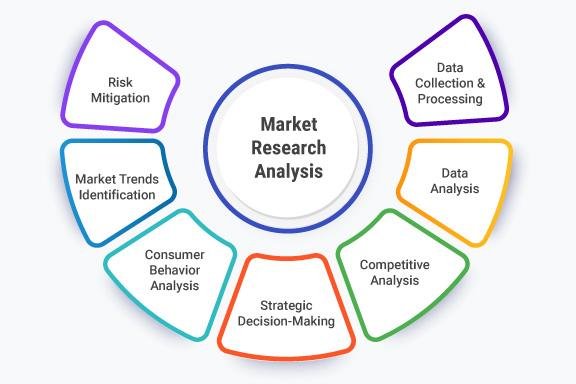
To help companies make data-driven decisions, market research analysts examine consumer behaviour, market trends, rivals, and pricing tactics.
The median pay is $76,950.
Estimated Growth: 7%
Proficiency in consumer research, SQL, Excel, and analytics gives one a competitive edge. To learn more, connect with specialist Essay Writers. They have your back.
Here are the key skills you will learn in a business degree.
Financial analysis- It includes cash flow forecasting, budget management, and statement reading.
Strategic planning- It includes determining competitive advantage, evaluating market risks, and resolving complicated issues.
Market Research- Finding customer requirements and developing marketing plans are the goals of market research
Leadership and Team Management- Managing high-achieving teams, settling disputes, and using emotional intelligence.
Data analytics: Analyzing patterns to inform operational and digital choices.
Effective communication: Engaging stakeholders and outlining clear organizational strategies are examples of effective communication.
Overall, a business degree is a strong catalyst for long-term professional success. Moreover, it equips you with strategic leadership, flexible abilities, and in-demand knowledge.
Also, it allows you to navigate changing global marketplaces and earn influential, rewarding executive positions.