 English
 Arabic
 French
 Spanish
 Portuguese
 Deutsch
 Turkish
 Dutch
Dutch
 Italiano
 Russian
 Romaian
 Portuguese (Brazil)
 Greek
Greek
How to Cancel a Cunard Cruise Booking: A Simple Guide to Policies, Deadlines & Support
Other |
2025-04-21 18:42:28
 Social Networth OS
 Creator Commerce
 Launch Startup
 Global News
 Creator Award
 Talkfever App
Mostra tutti i risultati
Talkfever App
Mostra tutti i risultati

Passa a Pro
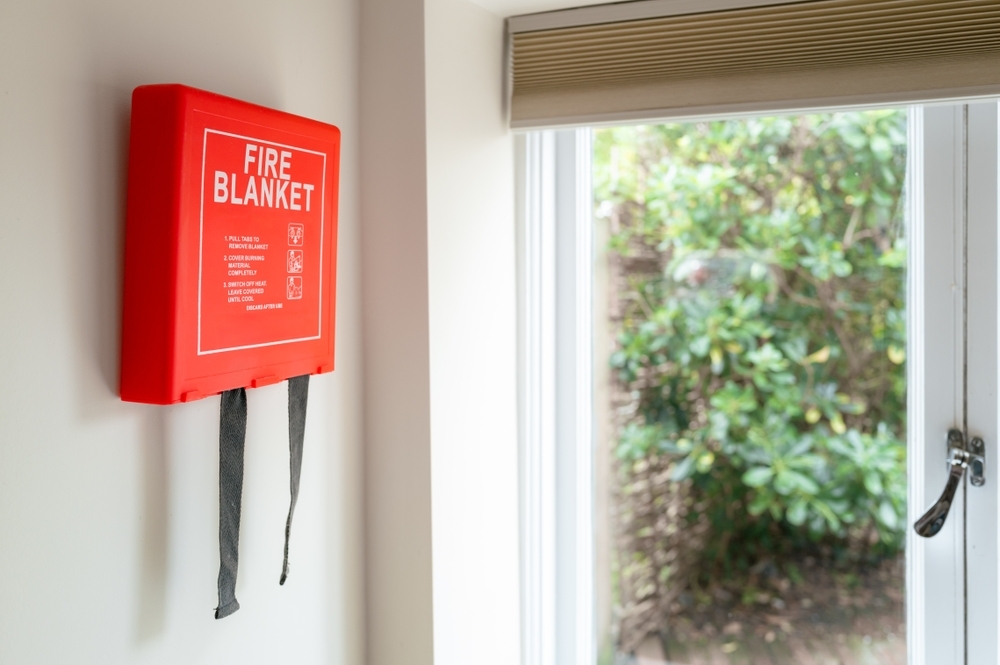
The smell of something burning reached the hallway before anyone noticed the flames. In the kitchen, a small pan had caught fire, and the person standing nearby froze for a moment. The fire was still contained, but the wrong action could make it much worse. Instead of carrying the pan outside or throwing water over it, they recognised that this was the type of small emergency for which a Fire Blanket could be useful.
A fire blanket does not attack flames with chemicals, foam, powder, or gas. Its basic purpose is much simpler. When an appropriate small fire is completely covered, the blanket can restrict the oxygen reaching the burning material and help stop combustion.
That simple principle does not mean every fire can be handled with a blanket. The size and type of fire, the surrounding conditions, the person's ability to reach the equipment safely, and the manufacturer's instructions all matter.
A fire blanket is a sheet made from fire-resistant material that is intended to cover certain small fires. It is commonly associated with kitchens because cooking oils, fats, and other food-related materials can create rapidly developing fires.
Official fire-safety guidance identifies light-duty blankets as suitable for certain small fires involving cooking oils or fats and for fires involving clothing. Heavy-duty versions can be intended for more demanding industrial applications.
The important point is that a blanket is selected for a particular risk rather than treated as a universal firefighting product.
A suitable blanket should be:
A flame needs oxygen to continue burning. When a suitable small fire is covered properly, the blanket creates a barrier between the flame and the surrounding air.
This can reduce the oxygen available to the burning material and interrupt combustion.
The effect can be easier to understand with a simple kitchen example. Suppose oil in a small pan ignites. The oil itself remains hot, but covering the pan can prevent the flames from freely drawing oxygen from the surrounding air.
The blanket does not instantly cool the oil. That is why the covered area should not be disturbed simply because visible flames have disappeared.
The usefulness of a fire blanket depends on the product, the size of the incident, and the conditions at the scene.
A small fire contained within a pan of cooking oil or fat is a common example. Guidance from several fire services recommends a suitable fire blanket for this type of incident and warns against using water because it can cause burning oil to spread.
A suitable blanket may also be used to smother flames involving clothing. It should never be viewed as a substitute for emergency medical treatment after a person has been burned.
For clothing fires, the person should not run. Stop, drop, and roll is a recognised emergency response, and a heavy fabric or suitable fire blanket can help smother flames.
Some workplaces may use blankets for particular small fire hazards identified during their fire risk assessment.
The manufacturer's instructions should determine whether a particular blanket is appropriate. A blanket designed for one application should not automatically be assumed to be suitable for every other fire.
Using one involves more than simply throwing a sheet toward a flame. The circumstances have to remain suitable for a safe response.
First, the person needs to determine whether the fire is genuinely small and confined. If flames are spreading to nearby surfaces or smoke is becoming difficult to tolerate, the situation may already be beyond a safe attempt at first-aid firefighting.
The blanket needs to be stored where it can be reached without putting someone directly in the path of the fire.
This is why official guidance recommends locating fire blankets close to the relevant hazard but in a position that remains safely accessible during a fire.
For a suitable pan fire, the blanket is placed over the burning area so that the flames are covered as completely as possible.
The person should avoid leaning over the flames or putting themselves between the fire and their escape route.
Once the fire has been covered, lifting the blanket to check underneath can introduce oxygen back to the hot material.
The manufacturer's instructions should be followed regarding how long the blanket should remain in place and what to do afterward.
A fire blanket and a portable extinguisher solve different problems.
A blanket physically covers a suitable fire. An extinguisher delivers a particular extinguishing agent, and its suitability depends on the type of fire for which it is rated.
For example, a kitchen may contain cooking-oil hazards as well as electrical equipment. A blanket may be appropriate for a small contained pan fire, while a suitably rated extinguisher may be required for another hazard.
Neither piece of equipment should be selected solely because it is cheap or readily available.
People researching fire extinguisher price may naturally compare different firefighting products before deciding what equipment a workplace or kitchen needs. Cost can be relevant, but it does not determine whether a particular item is appropriate.
The more useful questions are:
For example, choosing the cheapest available extinguisher would not make sense if its extinguishing agent is unsuitable for the fire risk. In the same way, installing a fire blanket in a location where flames could block access defeats much of its practical purpose.
The equipment should match the hazard first; cost can then be considered alongside quality, suitability, compliance, and maintenance.
A fire blanket can be useful because its operating principle is straightforward and it can be kept close to specific fire hazards.
A suitable blanket can provide an option for specific contained incidents, particularly some cooking and clothing fires.
Unlike a portable extinguisher, a blanket does not release an extinguishing agent across the surrounding area.
A kitchen is an obvious example. If a fire blanket is positioned correctly, it may be accessible when a small cooking fire develops.
A blanket should form part of a wider fire-safety arrangement that may include alarms, appropriate extinguishers, escape planning, and training.
The wrong response can turn a manageable situation into a more dangerous one.
Common mistakes include:
Fire services specifically warn against moving a burning oil pan and against throwing water onto it. If there is doubt about whether the fire can be safely controlled, leaving the area is the safer choice.
The storage location can determine whether the blanket is actually useful during an emergency.
It should be close enough to the relevant hazard for quick access but not positioned where the developing fire could prevent someone from reaching it.
For example, placing a blanket immediately beside a cooker may seem convenient. But if flames rise from the cooker and block that exact location, the equipment becomes difficult to access.
The storage position should therefore be considered as part of the fire-risk assessment rather than chosen only for convenience.
A fire blanket should remain accessible and in the condition specified by its manufacturer.
The container and surrounding area should be checked so the equipment has not been obstructed or damaged. For workplaces, routine inspection and maintenance of fire-safety equipment should form part of the wider fire-safety management programme. Scottish Fire and Rescue Service guidance also advises following the manufacturer's instructions to keep fire blankets functional and ready for use.
A blanket that has already been exposed to significant heat or flames should not automatically be assumed to be ready for another emergency. Its condition and replacement requirements should be determined according to the manufacturer's guidance.
Knowing when not to intervene is an important part of fire safety.
Do not attempt to control a fire with a blanket if:
Fire-safety guidance repeatedly emphasises that occupants should not put themselves at risk trying to fight a fire. Where a fire is beyond safe initial control, raising the alarm, evacuating, and contacting the fire service should take priority.
A fire blanket is one small part of fire protection.
A sensible safety arrangement considers the complete chain of response:
Fire prevention → early detection → alarm → safe evacuation → appropriate first-aid firefighting where safe → emergency response
For a kitchen, this might mean keeping cooking appliances maintained, avoiding unattended cooking, providing appropriate firefighting equipment, keeping escape routes clear, and making sure occupants know what to do if a fire starts.
Official guidance recommends suitable fire blankets and, where appropriate, Class F extinguishers for premises with cooking-oil risks.
The blanket therefore works best when it is part of a planned safety system rather than the only measure available.
It can help extinguish certain small, suitable fires by covering them and reducing the oxygen available to the flames. Its effectiveness depends on the fire being appropriate for the blanket and small enough to cover safely.
No. Water should not be poured onto burning cooking oil because it can cause the burning oil to spread rapidly.
Suitable fire blankets can be used for certain clothing fires. The person should not run, and emergency procedures such as stop, drop, and roll should be followed.
No. They have different functions and applications. The appropriate equipment depends on the hazards present.
No. Moving a burning pan can cause hot oil or flames to spread and expose the person to serious burns. Fire-service guidance specifically advises against moving a burning pan.
Do not take unnecessary risks. Raise the alarm, leave the building or affected area, and contact the appropriate emergency service.
A fire blanket works through a straightforward physical principle: covering a suitable small fire can restrict the oxygen available to the flames. That makes it useful for particular situations, especially certain small cooking-oil or clothing fires.
Its usefulness, however, depends on correct selection, suitable placement, proper condition, and safe circumstances. A blanket cannot make a large or rapidly spreading fire safe to approach.
The most important part of using any firefighting equipment is knowing its limits. Keep the equipment accessible, understand the hazards around you, follow the manufacturer's instructions, and never allow an attempt to control a small fire to become a greater danger to people.


