English
 Arabic
 French
 Spanish
 Portuguese
 Deutsch
 Turkish
 Dutch
Dutch
 Italiano
 Russian
 Romaian
 Portuguese (Brazil)
 Greek
Greek
Glyco Forte Glucose Management: Støtte for balansert blodsukker og helse
Health |
2025-05-14 10:26:17
 Social Networth OS
 Creator Commerce
 Launch Startup
 Global News
 Creator Award
 Talkfever App
عرض كل النتائج
Talkfever App
عرض كل النتائج

ترقية الحساب
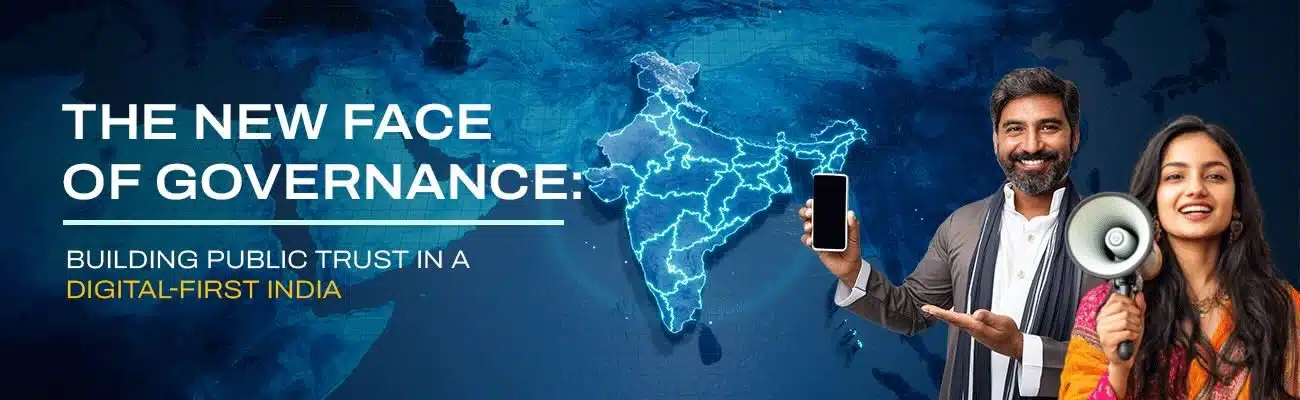
A Social Media Agency working with government institutions today does far more than schedule posts and track likes. Ministries, PSUs and public departments across India are using digital platforms to explain schemes, answer citizen questions, correct rumours and share verified updates the moment a crisis breaks. Twenty years ago, none of this was possible at this speed. Today it is expected.
Think about what an ordinary citizen actually wants. Someone wants to know if a subsidy applies to their household. A commuter wants a real update on a delayed metro line. A student needs to know the last date to apply for a scholarship. During a flood or an outbreak, thousands of people want confirmed facts within minutes, not after the evening news. More often than not, they turn to social media first, before a government office, before a newspaper, before anything else.
That shift has turned social media into a frontline interface between the state and its citizens. It listens, it informs, and when handled well by a competent Social Media Agency, it earns trust. When handled poorly, it does the opposite.
Why visibility alone won't get you there
Governments now have more digital tools than ever. Yet Deloitte's State of AI research found that only 26% of global government leaders have actually deployed tools such as chatbots. So the gap isn't about access to technology. It's about how thoughtfully institutions use what they already have.
This is exactly where a capable Media Management Agency earns its place. Posting often, or posting everywhere, does not automatically build confidence. A citizen scrolling through three different versions of the same update, one from an official handle, one from a news outlet, and one from an account impersonating the ministry, cannot easily tell which one to trust. Every single post from a government handle becomes a small, ongoing test of institutional credibility.
Research on digital trust points again and again to the same foundations: security, accountability and privacy. In communication terms, that translates into a short, practical checklist. Verify before you publish. Cite your source. Update citizens on time. Keep the message consistent across every handle. And when something changes, say so plainly instead of pretending it didn't.
During an emergency, a simple line such as "here is what we know right now, and here is when we will update you" builds more confidence than false certainty ever will. Institutions tend to lose public trust faster by being confidently wrong than by being honestly incomplete.
What India's digital communication approach looks like
India offers a useful case study of government communication at scale, across languages, states and a huge, varied population.
The Press Information Bureau has moved well past traditional press releases, now producing explainers, infographics and multilingual digital content. Its PIB Fact Check unit responds directly to rumours circulating about government policy, which tells you something important: countering misinformation is no longer a side task, it is part of the job.
MyGov, launched back in 2014, has since grown into a serious channel for citizen consultation, not just scheme promotion. Platforms like UMANG and DigiLocker have similarly pulled everyday government interaction out of physical offices and onto people's phones.
Across all these examples, one pattern keeps repeating. Shared infrastructure and shared standards work better than every department trying to build its own system from scratch. Consistency across handles is, in itself, a signal that citizens can trust.
Speaking plainly without losing precision
One of the toughest parts of public communication is language. Government notifications are written for legal and administrative precision. Ordinary citizens simply don't talk that way, and that gap is exactly where confusion, and eventually misinformation, tends to creep in.
A good Digital Marketing Agency working on government accounts knows how to close that gap without watering down the substance of a policy. A dense infrastructure notification becomes a short explainer video. A legal notification becomes a simple FAQ. A welfare scheme gets told through one citizen's real story. A budget line becomes an infographic that actually shows a community what it means for them.
The goal here isn't to make government communication sound casual. It's to make it understandable. A national message still needs one consistent institutional voice, even while it adapts to local languages, regional context and very different levels of digital literacy from state to state.
Why listening matters as much as posting
Comments, direct messages, mentions and ongoing conversations reveal where a policy is being misunderstood, where a service is quietly failing, or where a false claim is starting to spread. Treated properly, social listening works as an early warning system rather than a monthly report.
That changes what should actually get measured. Most government social media reports still count outputs: followers gained, posts published, likes collected. Those numbers look good on a slide but say very little about whether citizens are being served. Response time, queries resolved, sentiment trends, recurring complaints and misinformation detected tell you far more, because they measure whether the channel is functioning as an actual service rather than a broadcast.
Seen this way, social media stops being a publicity function and becomes something closer to an intelligence and engagement function, which naturally calls for different skills, different tools and a different reporting structure altogether. This is the shift a good Social Media Agency should be pushing government clients toward, well before a crisis forces the issue.
Where AI helps, and where it should stop
AI can extend all of this. Chatbots handle repetitive queries at a volume no human team could manage alone. AI-driven analytics can spot recurring concerns, process enormous volumes of citizen feedback, and help teams read public sentiment across multiple languages at once.
Still, technology cannot replace accountability. Government communication regularly touches welfare, healthcare, taxation, education and public safety, areas where one wrong automated answer has a real cost for a real person. That is why AI-generated responses need human oversight, clear escalation paths and strong privacy safeguards, given how much citizen data now flows through these systems. AI should make communication faster and sharper, never less human and never less accountable.
Where a communication partner adds real value
Running an effective government social media presence requires knowledge of policy, audience behaviour, platform mechanics, regional nuance, crisis response and reputation management all at once, more than most in-house teams can realistically cover on their own.
For ministries, departments, PSUs and public institutions, working with a firm that combines corporate communications and public relations expertise under one roof, alongside content, creative production, media relations, digital outreach, social listening and crisis preparedness, tends to produce far more consistent results than juggling several disconnected vendors.
Regional depth matters enormously in a market as diverse as India. Language-first communication, regional social handling, sentiment tracking by state and hyperlocal outreach all help bring a national programme closer to the communities it was built to serve. Visual storytelling matters just as much, turning dense policy into explainer videos, short documentaries and digital content that actually works for audiences with different literacy levels and different internet speeds.
From digital presence to public confidence
The future of government communication won't be decided by how many platforms a ministry shows up on. It will come down to how well those platforms actually serve the people using them. The strongest approaches combine accuracy with accessibility, technology with human judgement, and broadcasting with genuine listening. They make it easier for a citizen to find information, understand a policy, ask a question, and get a real answer back.
For any ministry, department or public body, that is a significant opportunity sitting right in front of them. Social media doesn't have to stay a digital noticeboard. Built the right way, with consistency, responsiveness and honest accountability, it becomes something far more valuable: a working bridge between policy and people, and the trust that follows from it.
PR Professionals works with ministries, PSUs and public institutions across India as a Media Management Agency and Digital Marketing Agency, bringing strategy, content, regional outreach and crisis-ready communication together under one team.