English
 Arabic
 French
 Spanish
 Portuguese
 Deutsch
 Turkish
 Dutch
Dutch
 Italiano
 Russian
 Romaian
 Portuguese (Brazil)
 Greek
Greek
Thermoplastic Composites Market Poised to Hit US$ 56.71 Billion by 2033
Other |
2026-07-10 07:43:16
 Social Networth OS
 Creator Commerce
 Launch Startup
 Global News
 Creator Award
 Talkfever App
Hepsini Gör
Talkfever App
Hepsini Gör

Upgrade to Pro
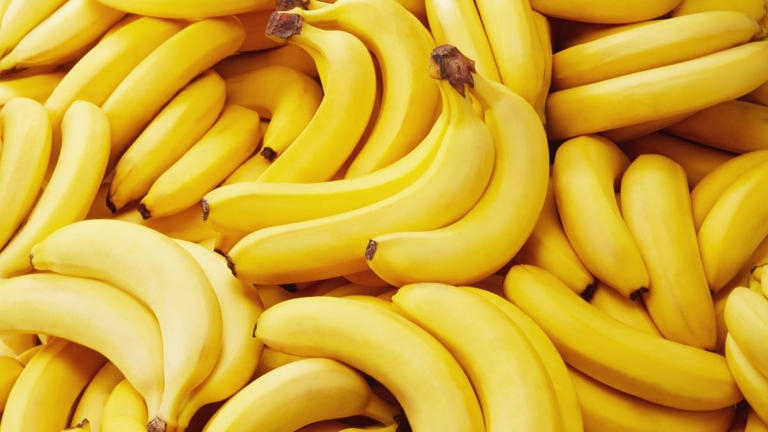
Bananas are more than just a popular fruit in India—they are a vital part of daily diets, religious rituals, traditional medicine, and rural livelihoods. India stands proudly as the world’s largest producer of bananas, contributing nearly one-fourth of global output. At the heart of this massive production system lies one city that has earned a distinctive title through decades of agricultural excellence and innovation: Jalgaon, widely celebrated as the Banana Capital of India.
This article explores where the banana capital is located, why Jalgaon holds this prestigious status, how bananas are produced across India, and the economic, environmental, and technological factors that make banana cultivation so successful.
The title “Banana Capital of India” is not an official government designation but a widely accepted recognition based on production volume, quality of produce, advanced farming practices, and contribution to the banana supply chain. Jalgaon district in Maharashtra consistently leads the country in banana cultivation and productivity.
With vast tracts of land dedicated to banana farming and a farmer community deeply experienced in scientific agriculture, Jalgaon has become synonymous with large-scale banana production.
Jalgaon is situated in the northern part of Maharashtra, in the Khandesh region. It lies between the Satpura mountain ranges to the north and the fertile Tapi River basin to the south. This geographical placement provides the district with a favorable agro-climatic environment that supports intensive banana cultivation.
The district enjoys:
Access to irrigation from rivers, canals, and wells
Well-connected transport routes to major markets
Proximity to industrial and agricultural hubs
These factors collectively strengthen Jalgaon’s position as India’s leading banana-producing center.
Several key reasons explain Jalgaon’s dominance:
Jalgaon contributes a substantial share of Maharashtra’s banana output and ranks among the top banana-producing districts in India. Thousands of hectares of land are devoted to banana plantations.
Farmers in Jalgaon were among the earliest adopters of tissue culture technology, drip irrigation systems, and fertigation (fertilizer application through irrigation). These methods ensure uniform crop quality and higher yields.
Bananas grown in Jalgaon are not only sold in domestic markets but also exported to Gulf countries and other regions, reinforcing its reputation as a premium banana-producing zone.
Close collaboration between farmers and agricultural universities has promoted scientific farming methods, disease management strategies, and improved banana varieties.
India is the largest banana producer in the world, with production exceeding 30 million tonnes annually. Bananas are cultivated in nearly all tropical and subtropical states, making it a truly pan-Indian crop.
Maharashtra
Tamil Nadu
Gujarat
Andhra Pradesh
Karnataka
Madhya Pradesh
Uttar Pradesh
Bihar
West Bengal
Among these, Maharashtra consistently leads in productivity per hectare, with Jalgaon district as its core contributor.
Cavendish
Grand Naine
Robusta
Poovan
Nendran
Rasthali
Different regions grow varieties suited to their climate and market demand. Jalgaon mainly focuses on Grand Naine and Cavendish bananas due to their long shelf life and export potential.
Bananas thrive in warm and humid conditions. Ideal temperature ranges between 15°C and 35°C. Extreme cold or heat can damage the plant and reduce yield.
Jalgaon’s climate offers:
Long warm seasons
Moderate rainfall
Low risk of frost
Adequate sunshine
These conditions allow farmers to cultivate bananas almost year-round with proper irrigation.
Banana plants grow best in:
Deep, well-drained loamy soil
Rich organic matter
Slightly acidic to neutral pH
The fertile alluvial soil of Jalgaon supports strong root systems and healthy fruit development.
Modern banana farming in Jalgaon blends traditional knowledge with advanced technology.
Instead of using suckers from old plants, farmers use tissue-cultured saplings grown in laboratories. These plants are:
Disease-free
Genetically uniform
Faster growing
Higher yielding
Drip irrigation ensures:
Water efficiency
Reduced soil erosion
Uniform nutrient supply
Lower electricity costs
This system is especially valuable in regions where water conservation is essential.
Nutrients are delivered directly through irrigation lines. This improves fertilizer absorption and reduces wastage.
Farmers use integrated pest management (IPM) strategies, combining biological methods with minimal chemical use. This ensures:
Healthier crops
Reduced environmental damage
Better export quality
Modern tools are used for land preparation, plant spacing, and harvesting, improving efficiency and reducing labor strain.
Banana cultivation plays a vital role in both local and national economies.
Banana farming provides direct and indirect employment to:
Farmers
Farm laborers
Transport workers
Packaging and cold storage operators
Export traders
Unlike seasonal crops, bananas can be cultivated throughout the year, offering farmers a steady income stream.
India exports bananas to countries in the Middle East, Russia, and Southeast Asia. Jalgaon’s bananas are known for uniform size and good shelf life, making them suitable for international markets.
Bananas are processed into:
Banana chips
Banana powder
Baby food
Banana fiber products
Beverages
This diversification increases profitability and reduces wastage.
Jalgaon produces more bananas per hectare than many countries.
Farmers often grow bananas alongside crops like papaya and turmeric to maximize land use.
Banana leaves from the region are widely used for eco-friendly plates and packaging.
Banana fiber is now being used in textiles and handicrafts.
The city hosts agricultural fairs and farmer workshops dedicated to banana research and innovation.
With increasing awareness of climate change and resource conservation, banana farmers are adopting eco-friendly methods such as:
Organic composting
Reduced chemical fertilizers
Rainwater harvesting
Mulching to retain soil moisture
These practices not only protect the environment but also improve soil health and long-term productivity.
The story of India’s Banana Capital is one of innovation, resilience, and agricultural excellence. Jalgaon has transformed itself from a traditional farming district into a modern horticultural powerhouse through scientific techniques, farmer cooperation, and favorable natural conditions.
As India continues to strengthen its position in global fruit production, Jalgaon will remain at the forefront—an empire built not on stone or steel, but on fertile soil and golden bunches of bananas. The title “Banana Capital of India” is not just symbolic; it reflects a legacy of leadership in one of the nation’s most important agricultural sectors.
Jalgaon in Maharashtra is widely recognized as the Banana Capital of India due to its high production and advanced farming methods.
Bananas are affordable, nutritious, and widely consumed. They provide income to millions of farmers and contribute significantly to India’s fruit economy.
Its warm climate, fertile soil, reliable irrigation, and adoption of modern agricultural technology make it ideal for banana cultivation.
Grand Naine and Cavendish varieties are commonly grown because of their high yield and export demand.
Yes, India exports bananas mainly to Gulf countries, Russia, and neighboring nations.
It is a method of producing disease-free banana plants in laboratories, ensuring uniform growth and higher productivity.
With irrigation and proper management, bananas can be cultivated throughout the year in many parts of India.