English
 Arabic
 French
 Spanish
 Portuguese
 Deutsch
 Turkish
 Dutch
Dutch
 Italiano
 Russian
 Romaian
 Portuguese (Brazil)
 Greek
Greek
What makes Custom Match Boxes useful for branding
Other |
2026-08-28 05:25:40
 Social Networth OS
 Creator Commerce
 Launch Startup
 Global News
 Creator Award
 Talkfever App
Mostra tutti i risultati
Talkfever App
Mostra tutti i risultati

Passa a Pro
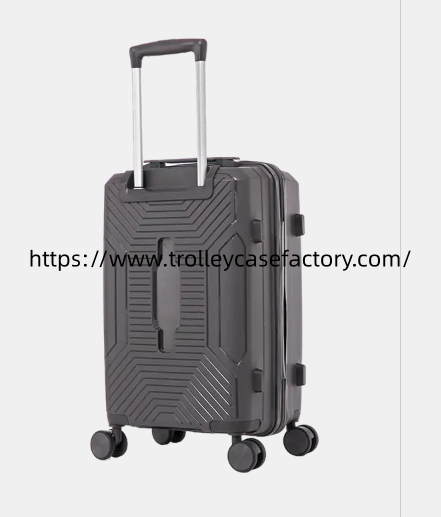
Silent Spinner Suitcase selection should involve more than checking appearance or listening to wheel noise briefly in a showroom. Buyers should evaluate wheel materials, bearing movement, housing construction, handle stability, body structure, internal organization, dimensions, load behavior, sample quality, and packaging. For brands, wholesalers, importers, and retailers, these details can influence customer experience and product positioning. A structured evaluation also gives manufacturers clearer specifications before customized development or bulk production.
Identify The Intended Customer
Every product project should begin by identifying the target user.
Business travelers may prefer compact dimensions, organized storage, smooth handling, and a practical appearance. Families may require greater packing space and flexible internal organization.
Retailers should consider travel frequency, customer age groups, expected environments, preferred sizes, and target price ranges.
These factors can guide decisions about materials, wheel systems, handles, interiors, and overall product configuration.
Inspect Wheel Materials
The surface material of a wheel can influence rolling feel and vibration.
Buyers should ask for material specifications and examine the tread carefully. A flexible surface may absorb certain vibrations, while a harder surface can transmit more impact from uneven flooring.
The wheel should also be checked for consistent molding and proper attachment.
Material selection should be considered alongside bearing construction, housing design, wheel size, and overall product weight.
Test Bearing Movement
Buyers can lift the sample and rotate each wheel manually.
The movement should be checked for unusual resistance, grinding sensations, sticking, or inconsistent rotation.
Every wheel should be tested individually because one component may behave differently from another.
Buyers can record observations during the inspection and request adjustments when necessary.
This simple test can provide useful information before conducting longer rolling trials.
Examine Wheel Housing
The housing connects the wheel assembly to the main body.
Buyers should inspect attachment points, alignment, construction, and stability.
A gentle side-to-side movement test can help identify excessive looseness.
The housing should also be evaluated under a representative load because additional contents can place greater pressure on the connection area.
Manufacturers can discuss housing dimensions and attachment methods when buyers require customized configurations.
Test Different Floor Surfaces
A smooth showroom floor cannot represent every travel environment.
Buyers can test samples on smooth flooring, textured surfaces, carpet, thresholds, and other common indoor areas.
The sound level and handling behavior may change depending on surface texture.
Testing several surfaces can provide a more realistic assessment of the wheel assembly.
Straight movement should be tested alongside turning and directional changes.
Add A Representative Load
An empty case may behave differently from a filled product.
Buyers should place a realistic amount of contents inside the sample and repeat the movement tests.
Additional weight can affect balance, wheel contact, handle pressure, and directional control.
The buyer can compare empty and loaded conditions to identify noticeable differences.
Recording these results can make discussions between buyers and manufacturers more specific.
Check Directional Movement
A four-wheel travel design should allow practical movement in different directions.
Buyers can test forward movement, backward movement, side movement, and turning.
The product should remain reasonably stable when the user changes direction.
Each corner should be evaluated separately.
If one wheel assembly behaves differently, the manufacturer can inspect alignment, bearings, housing components, or installation details before sample approval.
Evaluate The Telescopic Handle
The handle system should be tested together with the wheel assembly.
Buyers can check extension, retraction, locking positions, grip design, and side movement.
Testing under empty and loaded conditions can provide different observations.
Handle length should also correspond to the intended user group and case dimensions.
For customized projects, buyers can discuss grip materials, handle length, button placement, and related component requirements during development.
Review Main Body Construction
The body should be evaluated according to the intended travel environment.
Buyers can inspect shell materials, textile sections, corners, seams, lining, hardware, and surface finishing.
Special attention should be given to areas where different components connect.
These locations may experience additional stress during transportation and handling.
The selected construction should correspond to the expected frequency of use and target market rather than appearance alone.
Examine Interior Organization
Interior space should support practical packing.
Buyers can inspect divider panels, compression straps, mesh pockets, zipper compartments, lining, and open storage sections.
Different customer groups may require different arrangements.
Business travelers may appreciate dedicated areas for documents and clothing, while leisure travelers may prefer larger open sections.
Manufacturers can adjust interior layouts during customized development according to buyer specifications.
Inspect Samples Before Bulk Production
A sample should be evaluated systematically before a larger order is confirmed.
Buyers can prepare a checklist covering dimensions, weight, wheel movement, bearing performance, housing stability, handle operation, body construction, interior organization, stitching, surface finish, branding, and packaging.
Any requested modification should be documented clearly.
The approved sample can then become a reference for production and future repeat orders.
Discuss Customization Requirements
Commercial customers may require customized colors, logos, surface finishes, wheel designs, handles, lining, labels, tags, and cartons.
trolleycasefactory can communicate according to individual project requirements and target markets.
Buyers should provide artwork, measurements, color references, component preferences, packaging instructions, and inspection criteria during development.
Minimum order quantities, sample arrangements, production schedules, inspection procedures, and shipping requirements should also be clarified before confirmation.
Consider After-Sales Needs
Wheel components and other hardware may eventually require replacement or maintenance.
Buyers should ask about component availability and potential service arrangements before placing larger orders.
This information can help retailers and distributors prepare for customer service requests.
A clear component plan may also make repeat purchasing easier when replacement parts become necessary.
Maintain A Clear Production Reference
After sample approval, buyers should maintain detailed product records.
Important information may include dimensions, materials, wheel specifications, bearing details, handle configuration, body construction, interior layout, colors, branding, labels, and packaging.
Clear records can help maintain consistency during repeat production.
They also provide a practical reference when buyers request future modifications.
trolleycasefactory can work with customers to discuss different product configurations and manufacturing requirements according to their intended markets.
For brands, wholesalers, importers, and retailers searching for travel cases designed around practical movement and reduced rolling noise, the https://www.trolleycasefactory.com/product/ offers a starting point for reviewing available designs and discussing customized requirements. Buyers can assess wheel materials, bearing movement, housing construction, handles, dimensions, interior layouts, branding, packaging, and sample specifications according to their target customers. Clear testing standards and an approved production sample can help create a more organized purchasing process from initial development through bulk manufacturing.