English
 Arabic
 French
 Spanish
 Portuguese
 Deutsch
 Turkish
 Dutch
Dutch
 Italiano
 Russian
 Romaian
 Portuguese (Brazil)
 Greek
Greek
On-Demand Multi-Service App: The Ultimate Business Guide for 2026
Music |
2026-06-06 12:38:28
 Social Networth OS
 Creator Commerce
 Launch Startup
 Global News
 Creator Award
 Talkfever App
Ver Todos
Talkfever App
Ver Todos

Atualize para o Pro
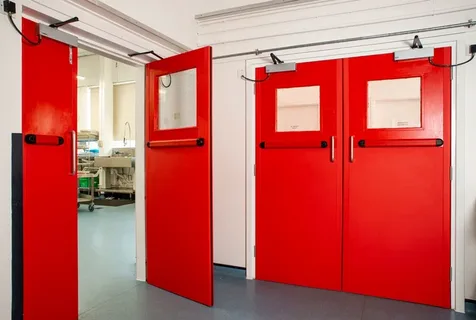
Fire doors are one of those building safety features that often receive attention only when an inspection identifies a problem. Yet their day-to-day condition can directly affect how well a building contains fire and smoke. In homes, HMOs, apartment blocks, offices and managed buildings, a correctly installed fire door can help protect escape routes and limit the movement of fire between separate areas.
This is why professional fire door installation London services involve more than fitting a heavy door into an existing frame. The door leaf, frame, hinges, seals, closer and ironmongery need to work together as a complete fire-resisting assembly.
For landlords and property managers searching for fire door installation near me, the installer’s technical knowledge matters just as much as the door being purchased. A certified or appropriately specified door can still fail an inspection if gaps are excessive, the closer does not shut properly or incompatible hardware has been fitted.
A normal internal door is mainly expected to provide privacy, security and separation between rooms. A fire door has another job. It is intended to resist the spread of fire for a stated period when installed correctly and kept in suitable condition.
Common classifications include FD30 and FD60, referring to nominal fire resistance periods of 30 and 60 minutes. Some doors are identified as FD30S or FD60S, where the additional "S" indicates smoke-control provisions.
The installation process can involve:
A suitable fire-rated door leaf
A compatible fire-resistant frame
Fire-rated hinges
Intumescent strips
Smoke seals where required
A suitable self-closing device
Compatible locks, latches and handles
Fire-rated glazing where specified
Appropriate fixings and protection around ironmongery
Correct gaps around the door leaf
It is the combination of these elements that matters. Installing an expensive fire-rated leaf into an unsuitable frame doesn't automatically create a satisfactory fire door.
One reason fire doors installation work requires proper assessment is that different buildings present different risks.
A flat entrance door separating a dwelling from a communal corridor has a different function from a door protecting a commercial plant room. An HMO bedroom door may also need to support a protected escape route used by several unrelated occupants.
The table below shows some typical situations.
| Property Type | Common Fire Door Locations | Points Usually Considered |
|---|---|---|
| Residential houses | Garages, protected stairways, certain converted layouts | Fire rating, closing action and escape route protection |
| Flats | Flat entrances, corridors, riser cupboards | Smoke control, self-closing and communal protection |
| HMOs | Bedrooms, kitchens, communal corridors and stairs | Frequent use, escape route protection and regular checks |
| Offices | Staircases, corridors, plant rooms and compartment areas | Occupancy, fire strategy and door hardware |
| Retail premises | Stock rooms, escape routes and back-of-house areas | Building use and fire risk findings |
| Managed blocks | Flat entrances, service areas and communal spaces | Consistency, record keeping and planned maintenance |
The exact requirement should be based on the building, its use and the relevant fire safety assessment rather than copied from another property.
Residential fire doors are commonly associated with flats, converted houses and homes with particular layouts.
Flat entrance doors deserve close attention because they may separate an individual dwelling from a communal escape route. If smoke or fire passes through that opening too quickly, occupants elsewhere in the building can also be affected.
A professional installer should inspect the opening before work begins. The frame condition, floor level, wall construction, width and height can all influence the installation.
They should also consider practical matters. A self-closing device needs enough force to close the door fully, but a door that is extremely difficult to open can create problems for residents. Good installation involves finding the correct balance while maintaining the intended fire performance.
HMOs tend to place greater demands on doors because shared areas may experience constant daily use.
Bedroom doors can be opened dozens of times a day. Kitchen doors may be exposed to heat, humidity and repeated impact. Communal doors can suffer damage from furniture, deliveries or occupants propping them open.
For these properties, fire door installation should be considered alongside ongoing Fire door maintenance London services.
An installer may fit the door correctly on day one, but maintenance remains necessary. Hinges loosen, seals become damaged and closers can move out of adjustment. Routine checking helps identify these issues before they affect the door's ability to operate as intended.
HMO landlords also benefit from keeping clear records of installation, inspections and repair work, particularly where several doors are managed within the same building.
Commercial fire door installation can range from a single replacement office door to dozens of doors across larger premises.
Offices, restaurants, clinics, retail premises, warehouses and mixed-use buildings can all contain fire-resisting doors. Their locations may include protected staircases, plant rooms, storage areas, corridors and compartment boundaries.
Commercial projects can also involve more complicated hardware. Doors may have access-control systems, electromagnetic devices, panic hardware, vision panels or specialist locks.
Any alterations need to remain suitable for the particular fire door assembly.
This is where experienced fire door installers can make a noticeable difference. They should understand that cutting, drilling or changing hardware isn't simply a carpentry decision. Changes to the door may affect how it is expected to perform.
Door gaps are among the first things inspectors tend to notice.
If the gaps around the top or sides are too large, the fire-resisting performance may be affected. Uneven gaps can also suggest that a leaf is twisted, the frame has moved or hinges are incorrectly positioned.
The threshold area also deserves attention because smoke control can depend on how the bottom of the door interacts with the floor finish or suitable sealing arrangements.
A common problem arises after flooring work. Carpet, laminate or tiles may be replaced after a door has been installed, changing the gap beneath it or interfering with closing.
This is one reason Fire door inspections London remain useful even when the original installation was carried out correctly.
A fire door cannot do its intended job while standing open.
Self-closing devices are used on many fire doors so the leaf returns to the closed position after use. A closer should be properly adjusted so the door moves into the frame and engages with the latch where one is fitted.
A door that stops a few centimetres short of the frame can become a safety concern even if the closer appears to be working.
Problems can develop after installation because of changes in hinges, flooring, air pressure or closer adjustment. These defects are often suitable for fire door repair rather than complete replacement.
Not every failed fire door requires a new doorset.
Fire door repairs London may be suitable where the basic door remains serviceable but limited defects have developed. Common remedial work may include correcting gaps, replacing damaged seals, adjusting closers, repairing frames or changing unsuitable hardware.
The decision should depend on the condition and identity of the existing door.
Where serious damage has occurred, important information about the door is unavailable or alterations have significantly affected its construction, replacement may be a better option.
People searching for fire door repairs UK should be wary of repair work based only on appearance. A cosmetic improvement doesn't necessarily correct a fire safety defect.
Installation is only the beginning of a fire door's working life.
Fire door inspections London can identify wear and damage that may not be obvious during everyday use. An inspection will generally consider several areas, including:
Door leaf condition
Frame condition
Head and side gaps
Threshold gaps
Intumescent and smoke seals
Hinges and fixings
Closing action
Locks and latches
Glazing
Door furniture
Signs of damage or alteration
The frequency of checks can vary according to the property and level of use. High-traffic managed buildings may need closer attention than a door that is rarely used.
Inspection records also make Fire door maintenance London easier to plan because building managers can see which doors require immediate repair and which remain satisfactory.
The fire door installation cost UK property owners encounter can vary widely because there is no single standard installation.
Price is affected by the type of door, fire rating, dimensions, finish, frame condition, glazing and hardware. Access to the property and the amount of preparation required can also affect labour.
A standard replacement in a suitable existing opening may be relatively straightforward. A bespoke door with glazing, access-control equipment or major frame work will usually cost more.
When comparing quotations, property owners should check whether the price includes the full installation rather than only the door leaf.
A quotation may need to cover the door, frame where required, hinges, seals, closer, handles, locks, fitting, adjustments and relevant documentation. Comparing like-for-like quotations gives a much clearer picture than choosing solely by the headline price.
A fire door certificate London customers ask about can mean different things depending on the circumstances.
There may be documentation associated with the door product, installation, inspection or maintenance work. Property owners should explain exactly what paperwork they need before booking the service.
For example, a managing agent may require evidence of installation work, while another client may need an inspection report showing whether existing doors are satisfactory.
Clear documentation becomes particularly useful in managed properties where several contractors and responsible persons may be involved over the life of the building.
A search for fire door installers near me usually produces many companies, but choosing between them should involve more than comparing prices.
Potential customers can ask how the installer assesses an opening, what door specification is proposed and what hardware is included. They can also ask how gaps, seals and closing action will be checked after installation.
The installer should be able to identify situations where repair is appropriate and situations where replacement is the safer choice.
For larger properties, experience with multi-door projects can also help. Coordinating residents, access arrangements, inspections and follow-up repairs becomes a substantial part of the work when dozens of doors are involved.
Even a well-installed door will experience wear.
Fire door maintenance London can include adjustments to closers, tightening or replacing hinges, correcting gaps, changing damaged seals and repairing minor frame defects.
Early repair is usually preferable to leaving a problem until a later inspection identifies several defects at once.
A door that begins rubbing against the floor, for example, may seem like a minor inconvenience. Over time, occupants may start wedging it open or the closer may stop shutting it correctly. Small maintenance issues can quickly become larger safety concerns if ignored.
Liviosiv provides fire door installation, inspection, repair and maintenance services for residential, commercial, HMO and managed properties in London. They work with property owners and managers who require individual door installations as well as larger projects involving several fire doors.
Their involvement can also continue after installation where inspections or remedial work are required, allowing property managers to keep installation and later maintenance under one service arrangement.
Property owners, landlords, managing agents and businesses looking for fire door installation London can contact Liviosiv to discuss individual doors or multi-property requirements. They also assist with fire door inspections, maintenance and repair work where existing doors need attention. Liviosiv can be contacted on
Company Name: Liviosiv
Address: 34 Ennismore Avenue, Greenford, England, UB6 0JN
Phone: +442046178121
Email: contact@liviosiv.co