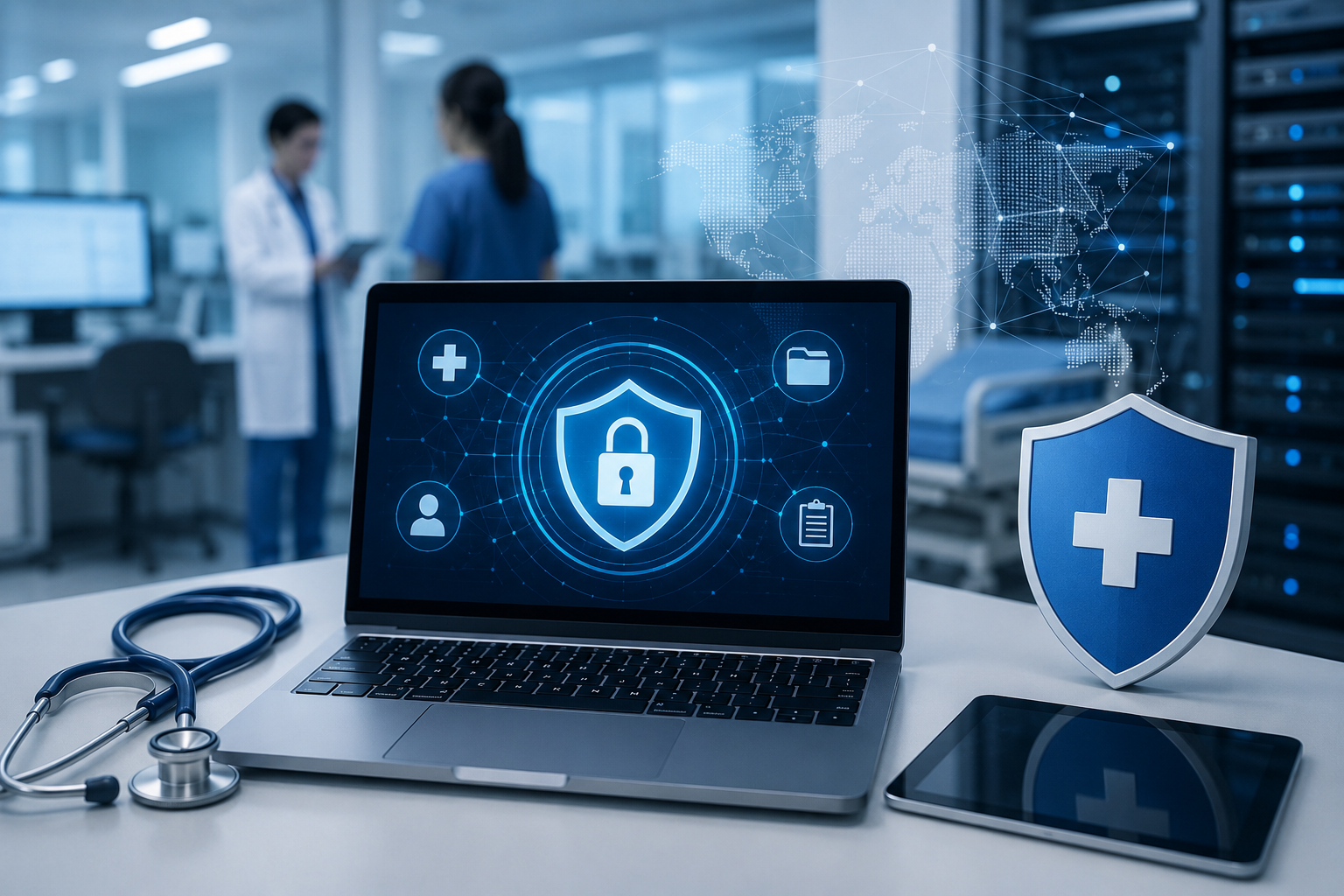
Healthcare organizations handle sensitive patient information every day. From electronic health records (EHRs) to billing systems and telehealth platforms, healthcare providers depend on technology to deliver safe and efficient services. However, protecting patient information is also a major responsibility.
The Health Insurance Portability and Accountability Act (HIPAA) establishes requirements for protecting protected health information (PHI). While HIPAA compliance involves policies, procedures, employee training, and organizational controls, reliable healthcare IT support can play an important role in helping organizations implement and maintain appropriate technical safeguards.
What Is HIPAA Compliance?
HIPAA is a U.S. federal law that includes requirements for protecting certain health information. The HIPAA Security Rule focuses on safeguarding electronic protected health information (ePHI) through administrative, physical, and technical safeguards.
Healthcare organizations must take reasonable and appropriate steps to protect ePHI from unauthorized access, alteration, disclosure, or loss. IT support teams can help organizations manage many of the technology-related controls that contribute to this protection.
1. Strengthening Access Controls
Not every employee should have access to every patient record or healthcare application. Healthcare IT support teams can help organizations implement role-based access controls that provide users with access appropriate to their responsibilities.
IT teams can also assist with:
- User account management
- Password policies
- Multi-factor authentication
- Employee access changes
- Account deactivation
- Privileged access management
These measures can reduce the risk of unauthorized access to sensitive healthcare information.
2. Supporting Data Encryption
Encryption helps protect ePHI when it is stored or transmitted. Healthcare IT support providers can help organizations configure and maintain encryption across supported devices, systems, and communication channels.
For example, IT teams may assist with encrypted connections, secure endpoints, encrypted storage, and other appropriate security technologies.
Encryption requirements should be evaluated based on the organization's environment and applicable HIPAA requirements rather than treated as a one-size-fits-all solution.
3. Maintaining Secure Systems and Devices
Outdated operating systems, applications, and devices can create security vulnerabilities. Regular patching and maintenance are therefore important parts of a healthcare IT security strategy.
IT support teams can monitor systems, deploy security updates, maintain endpoint protection, and identify devices that require attention. Proactive maintenance can help healthcare organizations reduce avoidable technology and security risks.
4. Monitoring and Managing Security Incidents
Healthcare organizations need processes for identifying and responding to potential security incidents. IT support teams can monitor systems for unusual activity and help investigate technical issues.
When suspicious activity is identified, support teams can help with steps such as isolating affected devices, reviewing logs, escalating incidents, and restoring systems when appropriate.
A well-defined incident response process can help organizations respond more effectively to potential threats.
5. Supporting Backups and Disaster Recovery
Healthcare operations cannot afford prolonged technology outages. Reliable backups can help organizations recover important information following system failures, ransomware incidents, or other disruptions.
Healthcare IT support teams can help establish backup schedules, monitor backup jobs, test restoration procedures, and maintain disaster recovery systems.
Regular testing is particularly important because having a backup does not automatically guarantee that data can be successfully restored.
6. Helping With HIPAA Risk Management
HIPAA compliance requires organizations to identify and address risks to ePHI. IT support providers can contribute technical expertise during risk assessments by identifying vulnerabilities across networks, endpoints, applications, and infrastructure.
Support teams can also help document technical controls and recommend improvements based on identified risks.
7. Supporting Employee Security Practices
Technology alone cannot provide complete protection. Employees also need to understand secure practices, such as recognizing phishing attempts, protecting credentials, and handling patient information appropriately.
IT support teams can assist with security awareness initiatives, technical safeguards, and user support when employees encounter suspicious emails, account issues, or security concerns.
Conclusion
Healthcare IT support can be an important part of a broader HIPAA compliance program. From access management and system maintenance to backups, monitoring, encryption, and incident response, IT teams help healthcare organizations establish stronger technical safeguards for ePHI.
However, IT support outsourcing alone does not make an organization HIPAA compliant. Compliance requires a comprehensive approach involving appropriate policies, procedures, risk management, workforce training, and organizational safeguards.
By partnering with an experienced healthcare IT support provider, healthcare organizations can strengthen their technology environment while supporting secure, reliable, and compliant operations.
 English
 Arabic
 French
 Spanish
 Portuguese
 Deutsch
 Turkish
 Dutch
Dutch
 Italiano
 Russian
 Romaian
 Portuguese (Brazil)
 Greek
Greek
 Social Networth OS
 Creator Commerce
 Launch Startup
 Global News
 Creator Award
 Talkfever App
Tout voir
Talkfever App
Tout voir