English
 Arabic
 French
 Spanish
 Portuguese
 Deutsch
 Turkish
 Dutch
Dutch
 Italiano
 Russian
 Romaian
 Portuguese (Brazil)
 Greek
Greek
IQOS二回機的全面解析
غير مصنف |
2026-05-12 07:48:31
 Social Networth OS
 Creator Commerce
 Launch Startup
 Global News
 Creator Award
 Talkfever App
عرض كل النتائج
Talkfever App
عرض كل النتائج

ترقية الحساب
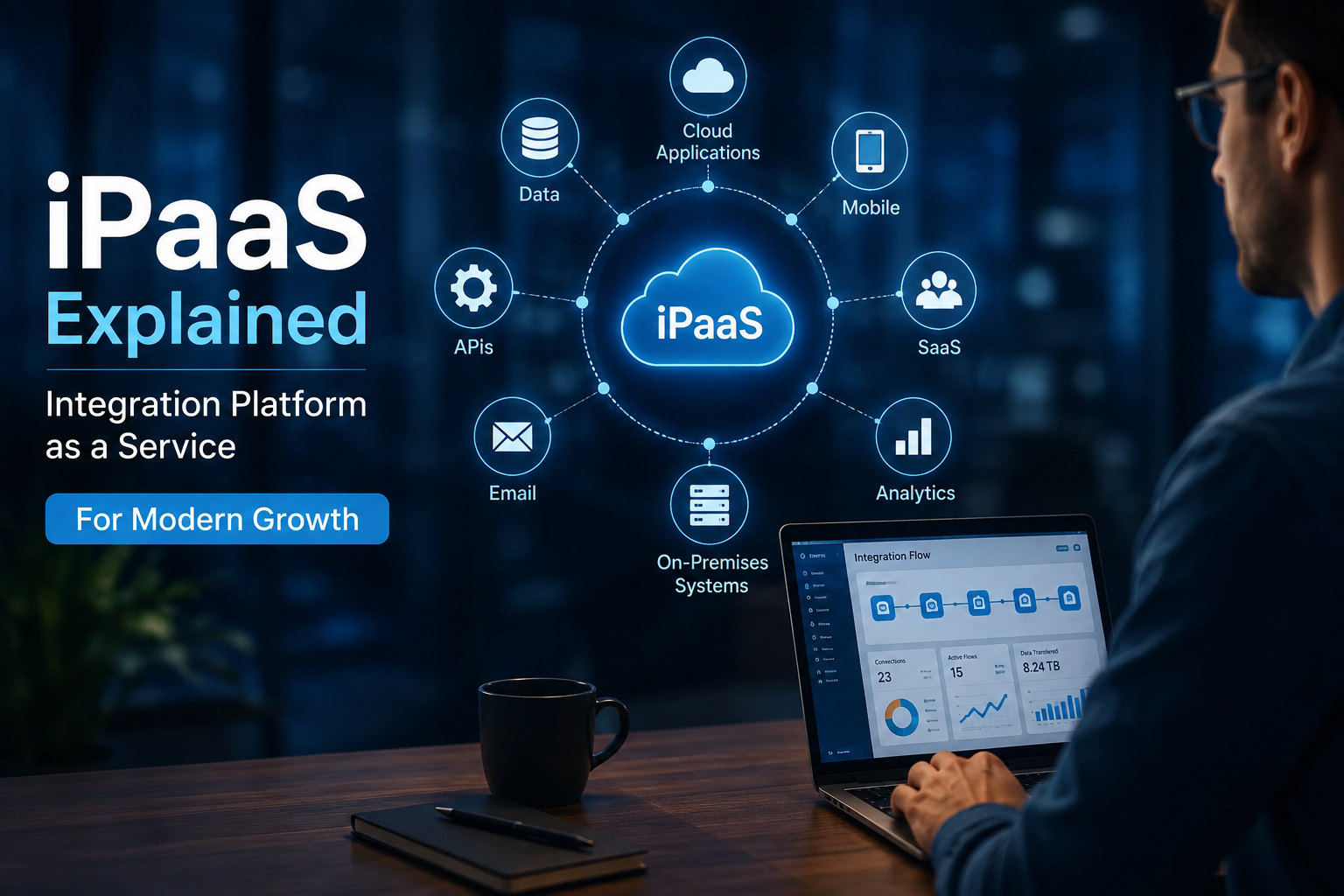
Every company today runs on a patchwork of software. A sales team lives in a CRM, finance works out of an accounting suite, marketing depends on email tools, and operations tracks everything in a separate database. The problem isn't that these tools exist — it's that they rarely talk to each other. Data gets copied by hand, spreadsheets go stale, and small mistakes turn into missed orders or unhappy customers. This is exactly the gap that an integration platform as a service (iPaaS) was built to close. Rather than hiring a team of developers to write custom code for every connection, businesses can now rely on a cloud-based platform that links applications, automates workflows, and keeps information flowing accurately in real time. This article walks through what iPaaS actually means, how it works, why so many organizations are adopting it, and what to weigh before picking one.
At its core, an integration platform as a service (iPaaS) is a cloud-hosted suite of tools that lets businesses connect different applications, systems, and data sources without building integrations from scratch. Instead of writing custom scripts for every pair of tools, teams use pre-built connectors, visual workflow builders, and reusable templates to link software together. Think of it as a translator sitting between all your business applications, making sure that when one system sends information, the receiving system understands it instantly and correctly. Because it's delivered as a service, there's no hardware to install and no infrastructure to maintain — the provider handles updates, scaling, and security patches in the background.
The mechanics of an integration platform as a service are simpler than they sound. Most platforms offer a library of connectors for popular software — CRMs, ERPs, marketing tools, payment gateways, and databases. A business selects the applications it wants to link, maps the fields that should sync (like customer names, order numbers, or invoice amounts), and sets rules for when data should move. Once configured, the platform monitors both systems continuously. When a new record appears in one application, the platform detects the change, transforms the data into a format the other system understands, and delivers it automatically. This happens in near real time, which means teams no longer wait hours or days for information to catch up across departments.
Companies of every size are dealing with the same headache: too many disconnected tools and not enough time to manage them manually. Growing businesses often add new software faster than their IT teams can integrate it, which creates data silos and slows decision-making. Adopting iPaaS solves this by giving non-technical staff the ability to build and manage integrations through visual interfaces, freeing up developers for higher-value work. It also reduces the risk of human error that comes with manual data entry, since information moves automatically once a workflow is set up. For businesses expanding into new markets or scaling their operations, having a reliable integration platform as a service (iPaaS) in place means new tools can be added without disrupting existing processes.
The advantages go beyond simple convenience. Speed is one of the biggest gains — projects that once took months of custom development can often be completed in days using pre-built templates. Cost savings follow closely behind, since businesses avoid the ongoing expense of maintaining custom-coded integrations that break every time an application updates. Visibility improves as well, because teams get a single dashboard to monitor how data moves across the entire organization instead of guessing where a process might have failed. Perhaps most importantly, an iPaaS grows alongside the business. As new departments, regions, or software tools get added, the platform can absorb that growth without requiring a complete overhaul of existing connections.
No technology is without trade-offs, and iPaaS adoption comes with a few. Some organizations underestimate the planning needed before implementation, leading to messy workflows that are hard to troubleshoot later. Others worry about vendor lock-in, since switching platforms after years of built-up automation can be disruptive. Security is another valid concern, given that sensitive data passes through a third-party system. These challenges are manageable with the right approach — mapping out data flows before building anything, choosing a platform with transparent security certifications, and starting with a small pilot project before scaling across the whole organization. Businesses that treat integration as an ongoing discipline, rather than a one-time setup, tend to get the most value from their investment.
Not every platform fits every business. Smaller teams may prioritize ease of use and quick setup, while larger enterprises often need advanced governance, detailed audit logs, and support for complex, high-volume data flows. It helps to look closely at how many pre-built connectors a platform offers for the tools already in use, how transparent its pricing is as usage scales, and how responsive its support team is when something breaks. Testing a platform with a real, low-risk workflow before committing long-term is one of the most practical ways to judge whether it will hold up under everyday business demands.
As more business functions move to the cloud, the role of integration platforms will only expand. Artificial intelligence is already being layered into many platforms to suggest mappings automatically, flag unusual data patterns, and predict where a workflow might fail before it does. Low-code and no-code capabilities are also making these platforms accessible to a wider range of employees, not just IT specialists. The direction is clear: connecting software will keep getting easier, faster, and smarter.
Disconnected software doesn't have to be the cost of doing business. An integration platform as a service (iPaaS) gives organizations a practical, scalable way to keep their systems talking to each other without draining engineering resources. For businesses looking to move faster, reduce manual errors, and make smarter decisions with accurate data, investing time in the right iPaaS strategy is one of the more straightforward upgrades available today.