 English
 Arabic
 French
 Spanish
 Portuguese
 Deutsch
 Turkish
 Dutch
Dutch
 Italiano
 Russian
 Romaian
 Portuguese (Brazil)
 Greek
Greek
 IMS for Investors
 Global News
 Vdo Junction
 Talkfever App
 Upcoming
Ways to Reach Aeromexico Support by Phone, Chat, anda Email : A Comprehensive Guide
Other |
2025-04-15 11:44:27
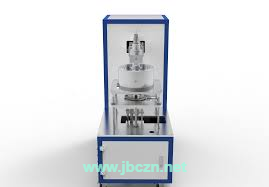
A diamond coating run lasts days, not hours. The plasma inside the chamber reaches thousands of degrees. The substrate holder sits directly beneath this heat source. Without proper cooling, the holder warps. The diamond film cracks. A single failed run wastes expensive gases and substrate materials. MPCVD diamond deposition coating equipment like JBCZN, produced by GOLD BLINGKING INTELLIGENT TECHNOLOGY (ZHE JIANG) CO., LTD., requires precise thermal management for long-duration processes. Yet many operators underestimate cooling demands. This situation raises a direct question for any production engineer: what cooling system specifications are critical for the substrate holder in a long-run MPCVD diamond deposition coating equipment?
Coolant flow rate determines heat removal capacity. A stationary substrate holder absorbs continuous plasma energy. Insufficient flow allows temperatures to climb beyond control limits. JBCZN designs its substrate holders with calculated flow paths that match plasma power input. A system running at microwave powers above six kilowatts needs flow rates exceeding fifteen liters per minute. Lower flows cause hot spots across the holder surface, producing non-uniform diamond films.
Inlet temperature stability affects deposition consistency. A cooling loop that fluctuates by a few degrees changes substrate surface temperature. Diamond quality shifts with each temperature swing. JBCZN specifies chillers with temperature control precision within plus or minus one degree Celsius. The chiller must maintain this accuracy across ambient temperature changes. A compressor that cycles on and off creates temperature oscillations that a well-specified unit avoids through continuous modulation.
Coolant purity prevents channel blockage. Tap water contains minerals that precipitate at elevated temperatures. These deposits narrow cooling passages over time. JBCZN recommends deionized water with conductivity below twenty microsiemens per centimeter. The deionization loop removes calcium, magnesium, and silica that form scale. A closed-loop system with regular conductivity monitoring maintains cooling efficiency across months of continuous operation.
Cooling channel geometry distributes heat extraction evenly. A single straight passage cools the center effectively but leaves edges hot. JBCZN machines spiral or serpentine channels that cover the entire holder surface. The channel cross-section must balance pressure drop against flow volume. A narrow channel increases water velocity for turbulent heat transfer. A wide channel reduces pumping power but may create stagnant zones. JBCZN engineers simulate flow patterns to eliminate dead spots.
Pressure rating guards against leaks inside the vacuum chamber. A cooling line rupture floods the deposition zone, ruining the diamond film and damaging the microwave system. JBCZN specifies stainless steel tubes with burst pressures ten times higher than operating limits. All fittings undergo helium leak testing before installation. The substrate holder itself includes redundant seals that contain coolant even if the primary seal fails.
Temperature monitoring provides real-time feedback. Thermocouples embedded in the substrate holder report surface conditions to the control system. JBCZN places multiple sensors across the holder to detect thermal gradients. A reading that rises above the setpoint triggers increased coolant flow or reduced microwave power. This closed-loop protection prevents catastrophic overheating during long runs when plasma conditions drift.
Duty cycle compatibility matches the cooling system to the deposition schedule. A substrate holder designed for eight-hour runs may overheat on a forty-eight hour diamond deposition. JBCZN tests each holder design under continuous plasma exposure equivalent to the customer's longest expected run. The cooling specification includes steady-state temperature maps taken after twenty-four hours of operation. A holder that reaches equilibrium below the distortion threshold passes validation.
For any facility planning extended diamond deposition, https://www.jbczn.net/product/optical-coating-equipment/ shows JBCZN's substrate holder cooling designs, where GOLD BLINGKING's engineers document flow, temperature, and purity requirements for each MPCVD diamond deposition coating equipment configuration. A well-cooled holder produces uniform diamond films run after run. A holder that overheats wastes weeks of effort. How much cooling margin does your current substrate holder provide?


