English
 Arabic
 French
 Spanish
 Portuguese
 Deutsch
 Turkish
 Dutch
Dutch
 Italiano
 Russian
 Romaian
 Portuguese (Brazil)
 Greek
Greek
Level Sensor Market Forecast to 2030: Rising Demand in Consumer Electronics Fuels Growth
Shopping |
2025-04-10 04:32:06
 Social Networth OS
 Creator Commerce
 Launch Startup
 Global News
 Creator Award
 Talkfever App
See All
Talkfever App
See All

Upgrade to Pro
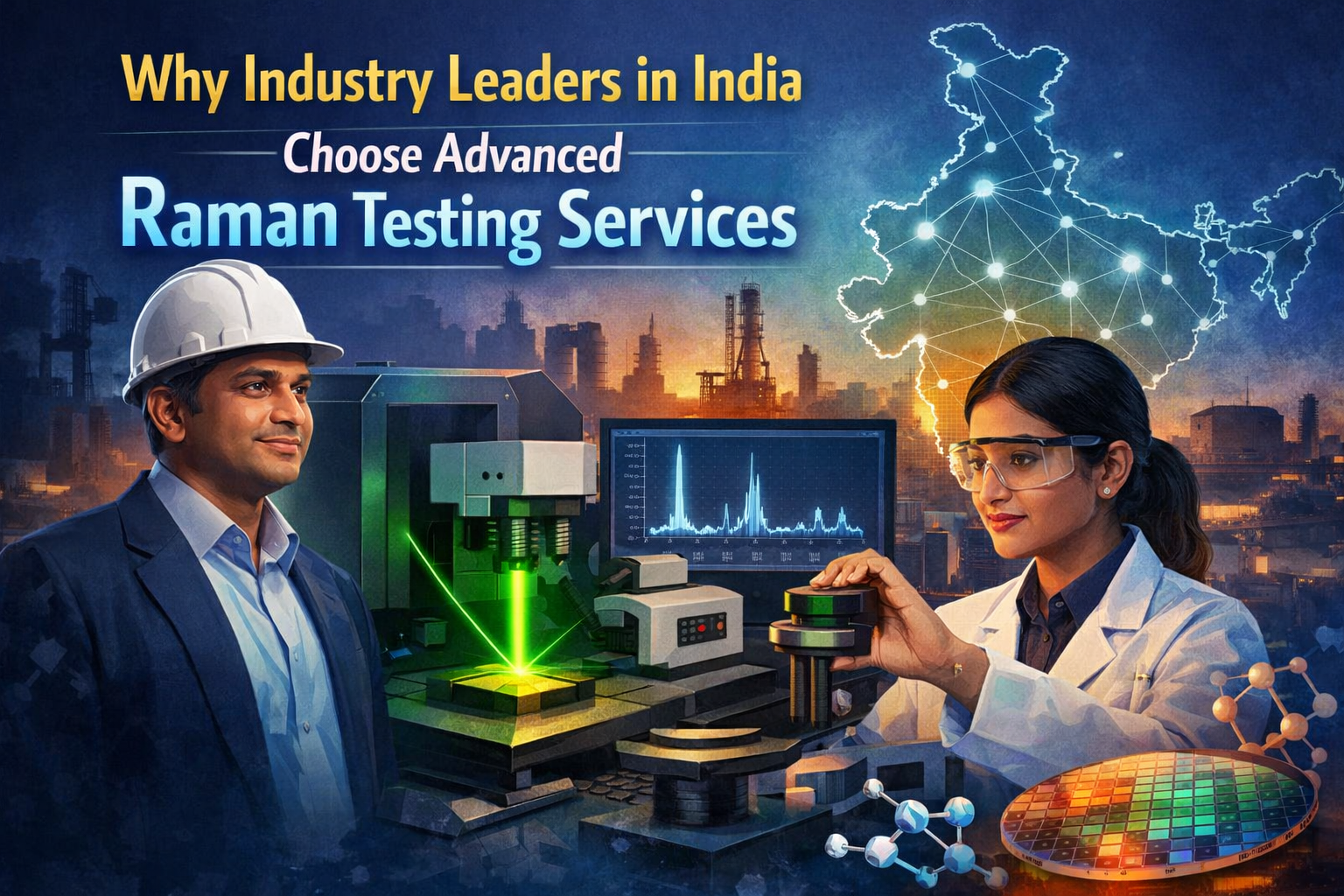
In an era where precision, compliance, and innovation define market leadership, Indian industries are rapidly adopting advanced analytical technologies to maintain a competitive edge. Among these technologies, Raman spectroscopy has emerged as a cornerstone of high-quality material analysis.
From pharmaceuticals and petrochemicals to semiconductors and biotechnology, industry leaders across India are increasingly relying on advanced Raman testing services to ensure accuracy, regulatory compliance, and operational excellence.
Raman testing is based on the principle of Raman scattering—a phenomenon discovered by Indian physicist C. V. Raman in 1928, for which he was awarded the Nobel Prize in Physics.
When monochromatic light (usually from a laser) interacts with a molecule, most of it scatters elastically. However, a small portion scatters inelastically, producing a shift in energy that provides a unique molecular fingerprint of the material. This allows precise identification of chemical composition and structural properties.
Unlike many traditional analytical techniques, Raman spectroscopy offers:
Non-destructive testing
Minimal to no sample preparation
Rapid and real-time analysis
High chemical specificity
Capability to analyze solids, liquids, gels, and powders
These attributes make it particularly valuable in modern industrial environments where speed and accuracy are critical.
India is one of the largest pharmaceutical manufacturers globally. Regulatory compliance and quality control are central to maintaining export credibility, especially in regulated markets such as the US and Europe.
Regulatory authorities such as the Central Drugs Standard Control Organization and global agencies require stringent validation of raw materials and finished products.
Advanced Raman testing supports pharmaceutical companies by:
Verifying incoming raw materials
Identifying active pharmaceutical ingredients (APIs)
Detecting polymorphic forms
Monitoring crystallization processes
Preventing cross-contamination
Identifying counterfeit drugs in the supply chain
Portable Raman devices are now widely used for warehouse verification and field inspections, significantly reducing testing turnaround time.
India’s chemical sector is highly diversified, producing specialty chemicals, polymers, agrochemicals, and industrial intermediates.
In such a complex production ecosystem, even minor compositional deviations can result in:
Product rejection
Safety hazards
Environmental compliance issues
Financial losses
Raman spectroscopy enables real-time process monitoring (Process Analytical Technology – PAT), allowing manufacturers to:
Monitor reaction kinetics
Optimize production parameters
Reduce waste
Improve yield and consistency
This proactive quality management approach minimizes costly production failures.
With India expanding its semiconductor and electronics manufacturing ecosystem, material characterization has become more critical than ever.
Raman testing is extensively used for:
Thin film analysis
Stress and strain measurements
Phase identification
Graphene and nanomaterial characterization
Crystal structure verification
Because Raman analysis is non-destructive, valuable semiconductor wafers and nanomaterials remain intact for further processing.
India’s ambition to become a global manufacturing hub under initiatives such as Make in India has elevated the importance of world-class testing infrastructure.
Export-driven companies must comply not only with domestic standards but also with international regulatory frameworks. Advanced Raman testing services provide:
Traceable documentation
Validated analytical methods
Audit-ready reporting
GMP and ISO-aligned procedures
This strengthens international credibility and reduces regulatory risk.
Counterfeit pharmaceuticals, industrial chemicals, and high-value materials pose a serious challenge in India’s large supply chain ecosystem.
Advanced Raman systems allow:
Through-package verification
Rapid field authentication
Non-invasive inspection
On-site regulatory enforcement
Industry leaders use Raman testing as a frontline defense against counterfeit risks, protecting brand reputation and consumer safety.
India’s growing R&D ecosystem—spanning biotech startups, renewable energy innovators, and advanced material developers—relies heavily on accurate molecular characterization.
Raman spectroscopy assists research teams in:
Studying molecular interactions
Analyzing phase transitions
Investigating battery materials
Exploring nanotechnology applications
Developing next-generation formulations
For innovation-focused companies, Raman testing services provide access to sophisticated analytical infrastructure without the capital burden of in-house systems.
While high-end Raman instruments represent a significant capital investment, partnering with specialized testing service providers offers several advantages:
Access to advanced, calibrated equipment
Experienced spectroscopists
Method development expertise
Reduced maintenance and calibration costs
Scalable testing capacity
This allows organizations—especially mid-sized enterprises and startups—to maintain global quality standards without excessive overhead.
Modern Raman systems are increasingly integrated with:
Artificial intelligence
Machine learning-based spectral libraries
Automated production lines
Digital quality management systems
This aligns seamlessly with India’s push toward smart manufacturing and Industry 4.0 adoption.
Real-time analytics and predictive quality monitoring are transforming Raman spectroscopy from a laboratory tool into a strategic manufacturing asset.
As ESG (Environmental, Social, and Governance) standards gain importance, industries are seeking environmentally responsible testing methods.
Raman spectroscopy:
Requires no chemical reagents
Produces no hazardous waste
Consumes minimal sample material
Reduces repeat testing
This supports sustainable laboratory practices and corporate responsibility goals.
Advanced Raman testing services are no longer just a technical necessity—they are a strategic enabler.
Industry leaders choose Raman testing because it:
Enhances product reliability
Reduces compliance risk
Accelerates innovation
Protects brand integrity
Improves operational efficiency
Strengthens export competitiveness
In a market where global competition is intensifying, analytical precision is directly linked to business credibility.
India’s industrial landscape is evolving rapidly. As companies expand globally and embrace innovation-driven growth, advanced analytical technologies are becoming essential.
Rooted in the groundbreaking discovery of C. V. Raman and powered by modern technological advancements, Raman spectroscopy stands at the forefront of quality assurance and research excellence.
For industry leaders in India, choosing advanced Raman testing services is not merely about compliance - it is about building a future defined by precision, performance, and global trust.