 English
 Arabic
 French
 Spanish
 Portuguese
 Deutsch
 Turkish
 Dutch
Dutch
 Italiano
 Russian
 Romaian
 Portuguese (Brazil)
 Greek
Greek
 IMS for Investors
 Global News
 Vdo Junction
 Talkfever App
 Upcoming
(Flight-Prices®)_What is the cheapest day to fly Lufthansa?
Other |
2025-04-21 21:41:54
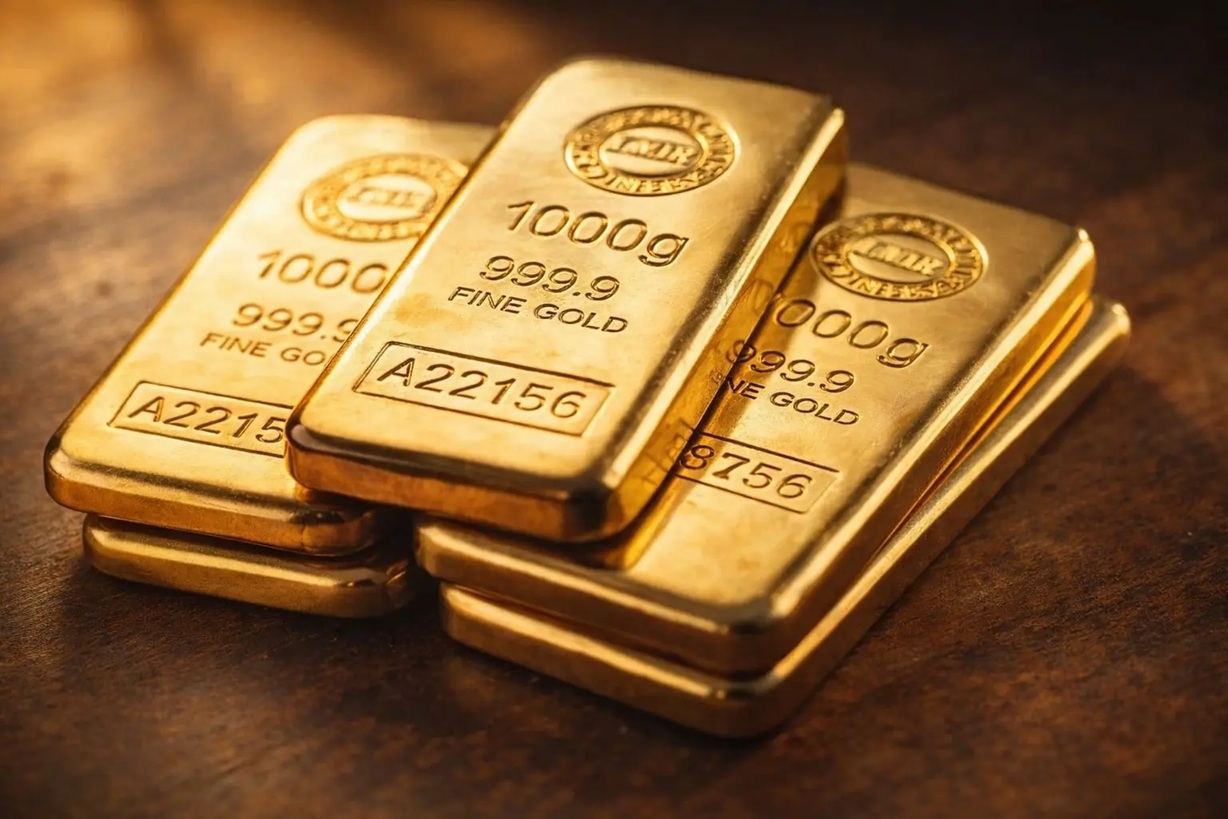
For centuries, gold has been the unchallenged emblem of enduring wealth. Its story was simple: a tangible refuge, a "crisis commodity" locked away in vaults and bank deposit boxes, waiting for a rainy day. It was an asset of fear and last resort. Yet, in today’s complex financial ecosystem—defined by digital assets, algorithmic trading, and geopolitical fragmentation—gold is undergoing a profound metamorphosis. Its role is no longer confined to the shadows of a vault; it is evolving into a dynamic, strategic instrument in the modern wealth creation playbook. To understand this shift, we must move beyond the old narratives and examine the four surprising truths now reshaping gold’s place in your portfolio.
The traditional view holds gold as an inert asset—bought, stored, and forgotten. The modern reality is far more fluid. The rise of secure, exchange-traded vehicles like Gold ETFs (Exchange-Traded Funds) has radically transformed gold’s liquidity profile. An investor can now buy or sell exposure to physical gold bullion with a single click during market hours, with the same ease as trading a stock.
This creates a powerful new utility. In a portfolio crisis where correlated assets like stocks and bonds may fall simultaneously, a highly liquid gold position can be strategically sold to raise capital. This "liquidity reservoir" can be used to cover margin calls, meet unexpected obligations, or—most crucially—to purchase other undervalued assets at the point of maximum fear. Thus, gold transitions from a mere store of value to an active, tactical tool for capital reallocation, providing not just safety, but opportunistic optionality during market dislocations.
Conventional asset allocation pits gold against equities. However, the more revealing duel is between gold and sovereign bonds, particularly those of developed nations like the U.S. Treasuries. Both are considered "safe havens," but their foundations differ radically. Bonds are a promise to repay in a future fiat currency, a promise backed by government credit. Gold is a promise of nothing but its own physical integrity.
In an era of soaring national debts and active central bank monetization of those debts (quantitative easing), the "credit" behind sovereign promises is being diluted. Real yields (adjusted for inflation) have spent years in negative territory, meaning bondholders are effectively paying governments for the privilege of lending to them. Gold, which carries no counterparty risk and has a 5,000-year track record of preserving purchasing power against currency debasement, is increasingly winning this trust war. It is becoming the preferred "hard asset" hedge not against market volatility per se, but against fiscal and monetary policy risk—the very policies meant to ensure stability.
Globalization's retreat and the move toward multipolar world order is introducing a new, potent driver for gold: geopolitical hedging. As nations and trading blocs impose financial sanctions, freeze foreign reserves, and weaponize access to the dollar-based payment system (SWIFT), the vulnerabilities of purely financial assets become stark.
Gold’s ultimate utility here is its neutrality. It is not an IOU from any particular nation. Central banks in Russia, China, Turkey, and India—nations keen to diversify away from dollar hegemony—have been consistent, aggressive net buyers of physical gold for their reserves. Individual investors are taking a cue from this "smart money." Allocating a portion of a portfolio to physical gold held in secure, non-bank, politically neutral jurisdictions acts as a form of financial insulation. It is an asset that theoretically remains accessible and valuable even if one's home currency or domestic financial system comes under extreme stress due to geopolitical conflict. It decouples a slice of one's wealth from any single nation-state's fortunes.
Perhaps the most futuristic shift is occurring at the intersection of gold and blockchain technology. Platforms now allow for the tokenization of physical gold bars, where each digital token represents verifiable, auditable ownership of a specific gram or ounce stored in a high-security vault. This merges gold's ancient value with 21st-century digital finance.
The implications are vast:
Micro-Ownership: It democratizes access, allowing investors to own fractions of a gram, making gold savings plans viable for anyone.
Programmable Finance: "Digital gold" can be used as collateral in decentralized finance (DeFi) protocols to borrow stablecoins, earn yield, or facilitate smart contracts—activities impossible with physical bullion.
Unprecedented Verification: Blockchain provides an immutable, transparent audit trail, solving age-old issues of purity verification and ownership history.
This doesn't replace physical gold but creates a parallel, high-efficiency layer for its utility. It transforms gold from a purely physical commodity into a liquid, programmable financial primitive for the digital age.
The image of gold as a static, fear-based asset gathering dust in a vault is obsolete. The four truths reveal its modern incarnation: a strategic, multi-faceted financial tool. It is a highly liquid source of crisis capital, a superior alternative to eroding sovereign debt, a geopolitical risk mitigator, and an asset poised for integration into the digital economy.
For the contemporary investor, this demands a recalibration of thought. Allocating to gold should no longer be a binary, emotional decision made amid headlines of crisis. Instead, it should be a deliberate, strategic allocation based on its unique properties in a diversified portfolio. It serves as a non-correlated stabilizer, a hedge against policy failure, and a form of "financial disaster insurance" with a tangible, timeless claim.
The ultimate lesson is that gold hasn't changed; our understanding of the risks around it has deepened. In a world of digital abstraction, financial engineering, and geopolitical uncertainty, gold’s physicality, neutrality, and historical permanence are not its weaknesses, but its most surprising and powerful strengths. The modern vault is not just a secure room—it is a holistic strategy, and within it, gold has claimed a dynamic and indispensable new role.


