English
 Arabic
 French
 Spanish
 Portuguese
 Deutsch
 Turkish
 Dutch
Dutch
 Italiano
 Russian
 Romaian
 Portuguese (Brazil)
 Greek
Greek
How to Register an E-commerce Company in India
Uncategorized |
2026-04-06 11:43:31
 Social Networth OS
 Creator Commerce
 Launch Startup
 Global News
 Creator Award
 Talkfever App
See All
Talkfever App
See All

Upgrade to Pro
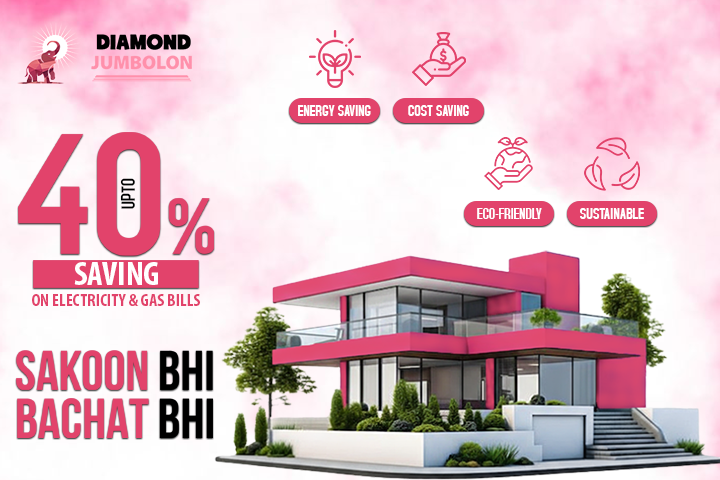
Rising Electricity Bills have become a major concern for homeowners and businesses, particularly during the hot summer months when air conditioners operate for long hours. While switching off appliances and using energy-efficient equipment can help, one of the most effective long-term solutions is reducing the amount of heat entering a building. Proper thermal insulation helps control indoor temperatures, improves cooling efficiency, and reduces unnecessary energy consumption, making it an important part of an energy-efficient home or commercial building.
During hot weather, roofs and exterior walls absorb solar heat throughout the day. This heat gradually transfers into the interior of the building, increasing room temperatures.
When indoor spaces become hotter, air conditioners must run longer and work harder to maintain the desired temperature. The greater the heat gain, the more electricity the cooling system is likely to consume.
This is why reducing heat transfer through the building envelope is an important part of controlling energy consumption. Instead of relying entirely on air conditioning, a properly insulated building creates a thermal barrier between extreme outdoor temperatures and indoor spaces.
Thermal insulation refers to materials designed to slow the movement of heat from one area to another. In buildings, insulation is commonly installed in roofs, walls, ceilings, floors, beams, and other areas where unwanted heat transfer may occur.
During summer, insulation helps prevent excessive outdoor heat from entering indoor spaces. During winter, it helps reduce the loss of indoor warmth.
By maintaining a more stable internal temperature, insulation can reduce the workload placed on cooling and heating systems.
Common insulation materials include rigid insulation boards, insulation sheets, foam-based systems, and other specialized thermal barriers designed for residential, commercial, and industrial applications.
The roof is one of the most important areas of a building when it comes to heat gain. Because it receives direct sunlight for several hours each day, an uninsulated roof can absorb and transfer significant heat into the rooms below.
Roof insulation creates a protective thermal layer that slows this heat transfer.
When less heat enters through the roof, indoor temperatures can remain more comfortable for longer periods. As a result, air conditioners may not need to operate as frequently or for extended periods.
This can contribute to:
For buildings in hot climates, roof insulation can therefore be an important component of an effective energy-saving strategy.
XPS insulation, or extruded polystyrene insulation, is widely used in modern construction because it combines thermal resistance, moisture resistance, and structural strength.
XPS insulation boards have a closed-cell structure that helps reduce heat transfer. They can be used in roofs, walls, floors, foundations, and various commercial or industrial applications.
One advantage of rigid insulation boards is that they can provide continuous insulation across larger surfaces when correctly installed. This helps reduce areas where unwanted heat may enter or leave the building.
For property owners looking to improve thermal performance, selecting an insulation material according to the building's design, climate, application, and required thermal resistance is essential.
Roofs are not the only source of heat gain. Exterior walls can also absorb heat throughout the day and transfer it indoors.
Buildings with large exposed walls, particularly those facing direct sunlight, may experience significant increases in indoor temperature.
Wall insulation can help reduce this transfer by creating an additional thermal barrier between outdoor conditions and interior spaces.
Combining roof and wall insulation can provide more comprehensive thermal protection than focusing on a single area alone.
The objective is to create a building envelope that reduces unnecessary heat exchange and enables air-conditioning systems to maintain comfortable temperatures more efficiently.
Air conditioners consume more power when they are required to continuously remove heat entering a room.
Even an energy-efficient AC unit can operate for extended periods if the building itself allows excessive heat penetration.
Thermal insulation addresses the problem at the structural level by reducing the amount of external heat that reaches indoor areas. Once the cooling system achieves the desired room temperature, a well-insulated space can retain that temperature for longer.
This can reduce frequent cooling cycles and unnecessary pressure on air-conditioning equipment.
Improved building insulation and efficient appliances can therefore work together as part of a broader energy-management strategy.
Thermal insulation is not limited to residential houses. Offices, factories, warehouses, commercial buildings, schools, hospitals, and other facilities can also benefit from improved insulation.
Large commercial buildings often use substantial amounts of electricity for cooling because they have larger roofs, walls, and interior spaces.
Reducing heat transfer can help these facilities improve temperature control while managing their cooling requirements more effectively.
For residential properties, the benefits include increased comfort, reduced dependence on air conditioning, and improved energy performance.
In both situations, insulation should be viewed as a long-term building improvement rather than a temporary method of controlling heat.
Insulation provides better results when combined with other sensible energy-saving practices.
Property owners can improve energy efficiency by maintaining air-conditioning systems, sealing unwanted air gaps, using energy-efficient lighting, limiting unnecessary appliance use, and reducing direct sunlight through windows where possible.
Proper ventilation and thoughtful building design can also help reduce indoor heat buildup.
However, these measures cannot completely compensate for roofs and walls that continuously transfer external heat indoors. This is why thermal insulation remains an important structural solution for long-term energy management.
Different buildings require different insulation systems. Factors such as roof construction, wall type, climate, moisture exposure, available space, insulation thickness, and desired thermal performance should all be considered.
High-quality insulation should also be professionally installed. Gaps, poorly fitted boards, incorrect joints, or unsuitable materials can reduce overall thermal performance.
Before choosing an insulation solution, homeowners and businesses should identify where the greatest heat gain occurs and select materials appropriate for those specific areas.
Reducing energy consumption requires more than simply using the air conditioner less often. A building should be designed or upgraded to prevent unnecessary heat from entering in the first place. Roof insulation, wall insulation, XPS insulation boards, and other thermal insulation solutions can help maintain stable indoor temperatures and reduce the demand placed on cooling systems. For homeowners and businesses dealing with increasing energy costs, improving building insulation can be a practical long-term step toward better comfort, more efficient electricity use, and greater control over the monthly Bijli Bill.