English
 Arabic
 French
 Spanish
 Portuguese
 Deutsch
 Turkish
 Dutch
Dutch
 Italiano
 Russian
 Romaian
 Portuguese (Brazil)
 Greek
Greek
Strategic Developments Influencing the Multiomics for Precision Medicine Market
Other |
2026-08-25 11:09:43
 Social Networth OS
 Creator Commerce
 Launch Startup
 Global News
 Creator Award
 Talkfever App
δες τα όλα
Talkfever App
δες τα όλα

Upgrade to Pro
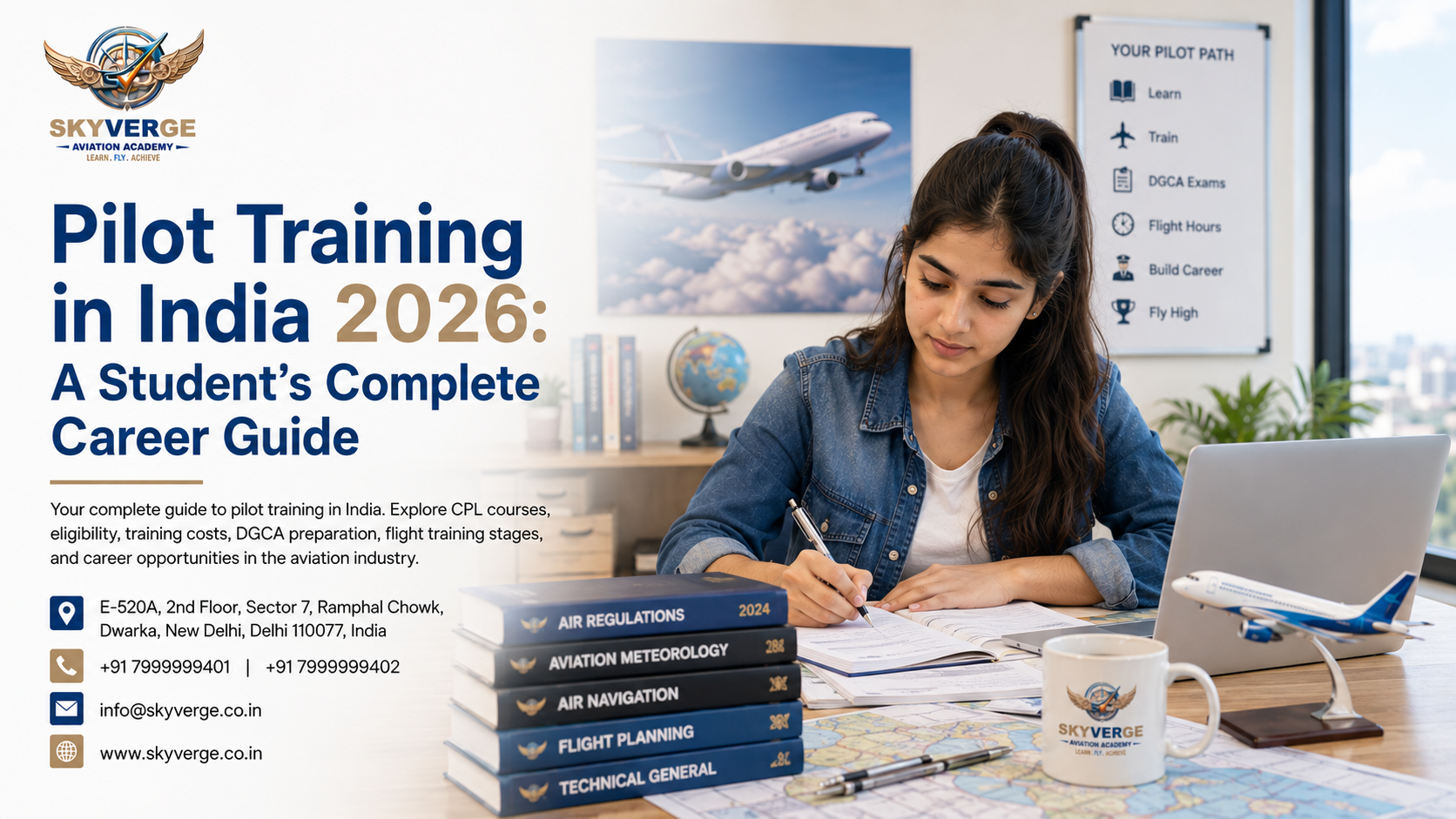
For many students, becoming a pilot is more than a career choice—it is a long-term goal that combines technical knowledge, discipline, responsibility, and a passion for aviation. However, starting a pilot career requires much more than simply learning how to fly an aircraft.
Students planning their aviation journey in 2026 should understand the eligibility requirements, DGCA examinations, ground training, flight training, licensing process, and financial planning involved before choosing an institute.
With the right preparation and realistic expectations, students can approach their aviation career with greater confidence and clarity.
The first step is understanding the complete pilot-training pathway. Students should not immediately focus on flight hours or aircraft training without first checking whether they meet the applicable educational and medical requirements.
The professional pilot pathway broadly involves:
The exact requirements can change, so students should always verify the latest information from DGCA and the relevant approved training organisation before making decisions.
Many students initially think that pilot training begins inside an aircraft. In reality, aviation theory forms an important foundation for practical flying.
A structured DGCA ground school can help students develop knowledge in subjects such as air regulations, navigation, meteorology, aircraft technical subjects, and other areas relevant to their examinations and professional training.
Ground studies can also help students understand why pilots make particular decisions during flight.
For example, understanding weather is not simply about passing an examination. A professional pilot needs to interpret weather information and understand how conditions can affect aircraft operations.
Similarly, navigation knowledge helps students understand routes, headings, charts, calculations, and other aspects of flight planning.
A Commercial Pilot Licence is one of the major milestones for students who want to pursue professional flying.
A CPL course in India combines theoretical knowledge with practical flight training and regulatory requirements. Students need to approach the course with consistency because both academics and flying require regular preparation.
Before enrolling, students should understand:
Having this information beforehand can prevent confusion later in the training process.
The financial aspect of pilot training is one of the most important considerations for students and parents.
The Pilot training cost in India is not identical for every student. Expenses can vary depending on the training organisation, aircraft used, flying requirements, location, accommodation, examinations, medical assessments, study materials, and additional training that may be required.
Students should therefore avoid comparing institutes only by their headline prices.
A better approach is to request a complete cost breakdown and ask whether the quoted amount includes all major components.
Before enrolling, students can ask:
This type of financial planning can make the training journey more predictable.
Students frequently search for commercial pilot course fees while comparing aviation institutes. However, the cheapest advertised course may not necessarily be the most economical option in the long term.
For example, an apparently lower fee may exclude certain components that students later have to pay separately.
Instead of asking only, "How much does the course cost?", students should ask, "What exactly am I receiving for this amount?"
Transparent communication about fees is an important factor when evaluating a training provider.
Families should also maintain an emergency financial buffer because training timelines and individual flying requirements can vary.
Choosing an appropriate Pilot training institute in Delhi or another city requires research.
Students should examine the institute's academic approach, faculty, student support, training arrangements, transparency, and overall reputation.
Some useful questions include:
Students should be cautious about organisations that make unrealistic guarantees about guaranteed airline jobs, fixed completion times, or guaranteed outcomes.
No institute can remove the student's responsibility to study, complete training, meet regulatory requirements, and perform successfully in examinations and assessments.
Searching for the Best pilot training institute in India is common, but students should define what "best" means for their own circumstances.
A strong aviation education provider should ideally offer:
Students should have a clear academic pathway rather than studying without direction.
Aviation is a specialised field, so students benefit from teachers and mentors who understand aviation subjects and the professional environment.
Students and parents should receive clear information about courses, fees, training arrangements, and applicable requirements.
Students should understand that obtaining a licence is an important milestone but not the end of their professional development.
Regular academic guidance can help students identify weaknesses and improve their preparation.
Technical knowledge is essential, but successful pilots also need the right professional attitude.
Students entering aviation should develop habits such as punctuality, preparation, attention to detail, communication, responsibility, and continuous learning.
Aviation also requires students to accept feedback.
During training, an instructor may identify areas that need improvement. Rather than becoming discouraged, students should treat feedback as part of their development.
The goal is not simply to complete training as quickly as possible. The goal is to become a competent and responsible aviation professional.
Aviation can be an excellent career for students who genuinely enjoy technical learning, responsibility, structured environments, and aviation operations.
However, students should not choose the profession simply because they like travelling or aircraft.
Professional flying involves:
Students should speak with experienced aviation educators and understand the career realistically before committing significant time and money.
Students can begin planning their aviation pathway after school if they meet the applicable educational and other eligibility requirements. However, they should first understand the current DGCA requirements and complete the necessary assessments.
Yes, theoretical knowledge is an important part of professional pilot preparation. Proper ground training can help students understand aviation concepts and prepare systematically for the applicable examinations.
Flight training involves aircraft operation, instructors, fuel, maintenance, facilities, regulatory requirements, and other expenses. Consequently, the overall Pilot training cost in India can be substantial and varies between training arrangements.
There is no single timeline applicable to every student. Training progress can depend on the student's academic preparation, flying schedule, weather, aircraft availability, individual performance, examinations, and regulatory requirements.
Not necessarily. Cost is important, but students should also compare training quality, faculty, academic support, transparency, facilities, student guidance, and the complete training structure before making a decision.
The aviation industry continues to attract students who want to build careers in commercial flying. But a successful pilot career begins with informed preparation.
Students should research the licensing pathway, understand current DGCA requirements, assess their medical eligibility, prepare academically, compare training options, and create a realistic financial plan.
SkyVerge Aviation Academy provides aviation education and student guidance from its location in Dwarka, New Delhi. The academy focuses on helping aspiring aviation students understand their educational pathway and prepare for the academic aspects of their pilot journey.
Students can visit the academy to discuss their aviation plans and understand the training pathway according to their individual goals.
Address: E-520A, 2nd Floor, Sector 7, Ramphal Chowk, Dwarka, New Delhi, Delhi 110077, India
Phone: +91 7999999401 | +91 7999999402
Email: info@skyverge.co.in
Whether you are beginning your research or already preparing for aviation examinations, the most important step is to make decisions based on accurate information rather than assumptions. A well-planned beginning can help you approach pilot training with greater confidence and a clearer understanding of what lies ahead.