English
 Arabic
 French
 Spanish
 Portuguese
 Deutsch
 Turkish
 Dutch
Dutch
 Italiano
 Russian
 Romaian
 Portuguese (Brazil)
 Greek
Greek
Singing Lessons from Home for Flexible Vocal Learning | The Pallikoodam
Other |
2026-08-19 16:23:02
 Social Networth OS
 Creator Commerce
 Launch Startup
 Global News
 Creator Award
 Talkfever App
Смотреть все
Talkfever App
Смотреть все

Обновить до Про
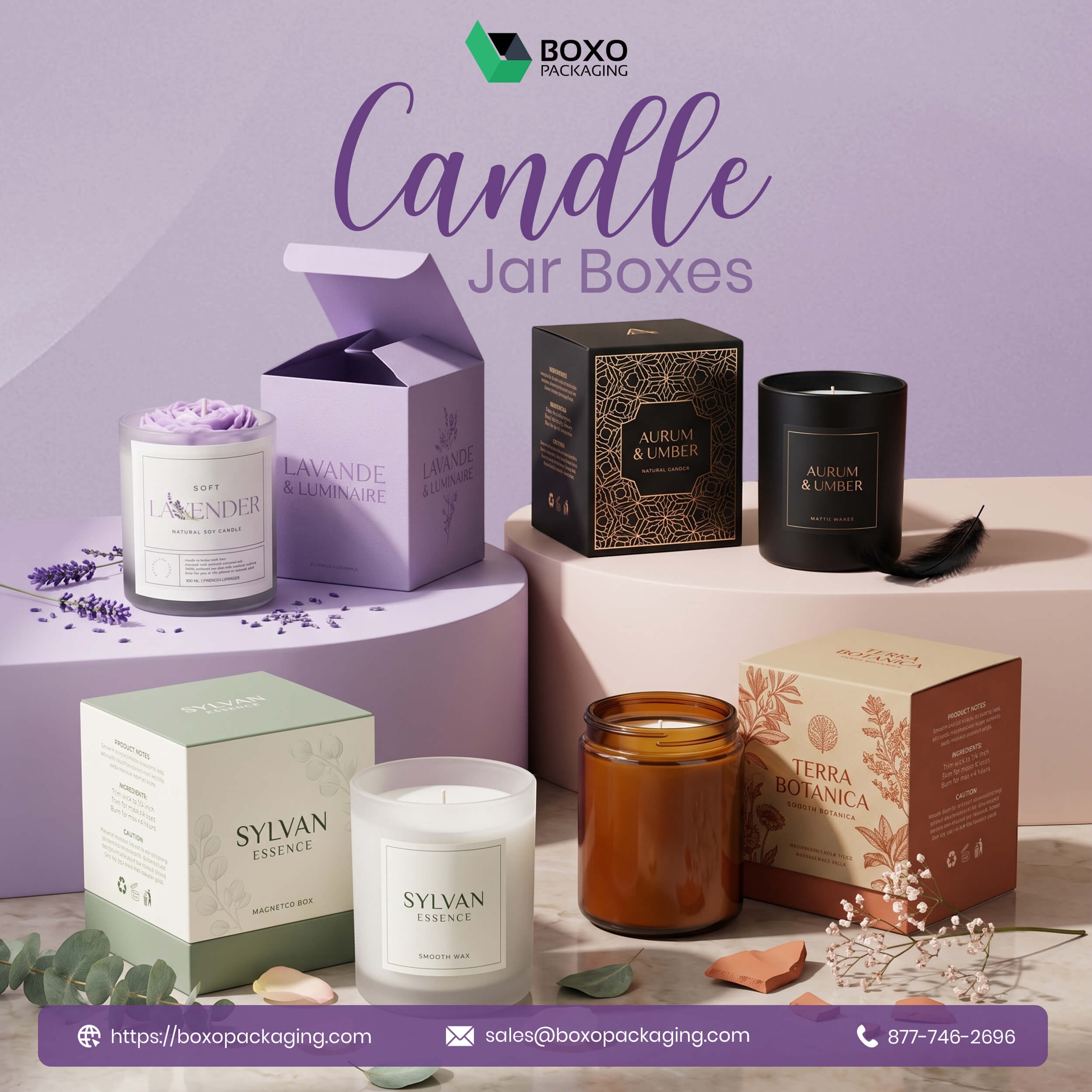
Candle jar packaging is designed to protect glass containers from movement, impact, pressure, and handling during transportation. The right packaging keeps the jar properly positioned, reduces contact with other surfaces, protects lids and labels, and helps the candle arrive in a condition that matches the brand's presentation standards.
Glass candle jars require more attention than many lightweight candle containers because glass can crack or break when exposed to impact or excessive pressure. A successful packaging design therefore needs to balance structural strength, product fit, internal support, material selection, and shipping conditions.
For candle brands, packaging should be designed around the actual jar rather than using a standard box size. Jar diameter, height, weight, lid style, glass thickness, wax weight, and sales channel all influence the packaging requirements.
Candle jars are commonly made from glass, which provides a premium appearance but requires appropriate protection during handling and transportation. Even a strong outer box may not provide enough protection if the jar is allowed to move freely inside.
The packaging system should control movement and create enough separation between the glass container and the outside walls of the box.
A candle jar can experience impacts when packages are moved, stacked, dropped, or placed into delivery vehicles. The packaging should reduce the amount of direct force transferred to the glass.
This is why internal support can be just as important as the strength of the outer box.
A candle jar contains both the glass container and the wax, which can make the completed product considerably heavier than an empty jar. Heavier products place greater demands on the bottom of the box and its structural seams.
The box material and construction should therefore be selected according to the finished product weight.
The first step in designing candle jar packaging is measuring the complete product. Small dimensional differences can affect the fit and performance of a custom box.
Measure the jar's height, diameter, lid dimensions, overall weight, and any parts that extend beyond the main container.
The lid should be included in the packaging measurements. Some candle lids extend beyond the diameter of the jar, while others have decorative or raised features.
The internal box dimensions should account for the complete packaged candle rather than only the glass container.
Manufacturing tolerances should be considered when creating the box. A package that fits too tightly can make filling difficult and may place unwanted pressure on the jar.
A package that is excessively large can allow the candle to move during transportation.
The material provides the foundation for the package's structural performance. Common options include kraft paperboard, coated paperboard, rigid board, and corrugated board.
The right choice depends on candle weight, box dimensions, shipping conditions, retail requirements, and desired presentation.
Kraft paperboard is popular among candle brands because it provides a natural appearance and works well with minimalist and artisan branding.
It can be suitable for many candle cartons when the correct board specification is selected. However, kraft appearance should not be confused with structural strength. GSM, thickness, construction, and box geometry all influence performance.
Coated paperboard provides a smooth surface for detailed graphics and strong brand colors. It can be useful for candle brands that want product photography, illustrations, patterns, or premium printed designs.
If the packaging will include coatings or specialty finishes, brands should consider how these components affect the overall material and end of life characteristics.
Corrugated board is particularly useful when additional strength is required. Its fluted construction provides rigidity and can offer better protection for shipping applications.
Different flute profiles have different thickness and performance characteristics. The appropriate specification depends on the size and weight of the candle and the expected shipping conditions.
A properly designed insert can reduce movement inside the box and keep the candle centered. This is particularly important for glass jars because uncontrolled movement can increase the likelihood of impact.
The insert should hold the candle securely without placing excessive pressure on the glass.
Paperboard inserts can create a fitted compartment around the jar. They can be designed to hold the candle in a fixed position while remaining consistent with fiber based packaging strategies.
The insert should be tested with the actual jar to confirm that it provides enough support.
Molded fiber can be used for shaped internal protection in certain applications. It can provide a formed cavity around the product and may be considered by brands looking to reduce reliance on some plastic inserts.
The suitability of molded fiber depends on the product dimensions, required cushioning, production volume, and packaging design.
Every additional packaging component increases material use, cost, assembly requirements, and storage needs. If the candle already fits securely inside a properly designed box, additional protection may not be necessary.
The goal is to use the simplest internal structure that provides the required protection.
A custom box should closely match the dimensions of the candle while allowing practical clearance. Proper sizing helps limit movement and can also reduce unnecessary empty space.
The box should not be so tight that the jar becomes difficult to insert or remove.
Excessive horizontal movement can allow the jar to strike the box walls during transportation. Internal compartments or fitted inserts can help control this movement.
The amount of clearance should be established through physical testing rather than relying only on theoretical measurements.
The bottom of the box carries the weight of the candle. Weak bottom construction can lead to deformation or failure during stacking and transportation.
The box structure, board specification, locking mechanism, and adhesive areas should be evaluated together.
The lid is another part of the product that can experience damage during shipping. A loose lid can move independently inside the package, while a fragile or decorative lid may require additional clearance.
The packaging should hold the complete candle securely without damaging the lid surface.
Premium candle lids may have painted, metallic, textured, or printed surfaces. Contact with the inner packaging can create scratches or surface wear.
Appropriate internal spacing and compatible materials can help reduce this risk.
Candle jar packaging needs to withstand more than simple movement from one location to another. Packages can experience vibration, stacking pressure, handling, and changes in transportation conditions.
The packaging should therefore be tested under realistic shipping circumstances.
Direct to customer shipping can involve several handling stages. A candle box may be placed inside a corrugated shipping carton along with other protective materials.
The retail box should not necessarily be expected to provide all transportation protection by itself.
An outer corrugated carton can provide an additional protective layer around the presentation box. This allows the inner package to focus on product presentation while the outer carton handles much of the shipping environment.
For fragile glass candles, the complete system should be tested together.
Large empty spaces inside a candle box can allow the jar to move during transportation. Movement increases the chance that the glass will contact the walls or other objects.
Right sizing can therefore contribute to both product protection and material efficiency.
A box should not squeeze the jar. Excessive pressure can create problems during packing and may place unnecessary force on the glass.
The ideal package provides controlled clearance and secure positioning.
Candle jar packaging is often part of the product's visual identity. The box can display the brand name, candle collection, scent, product information, care instructions, and other relevant details.
Branding should support the product without compromising structural performance.
The candle name and scent should be easy to identify. Clear typography and appropriate contrast can make the package easier to understand on retail shelves and ecommerce photographs.
The packaging should visually reflect the candle itself. Natural kraft may work well for an artisan collection, while coated paperboard or rigid packaging may suit a more polished product line.
The design should remain consistent across different scents and sizes where possible.
Sustainability should be evaluated across the complete packaging system. Material selection, box size, recycled content, inserts, coatings, printing, transportation, and end of life can all affect the packaging's environmental profile.
Kraft material alone does not automatically make a package environmentally preferable.
Using appropriately sized packaging can reduce unnecessary material and empty space. It can also help reduce product movement when the internal structure is properly designed.
Right sizing should never come at the expense of necessary protection.
The Forest Stewardship Council, or FSC, provides certification systems related to responsible forest management and chain of custody. Brands seeking certified materials should confirm the applicable documentation through their packaging supplier.
Certification should be verified rather than assumed based on the appearance of the paper.
Physical sampling is one of the most important stages of candle packaging development. A digital design may look correct while still having problems with fit, closure, insert positioning, or structural performance.
Testing should use the actual candle whenever possible.
Place the complete candle inside the sample box. Check the jar, lid, label, and insert for proper clearance and positioning.
The candle should remain secure without being compressed.
The customer should be able to open the package without struggling. The jar should also be easy to remove without excessive force.
A secure shipping package should still provide a practical customer experience.
Gently move the completed package and observe whether the candle shifts. Excessive movement can indicate that the internal dimensions or insert design need adjustment.
If the product will be shipped, test the complete packaging system with the outer shipping carton. Inspect the jar, box corners, lid, label, and internal components after testing.
Candle jar packaging costs depend on several variables. These include material, GSM, dimensions, box structure, printing, finishing, inserts, tooling, order quantity, assembly, and shipping.
A basic printed folding carton can have a very different cost structure from a rigid box with a fitted insert and specialty finishing.
Larger quantities can reduce the average unit cost because setup and production expenses can be distributed across more boxes. However, bulk orders also require additional storage and inventory planning.
Businesses should choose quantities according to realistic sales forecasts.
The box price should not be considered in isolation. Inserts, freight, assembly, storage, secondary shipping cartons, and protective materials can all contribute to the final packaging cost.
Comparing complete packaging specifications gives businesses a clearer understanding of the actual investment.
Many packaging problems can be prevented through accurate measurements and physical testing. Common mistakes include:
The best candle jar packaging balances glass protection, product presentation, material efficiency, and shipping requirements. A package should hold the jar securely while remaining practical for employees and customers to handle.
Boxo Packaging can help businesses evaluate custom candle box dimensions, materials, structures, inserts, printing, and sampling before moving into larger production quantities.
Measure the candle jar, lid, label, total weight, and any additional components. These details provide the foundation for the packaging design.
Consider how the candle will be stored, packed, stacked, transported, and delivered. The package should be evaluated as a complete system rather than as an isolated box.
Internal inserts and stronger materials should be used where they provide measurable protection. Avoid adding components that increase cost and material use without improving performance.
Before placing a large order, test the actual candle inside the finished packaging. Check fit, movement, closure, presentation, and shipping performance.
Candle jar packaging works best when protection and presentation are designed together. With accurate measurements, suitable materials, secure internal support, appropriate box construction, and realistic shipping tests, candle brands can reduce unnecessary movement and create packaging that helps their glass products arrive safely and professionally.