English
 Arabic
 French
 Spanish
 Portuguese
 Deutsch
 Turkish
 Dutch
Dutch
 Italiano
 Russian
 Romaian
 Portuguese (Brazil)
 Greek
Greek
Blood Screening Market Growth Industry Demand, Fastest Growth, Opportunities Analysis
Health |
2025-04-25 10:58:54
 Social Networth OS
 Creator Commerce
 Launch Startup
 Global News
 Creator Award
 Talkfever App
Ver todos
Talkfever App
Ver todos

Atualizar para Plus
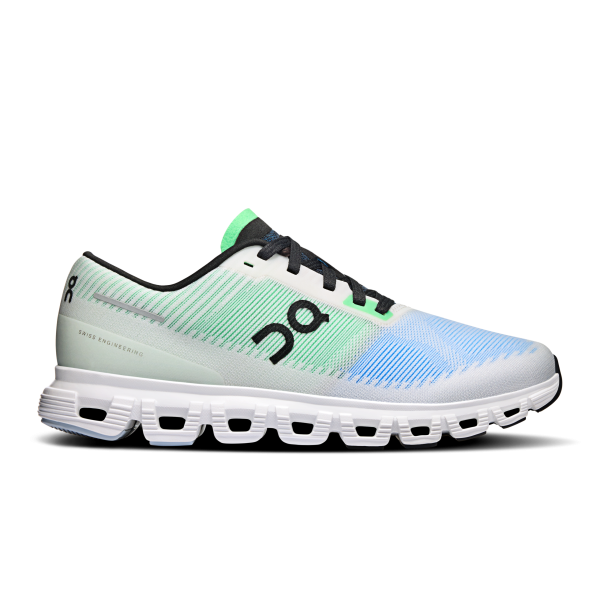
Whenever a brand releases a new numbered version of an already successful shoe, there is always a quiet tension running through the design process. Change too little and the release feels pointless, a marketing exercise rather than a genuine improvement. Change too much and the brand risks alienating loyal wearers who fell in love with the exact feel of the previous version. The On Cloud 6 arrived carrying the weight of this tension directly on its shoulders, following a predecessor that had already become something of a household standard within the brand's lineup. What the design team ultimately delivered was neither a cautious, invisible tweak nor a jarring reinvention, but a carefully calculated set of improvements aimed at specific weaknesses that dedicated wearers had spent years quietly living with.
By the time development began on the On Cloud 6, the brand had access to an enormous amount of real-world feedback gathered from years of the previous model being worn across countless different situations, climates, and body types. Rather than treating this feedback as background noise, the design team used it as the actual blueprint for what needed attention. Recurring complaints about slight heel slippage during faster movements pointed toward a need for a more secure heel counter. Reports of the toe box feeling slightly cramped for wearers with wider forefeet suggested room for adjustment in the front portion of the upper. Observations about the sole losing some of its responsive bounce after several months of regular use indicated a need for revisiting the compound density used in the pod structure itself. None of these issues were dramatic flaws that made the previous model unusable, but collectively they represented the kind of small, persistent frustrations that separate a merely good shoe from a truly exceptional one, and addressing them became the central mission driving the On Cloud 6 project.
Heel slippage might sound like a minor inconvenience, but for runners and walkers alike, even slight movement inside the heel cup during faster strides can lead to blisters, reduced efficiency, and a nagging sense of instability that undermines confidence in the shoe. The On Cloud 6 addressed this directly through a redesigned heel counter that wraps more securely around the natural curve of the foot, combined with a slightly deeper heel cup that keeps the foot anchored in place even during quick directional changes or faster-paced running. This adjustment required careful balancing, since a heel that locks too aggressively can create pressure points and discomfort of its own, particularly for wearers with narrower heels. The final design settled on a middle ground that provides noticeably improved security compared to the previous generation while still accommodating a reasonably wide range of natural heel shapes, a detail that testers specifically praised during extended wear trials involving repeated sprint intervals and quick stops.
Foot shape varies enormously from person to person, and one of the more common criticisms following the previous model's release involved wearers with naturally wider forefeet feeling restricted or pinched after extended periods of wear, particularly during warmer weather when feet tend to swell slightly throughout the day. The Waking On A Cloud Shoes responded with a modestly widened toe box, giving toes noticeably more room to spread naturally during the push-off phase of walking and running without requiring the wearer to size up and sacrifice overall fit elsewhere in the shoe. This adjustment was implemented carefully to avoid making the shoe feel sloppy or unstructured at the front, preserving the secure, wrapped feeling around the midfoot while specifically opening up space where it was genuinely needed. Wearers transitioning from the previous model to the On Cloud 6 have frequently mentioned this toe box adjustment as one of the most immediately noticeable differences, particularly during longer runs or extended periods of all-day wear where foot swelling becomes a more significant factor.
Perhaps the most technically significant change involved the actual rubber compound used within the pod structure itself. Long-term wearers of the previous model had noted that while the shoe felt wonderfully responsive during its first several weeks of use, that distinctive springy bounce gradually diminished after extended mileage, settling into a noticeably flatter, less lively feel compared to when the shoe was brand new. Engineers working on the On Cloud 6 identified this gradual compression fatigue as a material science problem rather than a structural one, leading to research into a modified rubber compound designed specifically to resist this kind of long-term compression set. The resulting formula maintains its responsive characteristics for a noticeably longer portion of the shoe's usable lifespan, meaning wearers experience a more consistent feel between month one and month six of regular use rather than a gradual, disappointing decline in cushioning quality. This particular improvement, while less visually obvious than the heel or toe box adjustments, may ultimately prove to be the most meaningful change for long-term satisfaction among dedicated daily wearers.
The knit upper received modest but meaningful updates as well, incorporating a marginally denser weave in specific zones prone to abrasion or wear, particularly around the areas where shoelaces cross over the top of the foot and along the outer edges near the smallest toe. This targeted reinforcement addressed premature wear patterns that had occasionally appeared on the previous model after months of regular use, without sacrificing the overall breathability that had made the original design so popular for warm weather wear. Additionally, subtle improvements to the material's resistance to light moisture meant the On Cloud 6 handles brief exposure to damp conditions slightly better than its predecessor, though it remains, like previous models, unsuitable for sustained heavy rain or standing water without additional protective measures.
Adding structural improvements to the heel counter and reinforcing specific wear-prone areas of the upper inevitably introduces a small amount of additional weight compared to a more minimalist design. The On Cloud 6 does weigh marginally more than its immediate predecessor, a trade-off the design team accepted deliberately in exchange for the durability and stability improvements described above. For the overwhelming majority of everyday wearers, this weight difference proves negligible in actual practice, rarely noticeable outside of side-by-side comparisons or detailed technical measurements. Competitive racers focused on shaving every possible gram from their footwear for race-day performance might notice and prefer lighter, more minimalist models elsewhere in the brand's lineup, but for daily training, everyday wear, and general fitness use, the modest weight increase represents a sensible trade for the meaningful durability and comfort gains it delivers.
Rather than replacing the role that its predecessor had carved out within the brand's overall lineup, the On Cloud 6 essentially inherited and refined that same position as the dependable, versatile, everyday standard. It continues to serve the same broad audience of casual runners, all-day walkers, and general fitness enthusiasts who value consistent comfort over narrow specialization. What changes is not the fundamental purpose of the shoe but the quality and consistency of the experience it delivers, addressing accumulated small frustrations that had built up across years of real-world feedback from the previous generation. For existing wearers debating whether the upgrade is worthwhile, the honest answer depends largely on which specific issues they experienced with the earlier version. Anyone who struggled with heel slippage, felt restricted in the toe box, or noticed the cushioning losing its lively bounce after extended use will likely find the improvements immediately noticeable and genuinely worthwhile, while those who never encountered these particular frustrations may find the differences more subtle in daily practice, representing a quieter, more evolutionary refinement rather than a dramatic transformation.