English
 Arabic
 French
 Spanish
 Portuguese
 Deutsch
 Turkish
 Dutch
Dutch
 Italiano
 Russian
 Romaian
 Portuguese (Brazil)
 Greek
Greek
Nanofibers Market Size, Share & Trends Analysis with 8.4% CAGR Forecast to 2034
Other |
2026-07-07 12:14:46
 Social Networth OS
 Creator Commerce
 Launch Startup
 Global News
 Creator Award
 Talkfever App
عرض كل النتائج
Talkfever App
عرض كل النتائج

ترقية الحساب
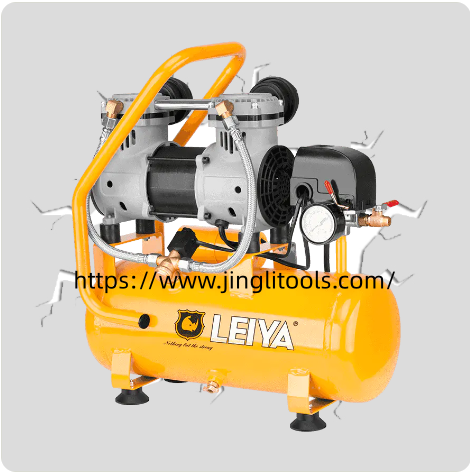
Air Compressor selection should begin with the actual requirements of the workshop rather than a single specification. Buyers should evaluate pressure, output, tank capacity, electrical supply, operating frequency, noise conditions, and installation space before comparing individual models. Different pneumatic tools can place different demands on a supply system, so understanding the complete working environment can help purchasing teams select equipment that fits their daily operations and avoid paying for specifications that may not be necessary.
Define the Intended Application
The intended application provides a practical starting point for equipment selection. Impact tools, spray equipment, cleaning devices, nailers, sanders, and inflation equipment may require different pressure and volume conditions.
Buyers should make a list of the tools that will connect to the system and identify how often each one will be used. It is also important to determine whether several devices may operate at the same time.
A workshop performing occasional maintenance will have different requirements from a production area where pneumatic equipment operates repeatedly throughout the day. Understanding this difference helps buyers establish a realistic purchasing target.
Compare Pressure Requirements
Working pressure is an important specification because every pneumatic application has a suitable operating range. Buyers should check the pressure requirements of their existing tools before selecting a supporting unit.
Maximum pressure should not be considered by itself. The purchasing team should also examine how consistently the equipment can provide the required supply during normal operation.
For demanding applications, insufficient capacity may result in pressure fluctuations during extended work. On the other hand, selecting a configuration far beyond the actual requirement can increase equipment size and operating costs without providing a practical benefit.
Examine Storage Capacity
Tank capacity affects how much compressed gas can be stored for short periods of increased demand. Buyers should therefore consider storage volume together with the expected workload.
A smaller tank may suit intermittent workshop activities, while a larger container can provide additional reserve when several pneumatic devices are used during changing work cycles.
The jinglitools product range includes different tank configurations. Available models include compact options as well as units using 30L, 40L, 60L, and larger storage capacities, allowing buyers to compare different configurations according to their intended applications.
Review Motor Specifications
Motor specifications should be evaluated according to the expected workload. Input power, operating speed, motor construction, and working cycle can all influence how equipment performs during routine use.
Buyers should avoid judging a model solely by its power rating. A workshop should instead consider the relationship between motor capacity, pressure requirements, storage volume, and operating frequency.
For businesses using equipment for several hours each day, the recommended duty cycle deserves particular attention. Following the supplier guidance for operating intervals can also help support appropriate equipment management.
Consider Noise Conditions
Noise can influence the working environment, especially when equipment is installed inside enclosed workshops or near operators.
Buyers should check the stated sound level and consider where the unit will be positioned. Room size, wall surfaces, ventilation, operating hours, and distance from workers can all affect how noticeable the operating sound becomes.
Some configurations are designed around lower-noise operation. For buyers working in service areas, laboratories, indoor workshops, or other noise-sensitive environments, this characteristic may deserve greater attention during product comparison.
Check Electrical Compatibility
Electrical requirements should be confirmed before purchasing. Buyers should review voltage, frequency, input power, plug configuration, and applicable electrical standards.
This step is particularly important for international orders because electrical specifications can differ between markets. Confirming these details before production can reduce installation problems after delivery.
The workshop layout should also be considered. Buyers can review cable routing, socket locations, ventilation space, and the available floor area before deciding where the equipment will be installed.
Evaluate Maintenance Requirements
Maintenance is another important part of the purchasing process. Buyers should ask about filter cleaning, condensate management, inspection intervals, replacement components, and recommended service procedures.
Oil-free compression systems do not require lubricating oil during the compression process, but regular maintenance is still necessary. Filters and other components should be inspected according to the manufacturer's recommendations.
jinglitools provides oil-free configurations designed for workshop applications and offers product information covering maintenance considerations. Buyers can review these details before selecting a model for their specific operating environment.
Check Safety and Operator Convenience
Safety features and handling characteristics should also be included in the evaluation. Buyers can review thermal protection, pressure control, electrical protection, emergency functions, handle design, wheels, and overall dimensions.
The location of controls can affect everyday operation, while wheels and handles may be useful when equipment needs to move between work areas.
For larger purchases, buyers can request product drawings, technical sheets, operating instructions, and sample information. These materials can make it easier to assess whether the configuration fits the actual workshop environment.
Evaluate the Factory Before Bulk Purchasing
A product specification is only one part of a larger purchasing decision. Buyers ordering several units should also examine production capability, inspection procedures, customization support, packaging, spare parts, technical communication, and delivery arrangements.
A manufacturer that provides detailed technical information can make comparison easier. jinglitools offers multiple configurations with different pressure ratings, motor specifications, storage capacities, and operating characteristics, giving buyers several factors to review before placing an order.
Before confirming a larger purchase, buyers can request detailed specifications, sample arrangements, inspection requirements, packaging information, and application recommendations. Clear communication can help both parties confirm the intended configuration before production begins. Buyers who want to review the available equipment range, technical information, and manufacturing services can visit the official jinglitools website directly at https://www.jinglitools.com/