English
 Arabic
 French
 Spanish
 Portuguese
 Deutsch
 Turkish
 Dutch
Dutch
 Italiano
 Russian
 Romaian
 Portuguese (Brazil)
 Greek
Greek
Why Ethical Hackers Are the Cybersecurity Heroes of the Digital Age
Other |
2025-04-29 05:18:48
 Social Networth OS
 Creator Commerce
 Launch Startup
 Global News
 Creator Award
 Talkfever App
Смотреть все
Talkfever App
Смотреть все

Обновить до Про
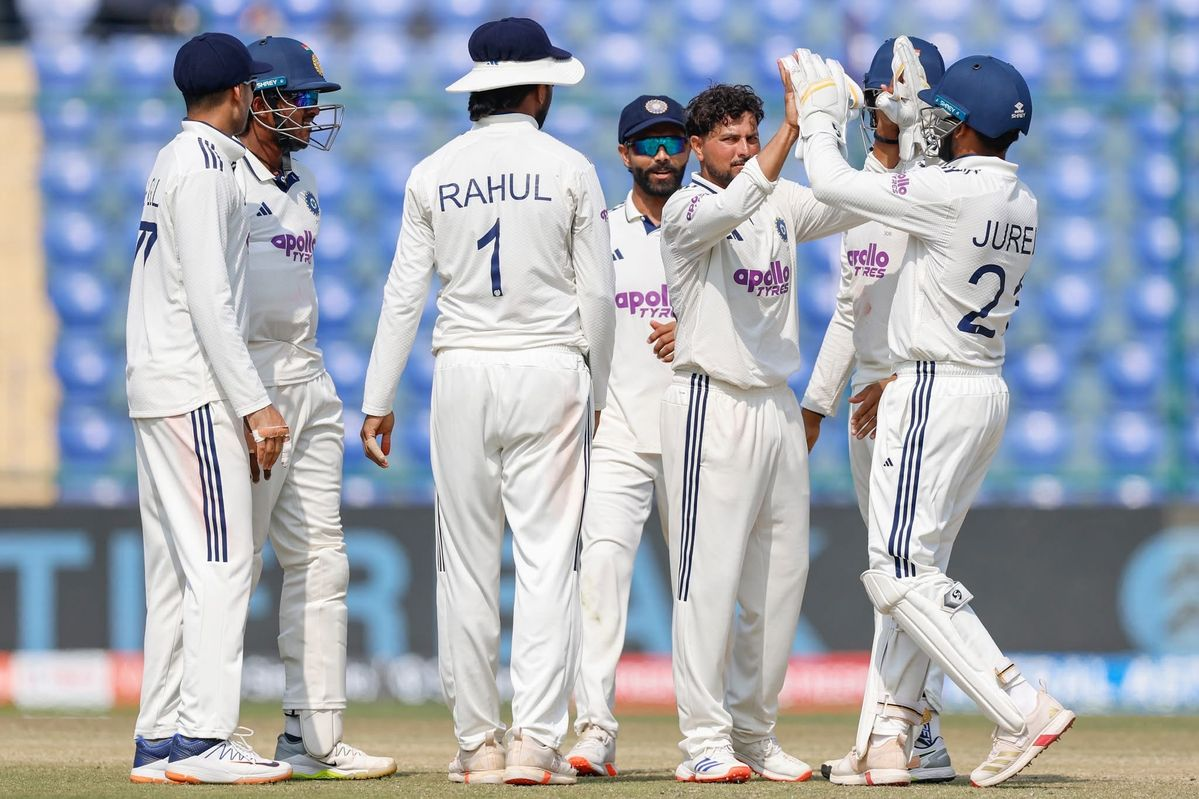
During a live cricket match, information arrives from several directions at once. A score changes every ball, player statistics update constantly, commentary adds context, and digital platforms may show additional numbers or market information.
The challenge is not finding data. The challenge is deciding which data actually matters.
For users following cricket through Tigerexch and other digital sports interfaces, this distinction can make live information much easier to understand. A number appearing on the screen is not automatically a useful signal. Its value depends on context, timing, reliability, and how it connects with the rest of the match.
This guide explains how to separate meaningful cricket information from digital noise without treating any statistic as a guaranteed predictor of what happens next.
A useful data point helps answer a specific question about the match.
For example:
A number becomes more useful when it has context.
Consider a batter scoring 30 runs. On its own, the figure says little. Thirty runs from 20 balls is different from 30 runs from 45 balls. Thirty runs during a difficult middle-over phase may also have a different meaning from 30 runs during a low-pressure chase.
The number is the same. The situation is not.
That is why good match analysis looks at relationships between statistics rather than isolated figures.
In live sports, a signal is information that helps explain a meaningful change in the match.
Noise is information that attracts attention without adding much understanding.
For example, a sudden increase in scoring rate after two boundaries may be interesting. But assuming that the new rate will continue for the next several overs can be misleading.
Useful signals often include:
| Data point | Why it can matter |
|---|---|
| Current score | Establishes the basic match position |
| Wickets lost | Shows remaining batting resources |
| Overs completed | Gives the score a time context |
| Current run rate | Describes scoring pace so far |
| Required run rate | Shows the pace needed in a chase |
| Recent partnership | Helps explain innings stability |
| Recent wickets | Can indicate a change in momentum |
| Boundary frequency | Adds context to scoring patterns |
| Batter balls faced | Helps interpret individual contribution |
| Bowling workload | Provides context around performance |
The key is not to watch every number equally.
A smaller group of relevant statistics is often more useful than a dashboard filled with dozens of constantly changing metrics.
The first question should always be:
What is happening in the match right now?
Suppose a team is chasing 180 and has reached 100 after 13 overs with six wickets remaining. Looking only at the score does not tell the complete story.
You would also want to know:
This is where Tigerexch data becomes easier to interpret when viewed as a connected set of information rather than individual numbers.
The same score can represent very different situations depending on wickets, overs, pitch conditions, batting depth, and recent events.
These are the foundation of almost every match calculation.
A score without the number of overs completed is incomplete. Likewise, knowing the overs without knowing the wickets lost leaves out a major part of the situation.
Always consider:
Runs + wickets + overs
as a basic three-part snapshot.
Current run rate tells you how quickly a team has scored up to that point.
The basic calculation is:
Runs scored ÷ overs completed
It is useful for understanding the pace of an innings, but it should not be treated as a prediction.
A team may score at 8 runs per over during one phase and slow down later because of bowling changes, wickets, field restrictions, fatigue, or match strategy.
During a chase, required run rate can be more informative than the current run rate because it shows the pace needed to reach the target.
For example, if 80 runs are required from 10 overs, the required rate is 8 runs per over.
But even this number needs context.
A required rate of eight may be manageable with several wickets in hand and strong batters at the crease. The same rate can become much harder after two quick wickets.
Wickets are not simply a number beside the score.
They represent remaining batting resources.
Two teams can require the same number of runs from the same number of overs but have very different situations because one has lost seven wickets while the other has lost only two.
This is one reason why reading a scoreboard in isolation can create a distorted impression.
Recent scoring can provide useful context, but short periods should not be overinterpreted.
A team scoring 15 runs from one over has changed the immediate scoring rate. It has not necessarily established a permanent new pattern.
Look for repeated behaviour across several overs rather than reacting to one unusually expensive or economical over.
Live cricket encourages quick reactions.
A six appears, the score changes, and attention immediately moves to the new situation. This is natural, but it can create a cognitive bias: the latest event may feel more important than it actually is.
Imagine a team has scored steadily for ten overs before one over produces 18 runs.
That over matters.
But it should be considered alongside the previous ten overs.
The better question is not
Did something dramatic just happen?”
Instead ask:
Did the event materially change the broader match situation?”
That distinction helps separate signal from noise.
Individual statistics are another area where users can easily misread information.
A batter's strike rate, for example, can look impressive without explaining the role that batter is performing.
A player facing a new ball may have a different objective from a batter entering during the final overs. Similarly, a bowler's economy rate can be affected by the quality of batters faced, pitch conditions, field placement, and match phase.
When evaluating player data, consider:
A statistic becomes more informative when you know why it happened.
Modern cricket viewing is increasingly multi-screen. Google reported in 2026 that 90% of cricket fans were active on a second screen while watching matches, showing how live viewing now extends beyond the primary broadcast.
That creates a new problem: more information does not always mean better understanding.
A viewer may have:
Trying to follow everything simultaneously can make important changes harder to identify.
A simpler approach is to establish a primary information hierarchy:
First: score, wickets and overs
Second: required rate or current rate
Third: recent scoring and wickets
Fourth: player and partnership context
Fifth: additional statistics
This keeps the most important information visible while reducing distraction.
Users may encounter different terminology when moving between cricket websites, mobile services, and digital entertainment platforms. Search phrases such as online cricket id login often refer to accessing an account or service rather than understanding the cricket data itself.
That distinction matters.
An account-access process and a match-analysis process are two separate things. Signing into a service does not make every statistic displayed there reliable, relevant, or predictive.
Before relying on any digital information, check:
Good digital habits are useful regardless of the platform being used.
A simple three-question filter can remove much of the noise.
Do not assume a label explains everything.
Understand whether a figure represents a historical average, current performance, recent trend, probability estimate, or simple score calculation.
A statistic without match context can be misleading.
Ask:
This is the most useful filter.
If a statistic does not change your interpretation of the match, it may not deserve much attention.
This does not mean the number is wrong. It simply means it has low practical value at that moment.
A single expensive over can change the score quickly, but it does not automatically establish a new scoring pattern.
Run totals become much more meaningful when combined with wickets.
A batter and a bowler should not be judged using unrelated measures or without considering their responsibilities.
A probability estimate describes likelihood. It does not guarantee an outcome.
More screens can produce more distraction. A small number of reliable information sources may provide better understanding.
Live matches move quickly. Not every ball requires a new conclusion.
When the match is moving quickly, use this short process.
Step 1: Establish the score
Check runs, wickets, and overs.
Step 2: Identify the objective
Is the team building a total or chasing one?
Step 3: Check the required or current rate
Understand the scoring pace in relation to the match situation.
Step 4: Look for repeated patterns
Check several overs instead of reacting to one delivery.
Step 5: Reassess after major events
A wicket, major partnership, injury, bowling change, or dramatic scoring shift may justify a fresh assessment.
This method is more reliable than continuously reacting to every number that changes on the screen.
One of the biggest mistakes in sports analysis is treating statistics as certainty.
Cricket contains too many changing variables for a single metric to determine the result.
A data point can describe what has happened. It can help explain what is happening. Some models can estimate possible outcomes.
None of those functions makes the result guaranteed.
This distinction is especially important when live statistics are viewed alongside exchange or betting information. Data can improve understanding, but it cannot remove uncertainty or guarantee a profitable decision.
Users should also consider the current legal environment. India's Promotion and Regulation of Online Gaming Act and the 2026 Rules introduced a national framework that prohibits online money games and establishes restrictions around their promotion and related financial transactions.
Therefore, anyone considering real-money online gaming or betting-related activity in India should verify the current legal position applicable to their circumstances rather than relying on older website claims.
The best way to use live cricket information is not to collect every available number. It is to identify the few signals that genuinely explain the match.
Start with the score, wickets, and overs. Add the required or current scoring rate, then consider recent patterns, partnerships, player roles, and major changes in match conditions. This approach keeps analysis focused and reduces the distraction caused by constantly changing digital information.
For users researching cricket id download, the same principle applies: verify the source and understand what the service actually provides before using it. Access to more information is useful only when that information is relevant and trustworthy.
The phrase cricket id download should never be treated as a shortcut to trustworthy cricket data. A download or access method does not automatically validate the information behind a service.
Likewise, cricket id download searches may lead users toward different types of digital services, so users should distinguish account-access information from actual match statistics and verify the service before proceeding.
The same caution applies when an online cricket id login is presented as the gateway to live information. Login access and data quality are separate questions.
If an online cricket id login page asks for unusual information or makes unsupported claims, users should stop and verify the service instead of assuming it is trustworthy.
Ultimately, good cricket analysis depends less on having the most numbers and more on understanding which numbers deserve attention.
Start with the score, wickets, and overs. These three figures establish the basic match situation. Then add current or required run rate depending on whether the team is setting a total or chasing.
No. Current run rate describes scoring pace so far, but it does not account for future wickets, batting resources, bowling changes, match conditions, or changes in strategy.
Short-term statistics can be heavily influenced by a small number of deliveries. A single over or wicket may change the immediate picture without representing a sustained trend.
Choose a small group of core metrics. Score, wickets, overs, scoring rate, recent events, and key player context are usually more useful than monitoring every available number.
Not necessarily. Strike rate should be considered alongside balls faced, match phase, required rate, wickets available, and the batter's role.
Data can help describe the situation and models can estimate probabilities, but no statistic guarantees a result. Cricket remains uncertain.
Check its source, update timing, definition, context, and consistency with other reliable information. A clearly labelled statistic is easier to evaluate than an unexplained number.
No. An online cricket id login is an access mechanism. It does not by itself establish that the statistics or other information shown after login are accurate.
No. Market movement is information about a market at a particular time. It is not proof of what will happen next and should never be presented as a guaranteed outcome.