English
 Arabic
 French
 Spanish
 Portuguese
 Deutsch
 Turkish
 Dutch
Dutch
 Italiano
 Russian
 Romaian
 Portuguese (Brazil)
 Greek
Greek
Automobil-Elektronik Kongress 2026: Neue Trends Entdecken
Music |
2026-05-15 10:05:32
 Social Networth OS
 Creator Commerce
 Launch Startup
 Global News
 Creator Award
 Talkfever App
Mostra tutti i risultati
Talkfever App
Mostra tutti i risultati

Passa a Pro
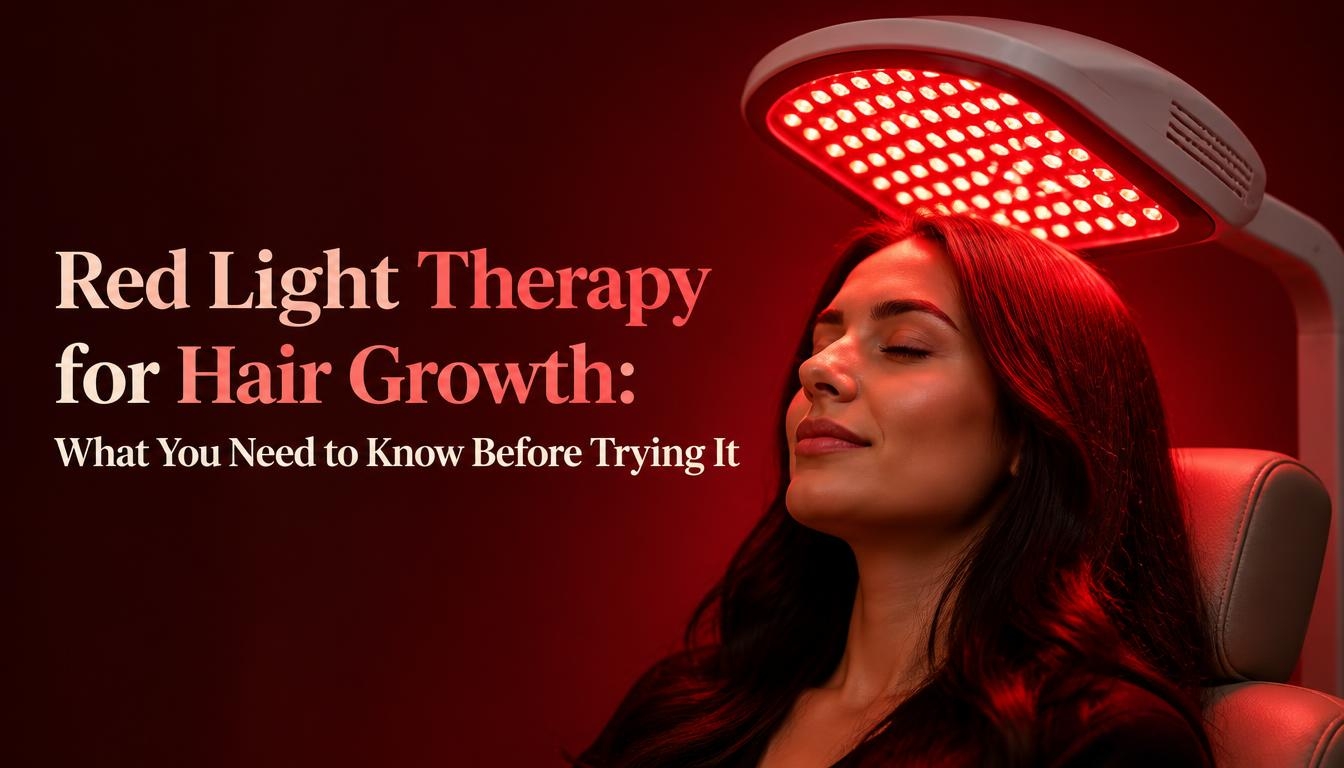
Hair loss can be frustrating, especially when thinning hair starts affecting your confidence. With so many treatments available today, red light therapy for hair growth has attracted attention as a non-invasive option that may help support healthier-looking hair.
Also known as low-level light therapy (LLLT) or photobiomodulation, this treatment uses specific wavelengths of light to stimulate the scalp. But does red light therapy actually work for hair growth, and is it worth trying?
Before investing in a red light therapy cap, comb, or helmet, here is what you should know.
Red light therapy is a treatment that exposes the scalp to low levels of red or near-red light. Unlike ultraviolet light, it does not work by damaging the skin. Instead, the light is intended to interact with cells in the scalp and hair follicles.
For hair loss, devices may use LEDs or low-level lasers to deliver light to the scalp. The goal is to support the activity of hair follicles and potentially encourage the growth phase of the hair cycle.
The U.S. Food and Drug Administration (FDA) maintains a classification for certain light-based hair-growth devices, and multiple devices have received 510(k) clearance for promoting hair growth in people with androgenetic alopecia. However, clearance applies to specific devices and intended uses—it does not mean that every red light product on the market is proven to work equally well.
Researchers believe low-level light therapy may influence cellular processes involved in hair follicle function. The exact biological mechanisms are still being studied, and researchers continue to investigate how factors such as wavelength, treatment duration, and light intensity affect results.
The important point is that red light therapy is designed to work gradually rather than instantly. Hair grows through different phases, so any improvement generally requires consistent treatment over an extended period.
This is why people considering LLLT should have realistic expectations rather than expecting noticeable regrowth after only a few sessions.
Research suggests that low-level light therapy can help some people with androgenetic alopecia, commonly known as male or female pattern hair loss.
For example, a randomized controlled trial comparing LLLT with topical 5% minoxidil in men with androgenetic alopecia found that both groups experienced improvements in hair density over six months. The study did not find a significant difference between the two treatments at three or six months.
At the same time, recent clinical reviews emphasize that the evidence for light-based approaches is still developing. Studies often differ in their devices, wavelengths, treatment schedules, sample sizes, and outcome measurements. More high-quality, long-term research is needed to determine exactly which patients are most likely to benefit.
In other words, red light therapy may help with hair growth, but it should not be viewed as a guaranteed solution for every type of hair loss.
Red light therapy has been studied most extensively for androgenetic alopecia. This is the hereditary form of hair loss that typically causes gradual thinning on the scalp.
Some FDA-cleared hair-growth devices are specifically indicated for certain patterns and stages of androgenetic alopecia in men and women.
However, hair loss can have many different causes, including nutritional deficiencies, hormonal changes, medications, autoimmune conditions, scalp disorders, stress, and certain illnesses.
If you are experiencing sudden, severe, patchy, or unexplained hair loss, it is better to determine the underlying cause before relying on a light-based treatment.
Treatment schedules vary depending on the device. Some systems are designed for several sessions per week, while others have different treatment durations and frequencies.
For example, one clinical trial used LLLT three times per week for 10 minutes over six months.
Always follow the manufacturer's instructions rather than assuming that longer or more frequent sessions will produce better results. Consistency is generally more important than trying to speed up the process.
One reason people are interested in red light therapy is that it is non-invasive and generally well tolerated when used as directed.
Nevertheless, some users may experience temporary scalp discomfort, warmth, redness, or irritation. Eye protection may also be necessary depending on the device.
People with certain medical conditions or those taking medications that increase light sensitivity should speak with a healthcare professional before starting treatment.
If you decide to try LLLT for hair growth, don't choose a product based solely on marketing claims or a high price.
Consider:
Whether the device is specifically intended for hair growth.
Whether its indications match your type and pattern of hair loss.
The wavelength and light-delivery specifications.
How often the manufacturer recommends using it.
Whether there is credible clinical evidence supporting the device or technology.
Whether the device has appropriate regulatory clearance for its intended use.
Remember that an expensive helmet is not automatically more effective than a less expensive option.
Red light therapy can be a reasonable option for people looking for a non-invasive approach to managing certain types of hair loss, particularly androgenetic alopecia. Research indicates that it may improve hair density for some users, but results can vary considerably.
It is also important to remember that hair growth treatments usually require patience. Taking before-and-after photographs under similar lighting can make gradual changes easier to track.
Most importantly, don't assume that all hair loss is the same. Identifying the cause of your hair loss is an important first step, especially if the thinning is sudden or unusual.
Red light therapy for hair growth is promising, but it is not a miracle treatment. Current research supports potential benefits for some people with pattern hair loss, while also highlighting the need for better long-term studies.
If you're considering LLLT, choose a device carefully, use it consistently according to its instructions, and discuss your options with a dermatologist or qualified healthcare professional when appropriate. A personalized approach can help you determine whether red light therapy makes sense as part of your overall hair-loss treatment plan.