English
 Arabic
 French
 Spanish
 Portuguese
 Deutsch
 Turkish
 Dutch
Dutch
 Italiano
 Russian
 Romaian
 Portuguese (Brazil)
 Greek
Greek
Climate Action and Corporate Sustainability Propel Carbon Credit Market at 20.8% CAGR
Uncategorized |
2026-05-25 10:12:52
 Social Networth OS
 Creator Commerce
 Launch Startup
 Global News
 Creator Award
 Talkfever App
Mostra tutti i risultati
Talkfever App
Mostra tutti i risultati

Passa a Pro
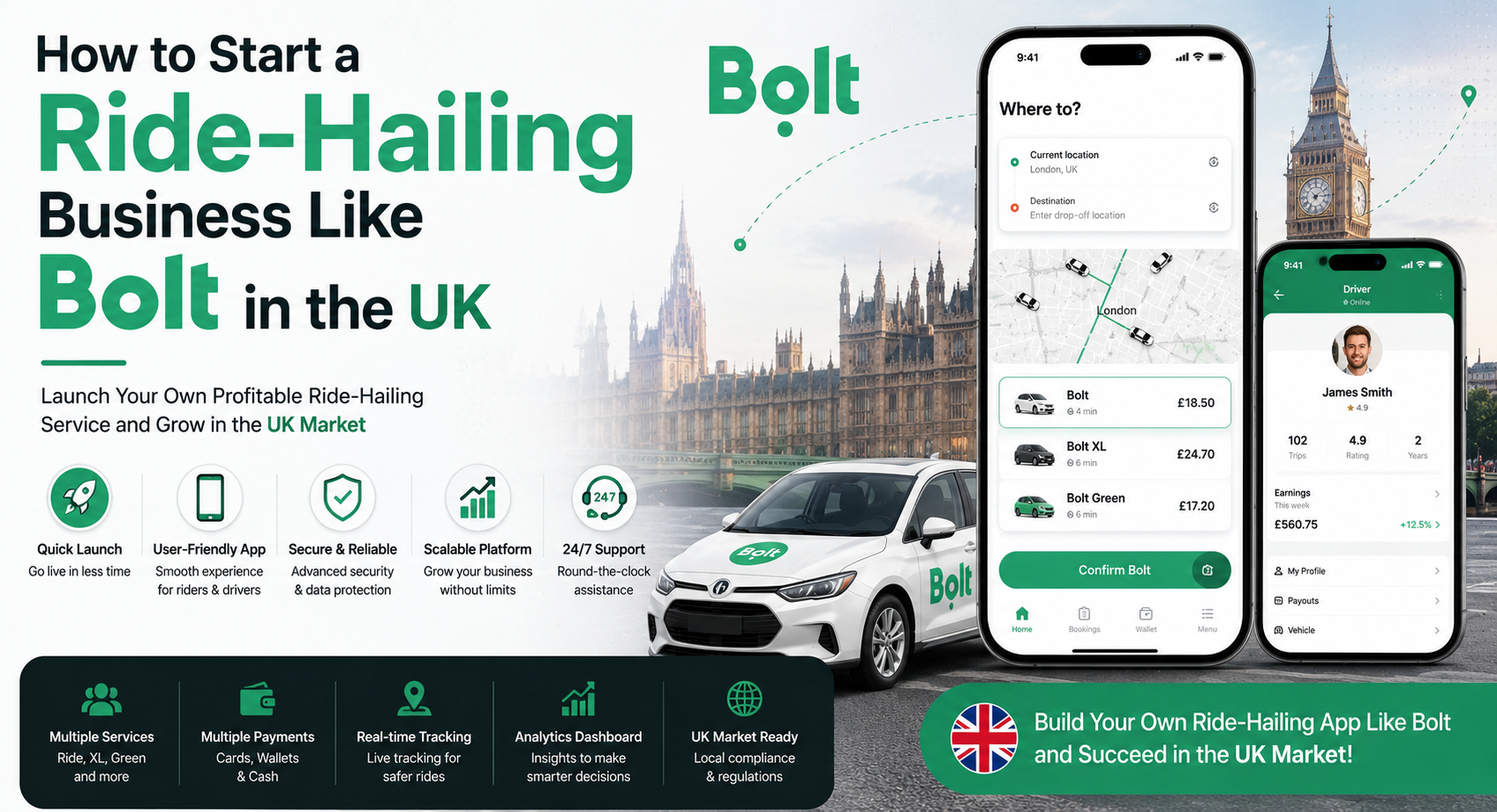
The UK ride-hailing sector has evolved into a technology-driven transportation ecosystem. Passengers now expect instant booking, transparent fares, live vehicle tracking, cashless payments, and dependable driver communication. For entrepreneurs, this creates an attractive opportunity to start a ride-hailing business like Bolt in the UK with a differentiated service proposition and a Bolt-style app.
Success, however, requires more than replicating an existing app. A resilient business needs regulatory preparedness, robust technology, reliable drivers, and a well-defined monetization strategy.
Begin by researching your target market. Analyze passenger demographics, popular routes, existing competitors, pricing structures, vehicle categories, and underserved locations.
Consider starting in a specific city or niche instead of attempting nationwide domination immediately. Airport transfers, corporate transportation, premium rides, or environmentally conscious mobility can provide distinctive market positioning.
Decide how your platform will connect passengers with drivers. You can operate as a marketplace that partners with licensed private-hire drivers or establish a more controlled fleet-oriented model.
Determine your service categories, operating territory, pricing methodology, cancellation policies, driver incentives, and customer support structure. A clearly articulated business model becomes the commercial compass for subsequent technology and operational decisions.
Regulatory compliance is indispensable when establishing a UK ride-hailing operation. Private-hire vehicles and operators are subject to licensing requirements, which vary by jurisdiction.
Research the requirements applicable to your operating area, including operator licensing, driver licensing, vehicle standards, insurance, safeguarding, and relevant data-protection obligations. Consulting qualified local regulatory professionals can help prevent expensive compliance oversights.
Technology forms the operational backbone of a Bolt-like business. A typical platform should include separate interfaces for passengers, drivers, and administrators.
Passenger functionality can include registration, ride booking, fare estimation, GPS tracking, multiple payment options, ride scheduling, ratings, reviews, trip history, and notifications.
Drivers need features such as ride requests, navigation, earnings monitoring, availability controls, trip management, and digital documentation. Meanwhile, administrators require centralized tools for managing users, drivers, vehicles, fares, commissions, promotions, complaints, and analytics.
A ride-hailing platform cannot thrive without dependable supply. Recruit qualified drivers and establish a structured onboarding process.
Driver verification should cover relevant licenses, documentation, vehicle eligibility, insurance, and background requirements applicable to your operating jurisdiction. Competitive commission structures, incentive programs, transparent earnings, and responsive support can improve driver retention.
Commission-based monetization is one of the most common approaches. The platform deducts a predetermined percentage from completed rides.
Other possibilities include subscription plans for drivers, booking fees, premium ride categories, corporate accounts, advertising partnerships, and promotional placements. Combining several compatible revenue streams can create a more resilient financial architecture.
A geographically focused launch can be more effective than an expensive nationwide campaign. Start with a carefully selected service area, recruit sufficient drivers, and create compelling passenger incentives.
Digital advertising, referral programs, social media campaigns, partnerships with hotels and businesses, and introductory promotions can help generate initial traction. Customer reviews and retention should become central performance indicators after launch.
Once bookings become consistent, expand strategically. Introduce additional vehicle categories, new service zones, corporate transportation, scheduled rides, loyalty programs, and advanced analytics.
AI-assisted demand forecasting, intelligent driver allocation, dynamic pricing, and predictive maintenance can further enhance operational efficiency. Scalability should be engineered into the platform from the outset rather than retrofitted after rapid expansion.
Starting a ride-hailing business like Bolt in the UK requires a synthesis of regulatory compliance, sophisticated technology, driver acquisition, strategic pricing, and sustained customer engagement. Entrepreneurs who prioritize a focused launch and scalable infrastructure can establish a compelling foothold before expanding into broader markets. Spotnrides can support businesses seeking to build a customizable ride-hailing platform with the functionality needed to operate and grow in the competitive UK mobility landscape.