English
 Arabic
 French
 Spanish
 Portuguese
 Deutsch
 Turkish
 Dutch
Dutch
 Italiano
 Russian
 Romaian
 Portuguese (Brazil)
 Greek
Greek
Platform Shoes Market Trends, Size and Forecast Report 2026–2036
Other |
2026-07-10 09:51:51
 Social Networth OS
 Creator Commerce
 Launch Startup
 Global News
 Creator Award
 Talkfever App
Ver Todos
Talkfever App
Ver Todos

Atualize para o Pro
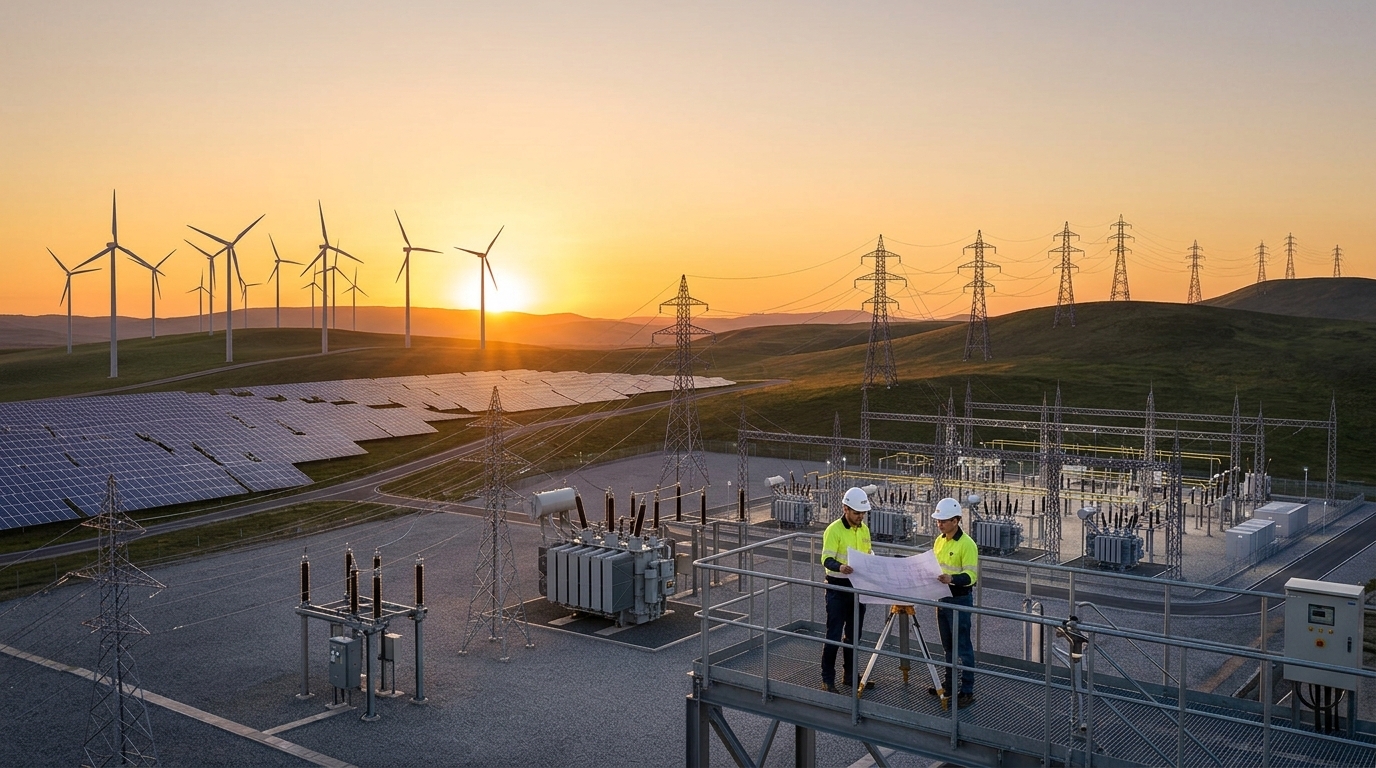
Modern power systems depend on substations to move electricity safely and efficiently between generation sources, transmission networks, and end users. Whether the project supports a utility network, renewable energy facility, industrial plant, or large commercial development, a well-designed substation plays a major role in system reliability.
But substation design is not simply about selecting a transformer, installing breakers, and connecting equipment. A successful project requires careful coordination between electrical systems, protection and control, civil infrastructure, communications, safety requirements, and future operational needs.
This guide explores the main elements of modern substation engineering design and explains why a structured approach can help reduce construction challenges, improve reliability, and support long-term system performance.
At its core, a substation is designed to perform one or more important functions within an electrical network. It may transform voltage, switch circuits, protect equipment, measure system performance, or connect different parts of the grid.
The exact design depends heavily on the project's purpose. For example, a renewable energy collector substation will have different requirements from an industrial substation or a high-voltage transmission facility.
That is why the engineering process should begin with a clear understanding of:
Establishing these requirements early helps prevent expensive design changes later in the project. In real-world projects, substation engineering often involves multiple disciplines that must work from the same design assumptions. Poor coordination between electrical, protection, and civil teams can lead to layout conflicts, redesign work, and delays during construction.
Modern engineering approaches increasingly focus on resolving these issues during the design phase rather than in the field.
One of the first major steps in substation engineering design is determining the electrical configuration.
This typically includes the development of single-line diagrams, which provide a simplified representation of how the substation equipment connects and operates. Engineers use these diagrams to establish the major components of the system, including transformers, circuit breakers, disconnect switches, bus arrangements, and incoming or outgoing feeders.
The selected bus configuration can significantly affect both reliability and project cost.
A simpler configuration may reduce equipment requirements and construction costs, while a more complex arrangement can provide greater redundancy and operational flexibility. The right choice depends on the criticality of the facility and the consequences of an equipment outage.
For example, a system serving a critical industrial process or a major utility transmission network may require a higher level of redundancy than a smaller distribution facility.
The design must also account for equipment ratings, load growth, fault current levels, insulation coordination, and operating conditions.
After the electrical configuration is established, the next step is selecting and arranging the major equipment.
Typical substation components include:
However, selecting the right equipment is only part of the process. The physical layout must also provide safe clearances, practical maintenance access, efficient cable routing, and sufficient space for construction activities.
Future expansion is another important consideration. A substation that meets today's requirements but leaves no room for additional feeders or equipment can become difficult and expensive to upgrade.
Good electrical substation design services therefore consider both immediate project requirements and the likely needs of the system over its operational life.
Modern design teams also coordinate electrical layouts closely with civil and structural engineering. Foundations, drainage, grading, steel structures, equipment access, and cable trenches must all work with the electrical arrangement.
A substation must do more than deliver power. It must also detect abnormal conditions and respond quickly enough to protect people and equipment.
Protection and control engineering is therefore a critical part of modern substation design.
Protective relays monitor electrical conditions and can initiate actions such as opening circuit breakers when faults occur. The protection system must be coordinated carefully so that the appropriate device operates while minimizing unnecessary interruptions to the rest of the network.
A modern protection and control design may include:
As substations become increasingly automated, communication architecture has become just as important as traditional wiring and equipment selection.
The goal is not simply to add more technology. It is to create a system that operators can monitor, control, maintain, and troubleshoot effectively.
Safety must be built into every stage of substation design.
One of the most important elements is the grounding system. During a fault, dangerous voltages can develop across the substation site. A properly engineered grounding system helps manage these conditions and reduce risks associated with touch and step voltages.
Grounding design is influenced by several factors, including soil conditions, fault current, fault duration, equipment arrangement, and site geometry.
Other important safety considerations include:
These considerations should not be treated as final checks after the design is complete. Integrating safety into the engineering process from the beginning can reduce the need for late-stage modifications.
The modern electrical grid is changing rapidly. Renewable generation, battery energy storage systems, advanced communications, and increasing automation are changing how substations are designed and operated.
As a result, today's substation engineering design should consider more than current operating requirements.
Engineers may need to plan for:
Designing with flexibility in mind can help asset owners avoid major upgrades when the system changes.
A practical design does not necessarily mean installing every available technology on day one. Instead, it means creating an infrastructure that can adapt as operational and grid requirements evolve.
A strong design process typically moves through several stages, from early planning to construction documentation and field support.
The process may include initial feasibility work, conceptual layouts, detailed electrical calculations, protection studies, civil coordination, equipment specifications, construction drawings, and support during installation and commissioning.
The quality of coordination during these stages can have a major impact on project outcomes. A technically correct design that is difficult to construct can still create costly problems.
That is why experienced electrical substation design services should focus on constructability as well as technical compliance.
American Power Engineers supports power infrastructure projects with engineering expertise across grid connection, power systems, compliance, and substation-related project requirements. Its published engineering resources also emphasize the importance of coordinating electrical, protection, civil, and construction considerations early in the project lifecycle.
For complex power projects, the company provides engineering support across utilities, renewable energy developments, EPC projects, and industrial facilities.
Modern substation projects require much more than selecting electrical equipment and preparing drawings. Successful substation design depends on a coordinated engineering process that balances reliability, safety, operational requirements, constructability, and future growth.
From the initial single-line diagram to protection systems, grounding, automation, and construction support, every decision affects the overall performance of the facility.
As power networks continue to evolve, investing in a thoughtful substation engineering design process can help project owners build infrastructure that is not only compliant and reliable today but also prepared for the demands of tomorrow.
For projects requiring specialized technical support, professional electrical substation design services can help bring together the different engineering disciplines needed to move from an initial concept to a practical, constructible solution.