English
 Arabic
 French
 Spanish
 Portuguese
 Deutsch
 Turkish
 Dutch
Dutch
 Italiano
 Russian
 Romaian
 Portuguese (Brazil)
 Greek
Greek
Algorithmic Edge: How AI is Reshaping the Cybersecurity Landscape
Other |
2024-02-23 08:09:19
 Social Networth OS
 Creator Commerce
 Launch Startup
 Global News
 Creator Award
 Talkfever App
δες τα όλα
Talkfever App
δες τα όλα

Upgrade to Pro
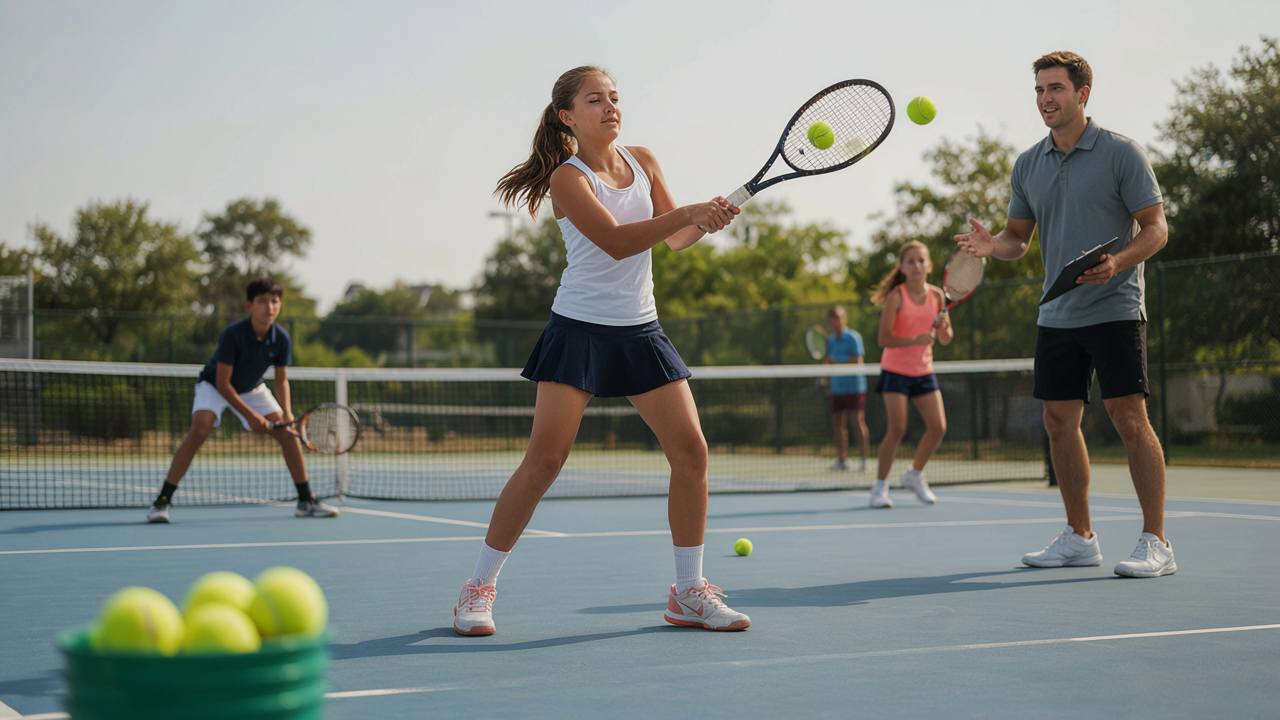
Tennis is more than a sport that teaches children how to hit a ball over a net. For young players, consistent training can become a foundation for physical development, confidence, discipline, decision-making, and healthy habits that last well beyond their early playing years. The skills developed on a tennis court can influence how children approach challenges, work with others, and stay committed to personal goals.
Whether a child is picking up a racket for the first time or already competing in local events, structured training gives them opportunities to improve at their own pace. Quality coaching focuses not only on winning matches but also on building strong fundamentals and helping young athletes understand how to learn from every practice.
Young athletes benefit from learning proper technique before bad habits become difficult to change. Tennis training introduces essential skills such as grip, balance, footwork, stroke production, serving, and court positioning.
The goal is not simply to make a young player hit the ball harder. Coaches can help players understand how their body moves during each shot and how small adjustments can produce better results. Learning these fundamentals early creates a technical foundation that players can continue developing as they grow.
This is one reason structured youth tennis lessons can be valuable. Instead of relying entirely on trial and error, young players receive age-appropriate instruction that helps them understand the purpose behind different movements and techniques.
Tennis requires players to react quickly while controlling their movements. A child may need to move forward, backward, sideways, or diagonally before adjusting their body to hit a moving ball. Repeating these movements helps develop coordination, balance, agility, and overall body awareness.
Training can also improve a young player's ability to connect visual information with physical movement. They learn to watch the ball, judge its speed and direction, move into position, and prepare a response.
These abilities are useful beyond tennis. Athletic coordination can support participation in other sports and physical activities, while regular movement encourages children to develop an active lifestyle from an early age.
One of tennis's most valuable characteristics is that players constantly make decisions. Every rally presents a new situation. A player must consider where the opponent is positioned, how much pace to use, whether to attack or defend, and where the next shot should go.
Good training encourages children to think rather than simply react. Coaches can introduce basic tactical concepts and gradually help players understand patterns of play.
For children involved in junior tennis Buffalo programs, this mental side of the game can be especially rewarding. Local training environments give young players opportunities to practice decision-making in drills, games, and match situations while learning how to remain composed when things do not go according to plan.
Confidence rarely appears overnight. It usually develops when young players see evidence that their effort is producing improvement.
A child who initially struggles to serve may eventually learn to make consistent serves. A player who finds movement difficult may become more comfortable reaching challenging shots. These small milestones can create a positive cycle: practice leads to improvement, improvement builds confidence, and confidence encourages the player to keep practicing.
Coaches play an important role by creating an environment where mistakes are treated as part of learning. Young athletes need to know that missing a shot does not mean they are failing. Instead, it provides information they can use to improve.
This approach is an important part of new york junior tennis and learning, where player development should include both athletic progress and personal growth.
Tennis provides countless lessons about persistence. Players will miss shots, lose points, face stronger opponents, and experience days when their game does not feel quite right. Learning how to respond to those moments can be more valuable than winning every match.
Regular training teaches children that meaningful improvement takes time. They may work on one technical detail for several weeks before seeing a noticeable difference. That experience helps them understand the relationship between patience, effort, and progress.
Young players can also learn resilience by resetting after mistakes. Instead of allowing one missed shot to affect an entire game, they learn to focus on the next point. Over time, this mindset can become useful in school, extracurricular activities, and other areas of life.
The ultimate value of youth tennis training is not measured only by tournament results or rankings. A strong tennis experience can help children develop habits and attitudes that remain useful as they mature.
Players learn to set goals, accept constructive feedback, practice deliberately, and evaluate their own performance. They also discover how preparation affects performance and how consistent effort can create long-term improvement.
For parents exploring youth tennis lessons, the best program is one that balances skill development with enjoyment. Children should have opportunities to challenge themselves without feeling that every practice or match is a test of their worth. When young athletes enjoy the process, they are more likely to remain active and continue playing.
Tennis can ultimately become a lifelong activity rather than something a child participates in for only a few seasons. With the right instruction and supportive environment, young players can develop technical ability, athletic confidence, strategic thinking, and resilience while building a lasting relationship with the sport.
For families interested in junior tennis Buffalo, finding consistent training and qualified instruction can be an important first step. Whether the goal is recreational play, school competition, or a more competitive pathway, the fundamentals learned during childhood can provide a strong foundation for whatever direction a player's tennis journey takes.