English
 Arabic
 French
 Spanish
 Portuguese
 Deutsch
 Turkish
 Dutch
Dutch
 Italiano
 Russian
 Romaian
 Portuguese (Brazil)
 Greek
Greek
Digital Pen Market Share: Poised for Rapid Expansion, Expected to Reach USD 7.92 Billion by 2032
Shopping |
2025-02-11 09:48:24
 Social Networth OS
 Creator Commerce
 Launch Startup
 Global News
 Creator Award
 Talkfever App
Alle anzeigen
Talkfever App
Alle anzeigen

Upgrade auf Pro
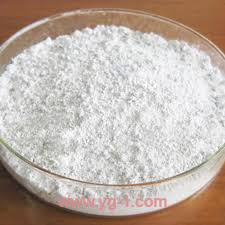
Every rubber compounder recognises that interplay. The internal mixer heats up, the polymer softens, and the viscosity begins to drop. A Peptizing agent accelerates this molecular breakdown, but its activity does not remain constant across all temperatures. YG-1, operating under the DongHai brand since 1985, formulates processing aids that respond to the thermal conditions inside the mixer. The question that drives efficient mastication: at what temperature does a peptizing agent deliver its greatest effect?
The chemical nature of peptization explains this temperature dependence. Most commercial peptizing agents, including those based on 2,2'-dibenzamido diphenyldisulfide (DBDD), require thermal energy to initiate their chain-scission activity. The active species, often sulfur-containing radicals, form when the peptizer decomposes in the presence of oxygen and heat. At room temperature, these molecules remain stable and inactive. As the rubber temperature rises, the decomposition accelerates, generating more reactive fragments that attack the polymer backbone. This Arrhenius-type behaviour means that activity increases exponentially with temperature, within certain limits.
Technical data from multiple manufacturers confirm a general activity onset around 70°C to 80°C. Below this threshold, the peptizing agent contributes little to viscosity reduction, and mechanical shearing carries the primary mastication burden. At approximately 80°C, products like Aktiplast 8 begin showing a marked effect on natural rubber. This temperature corresponds to the point where the rubber becomes sufficiently soft to allow molecular mobility, enabling the chemical reaction between the peptizer fragments and the polymer chains.
The efficiency curve rises steeply from this onset point. For many products, including DBD-40 and Pepton 44 RO, the optimal temperature range lies between 150°C and 160°C. Within this window, the peptizing agent achieves maximum catalytic activity, promoting rapid chain scission with minimal dosage. The reaction kinetics reach a favourable balance where the decomposition rate of the peptizer aligns with the diffusion rate of reactive species into the rubber matrix. Operating at these temperatures can significantly reduce mastication time and energy consumption.
Upper temperature limits exist, however, and exceeding them introduces risks. For natural rubber and certain synthetic elastomers, temperatures above 165°C can trigger cyclization reactions that actually increase viscosity or alter the polymer structure undesirably. Some sources recommend keeping styrene-butadiene rubber processing below 149°C (approximately 300°F) to prevent cyclization. The peptizing agent may remain active at these higher temperatures, but the rubber's thermal degradation or structural rearrangement negates the processing benefits. This dual effect explains why careful temperature control matters as much as the peptizer itself.
Rubber type modifies the optimal temperature range. Natural rubber (NR) and synthetic isoprene rubber (IR) respond to peptizing agents even at lower temperatures, with noticeable effects starting around 80°C. For these polymers, the temperature window extends to approximately 170°C, though the risk of cyclization increases at the upper end. Synthetic rubbers like SBR and BR require higher temperatures for effective peptization, typically in the 130°C to 150°C range. The dosage also varies, with synthetic rubbers requiring significantly higher peptizer levels (1.0-2.0 phr) compared to natural rubber (0.05-0.3 phr).
The mixing equipment influences the achievable temperature profile. Internal mixers, such as Banbury or intermesh rotors, generate heat rapidly through mechanical shearing, reaching peptization temperatures within the first minute of the cycle. This rapid heat generation favours efficient peptizer activation. On open two-roll mills, temperature control proves more challenging, though effective peptization still occurs above 80°C. The equipment choice affects not only the temperature but also the shear rate, which synergises with chemical peptization to reduce viscosity.
Practical considerations extend beyond the temperature dial. Adding a peptizing agent at the beginning of the mixing cycle ensures it experiences the full temperature ramp, maximising its active period. However, active carbon blacks and silicas can reduce peptizer effectiveness, so separate mastication before filler addition may be necessary. Sulphur and accelerators should be added late in the cycle, as they interfere with peptization. These procedural adjustments, combined with temperature control, determine whether the peptizer achieves its potential.
Monitoring the actual rubber temperature, rather than relying on set points, prevents deviations that reduce efficiency. Infrared sensors or thermocouples inside the mixing chamber provide real-time feedback for adjusting rotor speed or cooling water flow. YG-1's technical resources support customers in establishing temperature monitoring protocols that align with their specific equipment and rubber types.
For compounders seeking consistent viscosity reduction, understanding the temperature-activity relationship provides a practical tool. A peptizing agent that starts working around 70°C, peaks between 150°C and 160°C, and risks degradation above 165°C offers a clear operating window. YG-1 formulates its products to fit this profile, providing predictable performance when process conditions align. https://www.yg-1.com/ explores these principles in the context of compound development. Does your mixing cycle consistently hold the temperature that unlocks your peptizing agent's full potential?