English
 Arabic
 French
 Spanish
 Portuguese
 Deutsch
 Turkish
 Dutch
Dutch
 Italiano
 Russian
 Romaian
 Portuguese (Brazil)
 Greek
Greek
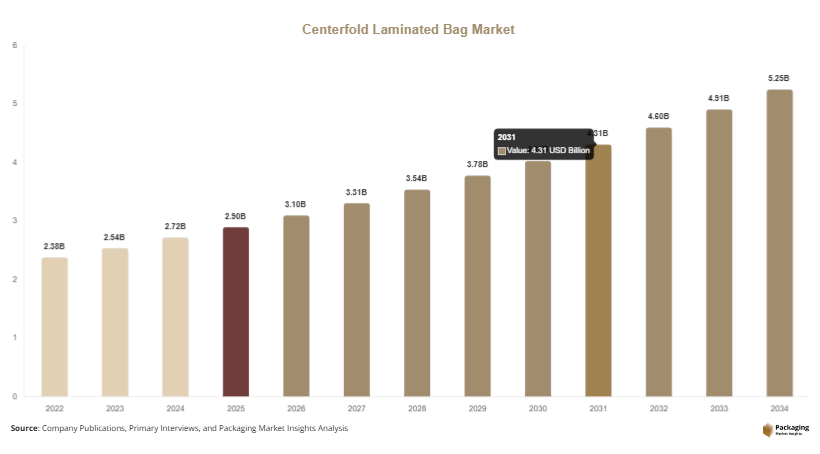
Centerfold Laminated Bag Market Outlook 2034: Opportunities, Challenges, and Regional Insights
Other |
2026-07-20 08:49:11
 Social Networth OS
 Creator Commerce
 Launch Startup
 Global News
 Creator Award
 Talkfever App
Afiseaza-i pe toti
Talkfever App
Afiseaza-i pe toti

Upgrade to Pro

Deals may take months to source and evaluate, while relationships with limited partners (LPs) can span multiple funds and decades. Yet many private equity firms still manage critical investor information across spreadsheets, email inboxes, meeting notes, and disconnected systems. That approach becomes difficult to scale.
A private equity CRM gives firms a centralized way to manage LP relationships, fundraising activity, communication history, and investor engagement. Instead of relying on individual team members to remember who spoke with which investor and when, firms can create a shared system of record for their investor relationships.
Modern private equity CRM platforms increasingly support automated communication tracking, fundraising pipelines, relationship intelligence, investor activity alerts, and AI-powered insights.
So how exactly are private equity firms using CRM to manage investor relationships?
Let's take a closer look.
A CRM, or customer relationship management system, is software that helps firms organize and manage relationships.
For private equity firms, however, the traditional definition of CRM is too narrow.
A PE CRM needs to manage relationships with:
Limited partners (LPs)
Prospective investors
Family offices
Pension funds
Endowments
Sovereign wealth funds
Fund-of-funds
Investment consultants
Portfolio companies
Deal intermediaries
Advisors and other industry contacts
The goal isn't simply to store names and contact information.
A private equity CRM should provide context around each relationship—communications, meetings, fundraising activity, investment history, relationship owners, notes, and next steps.
This is particularly important because private equity fundraising and dealmaking are highly relationship-driven and typically operate on long timelines.
One of the biggest problems private equity firms face is fragmented investor information.
An LP's information might exist in several places:
Excel spreadsheets
Email threads
CRM records
Meeting notes
Investor portals
Fund administration systems
Partner contact lists
Shared drives
When information is scattered, it becomes difficult for the IR team to get a complete picture of the relationship.
A CRM creates a centralized record for each investor.
For example, before an LP meeting, a partner could quickly review:
Previous conversations
Investment history
Fund commitments
Recent communications
Open follow-up items
Internal notes
Relationship owners
Fundraising status
Previous meeting outcomes
Instead of asking multiple team members for background information, the team can start the conversation with the relevant context already available.
Fundraising is one of the most important CRM use cases for private equity firms.
A PE firm may have hundreds of potential LPs, but each investor can be at a different stage of the fundraising process.
For example:
Prospect → Initial Contact → Meeting → Due Diligence → Data Room → Commitment Discussion → Soft Circle → Closed
A CRM allows the team to track where each investor sits in this process.
This gives the firm visibility into questions such as:
Which LPs have expressed interest?
Who has received the latest fund materials?
Which investors need follow-up?
Which LPs are currently in diligence?
Which investors have indicated potential commitment amounts?
Which relationships have gone quiet?
Where is the fundraising pipeline strongest?
Instead of maintaining this information in a separate spreadsheet, the fundraising team can manage it within the CRM.
Purpose-built private-market CRM platforms increasingly connect fundraising pipelines with investor information, communications, and fund data.
Investor relationships aren't built through one meeting.
They develop through dozens or hundreds of interactions over time.
An LP might:
Attend an annual meeting
Request a portfolio update
Speak with a partner
Ask about a new fund
Review a data room
Discuss co-investment opportunities
Attend a portfolio company event
Receive quarterly reporting
Have a follow-up call with the IR team
A CRM helps capture these interactions in one place.
Modern systems can automatically capture emails, meetings, and other relationship activity, reducing the amount of manual data entry required from IR teams.
That creates something extremely valuable:
institutional memory.
If the partner who owns an LP relationship leaves the firm, the relationship history doesn't have to leave with them.
Not every relationship is equally strong.
A private equity firm might have an LP listed in its database, but that doesn't necessarily mean the relationship is active.
A CRM can help firms understand:
Who communicates regularly with an LP
Which partner has the strongest connection
When the last meaningful interaction occurred
How frequently the firm engages with the investor
Whether engagement is increasing or declining
Which relationships may need attention
Relationship intelligence can help teams identify warm connections and determine who within the organization may be best positioned to make an introduction or continue an existing conversation.
This is particularly valuable when fundraising depends on trust.
A spreadsheet can tell you that an LP exists.
A relationship-focused CRM can help tell you how well your firm actually knows that LP.
LPs don't want to feel like another name on a mass email list.
They expect communication that reflects their relationship with the firm and their interests.
A CRM gives the IR team the context needed to make communication more relevant.
For example, before sending an update, the team can determine:
What fund the investor is involved in
What conversations have already taken place
Which topics the investor has shown interest in
Who last communicated with them
What follow-up was promised
Whether the investor is currently evaluating a new commitment
That information can make investor communication more targeted and useful.
Instead of:
“Just following up on our previous email.”
The team can have a much more meaningful conversation based on the actual history of the relationship.
Private equity relationships are rarely owned by just one person.
A managing partner may know the CIO of an institution.
Another partner may know someone on the investment team.
The IR team may communicate with the investor's operations team.
Without a centralized CRM, these relationships can remain invisible to the rest of the organization.
A CRM gives the firm a shared view.
Team members can see:
Who owns the relationship
Who has previously communicated with the LP
Which partners know the investor
What conversations have occurred
What actions are currently outstanding
This reduces duplicated outreach and helps teams coordinate before important investor meetings.
Private equity relationships don't end when a fund closes.
An LP that invested in Fund I may later invest in:
Fund II
Fund III
Fund IV
Co-investment opportunities
Continuation vehicles
Other strategies
This means the relationship needs to be understood across multiple fundraising cycles.
A CRM allows firms to maintain historical context.
The team can look at the investor's previous engagement and understand:
What happened before?
That might include:
Previous commitments
Historical meeting notes
Fundraising conversations
Investment preferences
Previous objections
Communication history
Relationship development
This historical context becomes particularly valuable when the firm begins raising its next fund.
A CRM isn't only a database.
When properly structured, it can help firms decide where to focus their attention.
Imagine a firm has 300 potential LP relationships.
The team can't give all 300 investors the same level of attention.
CRM data can help identify investors based on criteria such as:
Relationship strength
Previous investment history
Fund strategy fit
Engagement level
Recent activity
Potential commitment size
Fundraising stage
Internal relationship coverage
This allows IR teams to prioritize the relationships most likely to create meaningful fundraising outcomes.
Some modern private-market CRM platforms also provide dashboards and activity alerts to help teams identify engaged prospects and pipeline movement.
Investor conversations don't happen in isolation.
LPs want to understand how their investments are performing.
That means investor relationship management increasingly needs to connect relationship information with fund and portfolio data.
For example, before an LP meeting, the team may want to understand:
Fund performance
Investment history
Portfolio developments
Recent distributions
Current fundraising activity
Previous investor conversations
Some modern LP CRM systems are designed to connect investor relationships with economic and fund-performance data, creating a more complete view of the investor relationship.
The result is a more informed conversation.
Instead of opening several systems before every meeting, the team can work from a connected view of the relationship.
One of the easiest ways to damage an investor relationship is to forget a promised follow-up.
A partner might say:
“I'll send you that portfolio update next week.”
Then the meeting ends.
Three weeks later, nobody has followed up.
CRM workflows can help prevent this.
Teams can create reminders and tasks for:
Follow-up emails
Investor meetings
Data-room invitations
Fundraising updates
Quarterly communications
Annual meetings
Commitment discussions
Internal relationship reviews
Automation doesn't replace relationship building.
It makes sure important relationship-building activities don't fall through the cracks.
AI is becoming another important component of private equity CRM.
Instead of requiring team members to manually document every interaction, modern platforms can automate tasks such as:
Meeting transcription
Meeting summaries
Contact enrichment
Relationship analysis
Investor activity alerts
Follow-up recommendations
Investor research
For example, an AI-enabled CRM can turn a meeting into structured notes that become part of the investor's relationship history.
That means the CRM becomes more useful without requiring the team to spend hours maintaining it.
Modern private-market CRM products are increasingly positioning AI around fundraising intelligence, automated workflows, and investor relationship insights.
What gets measured can be improved.
A CRM can give private equity firms visibility into their investor relationship activity.
Depending on the platform, teams can analyze:
Number of active investor relationships
Investor engagement
Fundraising pipeline
Meetings completed
Follow-ups outstanding
Relationship coverage
Investor activity
Pipeline progression
Fundraising conversion
This helps leadership understand whether the firm's investor relations strategy is actually producing activity and momentum.
Instead of asking:
“How is fundraising going?”
Leadership can look at the underlying pipeline and relationship data.
Spreadsheets are useful.
For a small number of investors, they may be enough.
But as a private equity firm grows, spreadsheets become increasingly difficult to maintain.
Consider what happens when:
Multiple partners update the same investor
Different versions of the spreadsheet exist
Email history isn't captured
Follow-ups aren't assigned
Investor data becomes outdated
Relationships move between team members
Multiple funds share the same LPs
The problem isn't that spreadsheets are inherently bad.
The problem is that they're not designed to manage complex, long-term relationship networks.
A CRM provides structure, visibility, automation, and shared institutional knowledge.
Not every CRM is designed for private equity.
A PE-focused CRM should ideally include:
Centralized LP profiles, investment history, communication records, and relationship information.
Visibility into prospective investors and their progression through the fundraising process.
The ability to understand who knows whom and where strong relationships exist.
Automatic capture of emails, meetings, and other investor interactions.
Tasks, reminders, follow-ups, and investor communication workflows.
Dashboards that show fundraising progress, investor engagement, and relationship activity.
Connections between investor relationships and relevant fund or performance data.
Automated meeting notes, summaries, enrichment, recommendations, and relationship insights.
Appropriate permissions and security for sensitive investor and fund information.
The key distinction is that a PE CRM shouldn't simply function as a contact database. It should support the actual workflows private equity firms use to raise capital and manage relationships.
Buying a CRM isn't enough.
The firm needs a process for using it.
A practical implementation can follow five steps.
Determine what information the firm needs to track.
For example:
LP type
Fund commitments
Investor strategy
Relationship owner
Fundraising stage
Investment history
Communication history
Bring together information from spreadsheets, email systems, existing databases, and other relevant sources.
Clean duplicate and outdated records before importing them.
Every important investor relationship should have clear internal ownership.
The team should know who is responsible for maintaining and developing each relationship.
The less manual data entry required, the more likely the CRM is to remain accurate.
Email synchronization, calendar integrations, automated meeting notes, and contact enrichment can help.
The CRM should become part of the team's normal workflow—not another system employees are expected to update at the end of the week.
The best CRM is ultimately the one the team actually uses.
Private equity investor relations is becoming increasingly data-driven.
Firms are moving away from fragmented spreadsheets and disconnected systems toward centralized platforms that connect relationships, fundraising activity, investor data, and fund information.
AI is accelerating that shift.
The future isn't about replacing personal relationships with technology.
It's about giving investment professionals better information before, during, and after every investor interaction.
The relationship remains human.
The infrastructure supporting that relationship becomes digital.
Private equity firms don't win investor trust simply by having more contacts in a database.
They win by understanding their investors, communicating consistently, following through on commitments, and building relationships over multiple fund cycles.
A well-designed CRM helps make that possible.
It gives private equity firms a centralized view of their LP relationships, provides visibility into fundraising pipelines, captures institutional knowledge, automates follow-ups, and helps teams identify where their attention matters most.
Most importantly, it turns investor relationship management from a collection of individual activities into a repeatable firm-wide process.
The goal of a private equity CRM isn't to automate relationships. It's to give your team the information and structure needed to build better ones.