English
 Arabic
 French
 Spanish
 Portuguese
 Deutsch
 Turkish
 Dutch
Dutch
 Italiano
 Russian
 Romaian
 Portuguese (Brazil)
 Greek
Greek
Blockchain customer service number
Other |
2025-04-22 16:21:32
 Social Networth OS
 Creator Commerce
 Launch Startup
 Global News
 Creator Award
 Talkfever App
See All
Talkfever App
See All

Upgrade to Pro
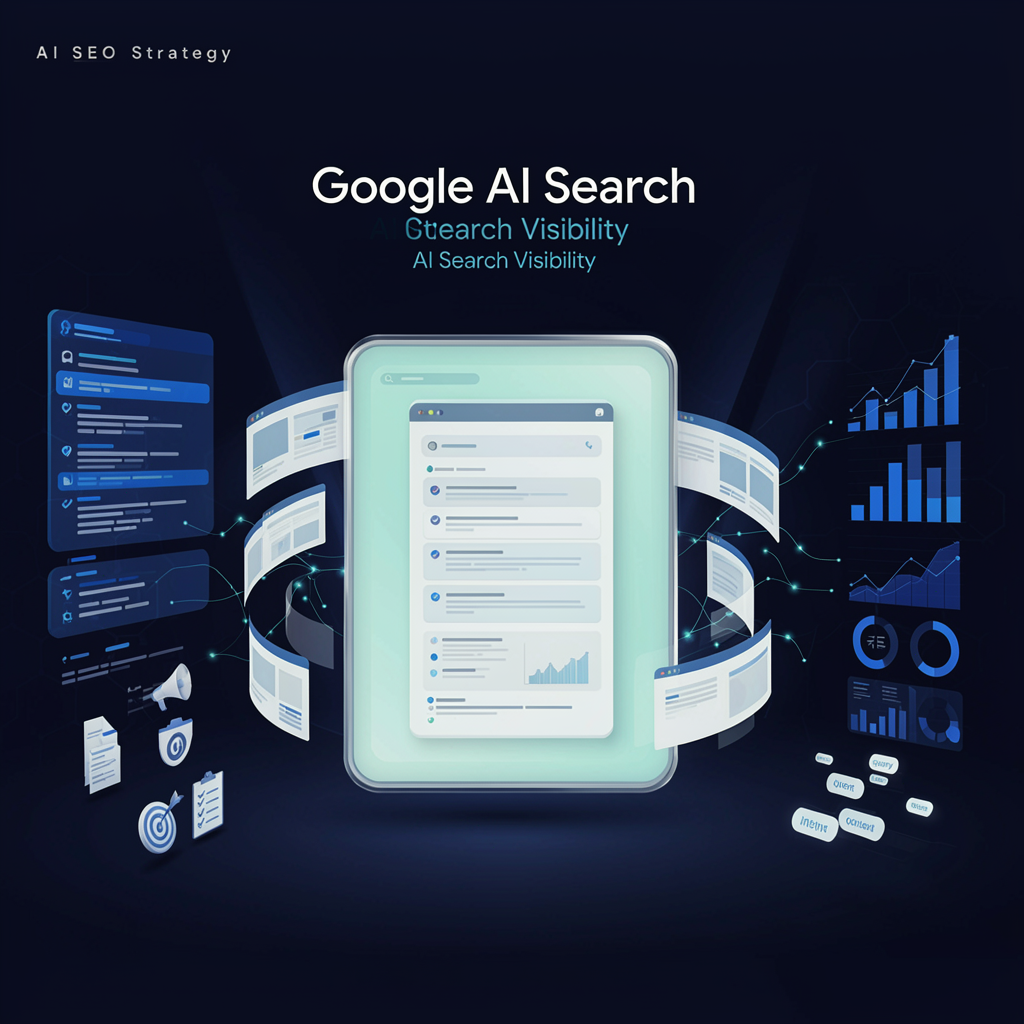
Google Search is going through one of its biggest changes in years. Instead of simply displaying a list of blue links, Google increasingly uses artificial intelligence to understand complex questions, summarize information, and connect users with relevant sources. At the center of this transformation are Google AI Overviews, which are changing how people search and how businesses need to approach SEO.
For marketers, this means traditional ranking positions are no longer the only measure of visibility. Businesses now need to think about how their content can become a useful, trustworthy source within AI-generated search experiences. Building strong AI search visibility requires a combination of traditional SEO, helpful content, topical authority, technical optimization, and a deeper understanding of search intent.
Google itself says AI Overviews are helping users ask longer and more complex questions while continuing to connect them with websites through links.
Traditional Google Search generally matched a user's query with individual webpages and ranked those pages according to relevance, quality, authority, and other signals. Google AI search adds another layer: AI can interpret the context behind a query and generate a synthesized response using information from multiple sources.
This changes the search journey. A user might previously search for several related keywords, open multiple pages, compare information, and then make a decision. With AI Overviews, Google can provide an initial explanation directly within the search results while offering links for users who want to explore specific sources.
Google has continued expanding the ways users can discover websites through AI Search. Recent updates have included more inline links, website previews, and features designed to highlight original content and trusted sources.
For SEO professionals, the lesson is important: visibility now happens inside a more conversational and dynamic search environment.
Traditional SEO is not disappearing. In fact, Google continues to emphasize that established SEO best practices remain relevant for appearing in its generative AI search features. However, the objectives of SEO are becoming broader.
Ranking on page one for a keyword is still valuable, but it does not necessarily tell the entire story. A page may need to demonstrate enough relevance and authority to be considered as a supporting source for an AI-generated response.
This creates a shift from keyword-focused optimization toward topic-focused optimization.
Instead of creating a single article around one keyword, businesses should build comprehensive content around important customer questions. For example, a company targeting local SEO could cover local rankings, Google Business Profile optimization, reviews, local citations, Maps visibility, local content, and conversion strategies.
This approach creates stronger topical relationships across a website and gives search systems more useful information to understand the brand's expertise.
The goal is no longer simply to rank a page. It is to build a website that consistently provides valuable answers across an entire subject area.
AI Overviews can summarize information quickly, which means generic content has less opportunity to stand out. If hundreds of websites repeat the same basic information, there is little reason for an AI-powered search experience to prioritize one generic article over another.
This makes original and genuinely useful content increasingly important.
Businesses should focus on providing insights that demonstrate real expertise. Case studies, original research, practical examples, expert commentary, first-hand experience, unique comparisons, and detailed explanations can make content more valuable than pages created simply to target search phrases.
Google has also highlighted growing interest in original content, authentic voices, and first-hand perspectives across AI Search.
For an effective AI SEO strategy, every important page should answer a real user need rather than simply contain a collection of keywords.
Content should be clear enough for users to understand quickly but detailed enough to provide meaningful value. Strong headings, logical organization, concise explanations, relevant examples, and supporting evidence all help create a better experience.
AI-powered search is encouraging users to ask questions differently. Instead of typing short phrases such as "best SEO agency," users may ask complete questions such as, "What should a small business look for when choosing an SEO agency?"
Google has reported that AI-powered Search is encouraging longer and more complex queries.
This means SEO research should go beyond traditional keyword volume.
Businesses should understand the questions customers ask before, during, and after a purchase decision. Content can then be structured around informational, commercial, local, and transactional intent.
For example, a service business could create content answering:
This type of question-based content can support visibility across traditional search and AI-powered search experiences.
The growth of AI Search does not make technical SEO less important. Search engines still need to discover, crawl, understand, and access website content.
A technically strong website gives search systems a clearer foundation for understanding its pages. Clean site architecture, descriptive titles, logical headings, internal linking, structured data where appropriate, mobile usability, indexability, and strong performance all remain important components of modern SEO.
Google's current documentation continues to emphasize established SEO practices for generative AI features. Its updated guidance also encourages site owners to focus on unique, non-commodity content and useful formats such as local, shopping, image, and video content.
This is why businesses should not treat AI SEO as a completely separate discipline. Instead, AI optimization should extend a strong SEO foundation.
A technically weak website with excellent content can still struggle to achieve consistent visibility.
A modern strategy should combine traditional search optimization with content designed for deeper, more conversational discovery.
Start by identifying the topics that matter most to your customers. Then map the questions and subtopics surrounding those subjects. Build authoritative pages that answer important questions comprehensively, and connect related content through thoughtful internal links.
Next, strengthen trust signals. Clearly communicate who is creating the content, demonstrate relevant expertise, support important claims, and provide genuine examples wherever possible.
Businesses should also monitor more than rankings. Organic traffic, conversions, engagement, branded searches, referral sources, and visibility across AI search experiences can provide a broader picture of performance.
Google is also introducing additional tools and insights for website owners as generative AI becomes more prominent in Search.
Most importantly, avoid chasing every new AI SEO trend. Google's guidance makes it clear that there is no special shortcut or separate formula that guarantees inclusion in AI-generated results. Strong SEO fundamentals, helpful content, technical accessibility, and genuine value remain the foundation.
Google AI Overviews are not simply another search feature. They represent a broader change in how people discover, evaluate, and consume information online.
The future of AI search visibility will increasingly depend on whether a website can provide information that is relevant, trustworthy, original, and genuinely useful. Businesses that continue optimizing only for individual keywords may find it harder to compete in an environment where search engines understand topics, context, and conversational intent at a much deeper level.
The smarter approach is to build authority around subjects rather than chasing isolated queries. Combine technical SEO with expert content, understand real customer questions, strengthen internal connections between related topics, and consistently create information worth citing.
At Dexora Digital, the opportunity is clear: modern SEO is evolving from simply competing for rankings to becoming a trusted source across traditional and AI-powered search. Businesses that adapt their strategy now can build stronger visibility, attract more qualified visitors, and remain competitive as Google AI search continues to develop.