English
 Arabic
 French
 Spanish
 Portuguese
 Deutsch
 Turkish
 Dutch
Dutch
 Italiano
 Russian
 Romaian
 Portuguese (Brazil)
 Greek
Greek
Global Low Alpha Material to Hit USD 184.85 Million by 2032 at 3.90% CAGR
Sem Categoria |
2026-05-29 15:00:23
 Social Networth OS
 Creator Commerce
 Launch Startup
 Global News
 Creator Award
 Talkfever App
Ver Todos
Talkfever App
Ver Todos

Atualize para o Pro
Basement water problems rarely happen just once. A small puddle after heavy rain can become a regular issue when the source of the water is never addressed. Moist walls, musty odors, peeling paint, and standing water often point to the same concern: water is finding a way into the basement and has nowhere reliable to go.
A good drainage system changes that situation. Instead of allowing water to collect around the foundation or enter the basement, it gives moisture a controlled path away from the structure. This can make a major difference for homeowners who are tired of dealing with the same leaks after every storm.
It is easy to focus on the visible water and overlook what is causing it. A crack may be sealed, a wall may be patched, or a wet area may be cleaned. These fixes can help, but they do not always stop the water from reaching the foundation.
Water naturally follows the easiest path. Poor grading, clogged gutters, saturated soil, and high groundwater can push moisture toward basement walls. Once the surrounding soil becomes heavily saturated, pressure can build against the foundation.
This is why a basement may stay dry for weeks and then develop water problems after a few days of heavy rain. The issue is often connected to drainage around the home rather than the interior surface where the water appears.
Soil can hold a surprising amount of water. When it becomes saturated, that moisture creates pressure against basement walls and floor areas.
Older foundations and areas with existing cracks can be especially vulnerable. Water may slowly work through weak points and leave damp spots inside the basement.
A drainage system helps reduce this pressure by giving water somewhere else to go. That can lower the amount of moisture pressing against the foundation.
The slope of the ground around a home matters more than many homeowners realize. When the soil slopes toward the foundation, rainwater can collect beside basement walls instead of moving away.
Gutters and downspouts can make the problem worse when they release roof water too close to the foundation. Over time, repeated saturation can keep the surrounding soil wet.
Proper drainage helps redirect that water before it becomes a recurring basement problem.
A few drops of water may not seem serious, especially when they appear only after storms. However, repeated leaks usually deserve attention. Recurring moisture can contribute to mold growth, damaged finishes, unpleasant odors, and deterioration of stored belongings. More importantly, it suggests that water continues to reach the foundation. Finding and controlling that water source is usually more useful than repeatedly treating the same interior symptom.
Basement drainage is designed to collect unwanted water and move it toward a safe discharge point. The exact setup depends on the property, soil conditions, foundation design, and location of the water problem.
Some systems collect water from beneath or around the basement floor. Others manage water outside the foundation before it can reach the walls. In many homes, the most reliable protection comes from addressing several drainage paths together.
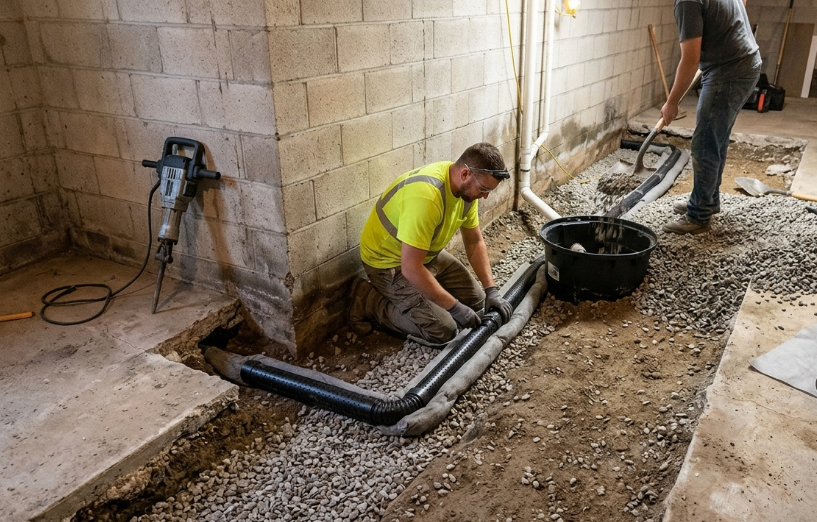
An interior drainage system can collect water that reaches the basement perimeter or comes through specific foundation areas. Rather than allowing water to spread across the floor, the drainage path directs it toward a collection point. In systems that use a sump pump, collected water can then be moved away from the home. This setup is especially useful where groundwater regularly enters the basement or where exterior excavation is not practical.
Exterior drainage works on the source side of the problem. It can help keep groundwater and surface water from remaining against foundation walls. Depending on the property, drainage may include properly placed pipes, gravel, waterproof barriers, grading improvements, or other measures designed to move water away from the structure. Stopping water before it reaches the foundation can reduce the amount of moisture that the basement has to deal with.
Drainage systems need somewhere for collected water to go. A sump pump is commonly used to remove water from a collection basin and discharge it away from the foundation.
A properly working pump can be particularly important during storms when water levels rise quickly. Backup protection may also be considered where basement flooding could cause major damage. The goal is simple: collect water, move it, and keep it from returning to the basement.
The biggest advantage of a drainage solution is not simply removing today's water. It is reducing the conditions that allow the same problem to happen again.
Basement drainage system installation in Lowell, MA can create a dependable route for water instead of leaving moisture to move through soil, cracks, joints, or other weak areas around the foundation. When drainage is designed around the actual source of the water, homeowners can spend less time reacting to leaks and more time preventing them.
When water has a clear route away from the home, it is less likely to remain trapped beside foundation walls. Reducing water buildup can also reduce hydrostatic pressure and repeated saturation of the surrounding soil. This helps create a drier environment around the basement.
Recurring dampness can be frustrating because it often returns after conditions change. Drainage provides a consistent way to manage water when the soil becomes wet. This can help reduce wet floors, damp wall sections, and moisture that appears after storms.
Water problems can affect more than flooring. Continued moisture may damage drywall, wood materials, insulation, stored items, and finished spaces. Keeping water under control helps protect the basement as a whole instead of only addressing one visible leak.
A drainage system works best when it matches the way water behaves around the property. Installing a solution without understanding the source can leave homeowners with an expensive system that does not fully solve the problem. Before installation, it is important to look at where water appears, when it appears, and what happens outside the home during wet weather.
Check where moisture first appears during or after rainfall. Does it come through a wall joint, floor edge, crack, or a low area? The location can provide useful clues about whether the issue is related to surface water, groundwater, or a specific foundation condition.
A drainage problem can begin above ground. Gutters full of debris may overflow near the foundation, while short downspouts can release large amounts of water beside basement walls. Keeping roof runoff moving away from the home is a basic but important part of moisture control.
Walk around the outside of the home after rain. Look for areas where water sits close to the foundation or where the ground appears to slope inward. Persistent puddles and soggy soil near basement walls may indicate that exterior drainage needs attention.
Good drainage is not only about choosing the right materials. The system also needs to be installed so water can actually move where it is supposed to go. Poor connections, blocked discharge paths, incorrect slopes, or inadequate drainage capacity can reduce the system's effectiveness. Maintenance also matters because debris, pump failure, and damaged components can eventually create new water problems.
A drainage system depends on a clear route. If water cannot move efficiently through that route, it may collect again around the foundation. Proper placement and slope help maintain consistent flow and reduce areas where water can stand.
Moving water away from the basement is only part of the job. It also needs to stay away after discharge. The outlet should be positioned so removed water does not simply flow back toward the foundation. This is especially important during periods of heavy rainfall.
A drainage system should not be treated as a set-it-and-forget-it solution. Gutters need cleaning, discharge points should remain clear, and sump pumps should be checked regularly where applicable. Basic maintenance can catch problems before a major storm exposes them.
There are situations where repeated water problems point to a larger moisture-control issue. Water that returns after every heavy storm, dampness across several basement areas, or a sump pump that runs constantly deserves a closer look. A professional assessment can help determine whether the problem is caused by surface drainage, groundwater, foundation conditions, or a combination of issues.
The important thing is to treat the source rather than repeatedly covering up the evidence. A basement that gets wet over and over is usually telling you something about how water is moving around the property.
Recurring basement water is often a drainage problem in disguise. Sealing visible cracks or cleaning up after a flood may provide temporary relief, but long-term protection comes from giving water a reliable path away from the foundation.
A properly planned drainage system can reduce water buildup, limit pressure against foundation walls, and help keep the basement dry through changing weather conditions. Homeowners should also understand the role of grading, gutters, downspouts, sump pumps, and regular maintenance.
One useful term to understand is hydrostatic pressure, which describes the pressure created by water at rest. Managing that pressure is an important part of protecting a basement from recurring moisture problems.