 English
 Arabic
 French
 Spanish
 Portuguese
 Deutsch
 Turkish
 Dutch
Dutch
 Italiano
 Russian
 Romaian
 Portuguese (Brazil)
 Greek
Greek
Next-Generation Chip Packaging and Smart Manufacturing Technologies Drive Long-Term Market Growth
Literature |
2026-05-26 06:21:44
 Social Networth OS
 Creator Commerce
 Launch Startup
 Global News
 Creator Award
 Talkfever App
Mostra tutti i risultati
Talkfever App
Mostra tutti i risultati

Passa a Pro
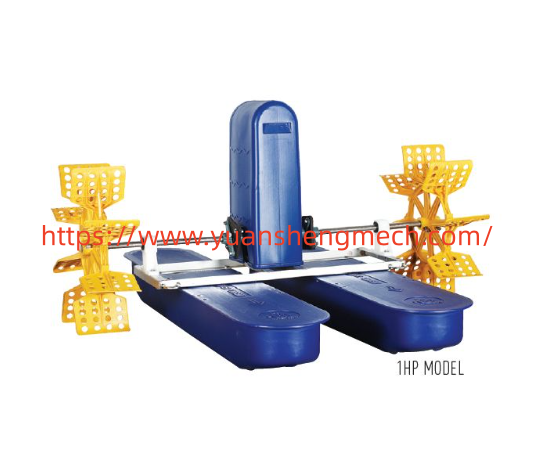
Air movement systems are used across many environments where controlled airflow is essential to daily operation. When evaluating a Vortex Air Blower, users should consider material compatibility, internal airflow design, operating conditions, installation, maintenance, system integration, and overall equipment usability. Taizhou Yuansheng Aquaculture Machinery Co., Ltd. provides a practical manufacturing perspective for understanding how blower construction can support aeration, ventilation, and other air-handling applications.
Material selection should begin with the environment in which the blower will operate. Housing materials need to provide structural stability while protecting internal components from surrounding conditions. Components such as impellers, shafts, bearings, seals, fasteners, and connection sections also require suitable material choices. When equipment is used near water or in humid environments, material compatibility becomes particularly important.
The external housing serves more than an aesthetic purpose. It protects internal mechanical elements while providing a stable structure for installation. A well-organized housing can also make inspection and cleaning easier. Smooth external surfaces may help reduce the accumulation of dust or residue, while protective sections can shield important components during everyday operation.
Purchasing decisions should be based on the intended airflow application. Blowers can support aeration, air circulation, ventilation, suction, pneumatic movement, or other processes. The most suitable configuration depends on how air will enter the system, where it needs to travel, and what equipment will receive the airflow. Evaluating the complete system can therefore be more useful than choosing a blower based only on its general product category.
The internal airflow path is central to blower technology. A rotating impeller works together with the housing and internal passage to create air movement. The design of these components influences how smoothly air travels through the equipment. Careful mechanical coordination can support stable airflow while limiting unnecessary complexity in the structure.
Connected components also affect blower performance. Filters, pipes, valves, diffusers, connectors, and other accessories can create resistance within the airflow pathway. A properly planned system should consider these elements together. Keeping the airflow route organized can help the blower work more effectively and reduce avoidable operating demands.
Control technology can improve equipment usability. Depending on the application, operators may need to start, stop, monitor, or adjust the blower according to changing conditions. Clear controls and suitable protection features can make daily operation easier to understand. In automated facilities, the blower can also be integrated into a broader control system for coordinated air management.
Noise and vibration are important user-experience considerations. Rotating machinery naturally produces mechanical movement, but thoughtful structural design and secure installation can help maintain a more stable operating environment. Balanced components, appropriate mounting, and regular inspection can all contribute to smoother equipment operation.
Maintenance accessibility should be evaluated before installation. Blowers may accumulate dust, moisture, or other contaminants depending on the surrounding environment. Easy access to important components can simplify inspection and cleaning. Practical service arrangements can also help maintenance personnel identify wear or connection issues before they affect the wider system.
Installation flexibility is another purchasing consideration. Equipment may need to fit within existing machinery, production areas, aquaculture facilities, or water-management systems. A logically arranged connection structure can simplify installation and reduce unnecessary changes to surrounding equipment. Access for future inspection should also be considered when selecting the installation position.
For aquaculture applications, air blowers can support aeration systems that introduce air into water and encourage circulation. The effectiveness of such a system depends on the relationship between the blower, air lines, diffusers, water conditions, and pond or tank layout. Choosing equipment with the wider aeration arrangement in mind can help create a more coordinated operating system.
The user experience also depends on equipment identification and daily handling. Clearly organized connections and accessible components allow operators to understand the equipment more easily. When routine checks can be performed without unnecessary effort, maintenance becomes a more manageable part of daily operations.
Design and appearance can contribute to practical equipment organization. A clean external structure can make machinery areas appear more orderly, while protective housings can keep mechanical elements visually contained. Compact construction can also be useful where installation space is limited. Good design connects appearance with accessibility, protection, and maintenance rather than treating aesthetics as a separate concern.
Energy-conscious system planning is another consideration. Blower efficiency depends not only on the machine itself but also on the resistance created by the connected airflow system. Clean filters, well-maintained air pathways, suitable connections, and appropriate equipment selection can help avoid unnecessary operating effort.
Long-term usability is closely related to maintenance and system planning. Regular inspection of connections, rotating components, seals, protective structures, and airflow pathways can help identify potential issues at an early stage. Keeping the surrounding system clean and organized can also support more consistent equipment operation.
Taizhou Yuansheng Aquaculture Machinery Co., Ltd. provides a practical reference for businesses evaluating air-handling equipment through material selection, airflow technology, installation, maintenance, operator convenience, system integration, and equipment design. More information about its machinery and aquaculture-related solutions is available at https://www.yuanshengmech.com/.


