English
 Arabic
 French
 Spanish
 Portuguese
 Deutsch
 Turkish
 Dutch
Dutch
 Italiano
 Russian
 Romaian
 Portuguese (Brazil)
 Greek
Greek
Is It Legal to Convert YouTube Videos to MP3?
Music |
2026-07-14 10:07:38
 Social Networth OS
 Creator Commerce
 Launch Startup
 Global News
 Creator Award
 Talkfever App
عرض كل النتائج
Talkfever App
عرض كل النتائج

ترقية الحساب
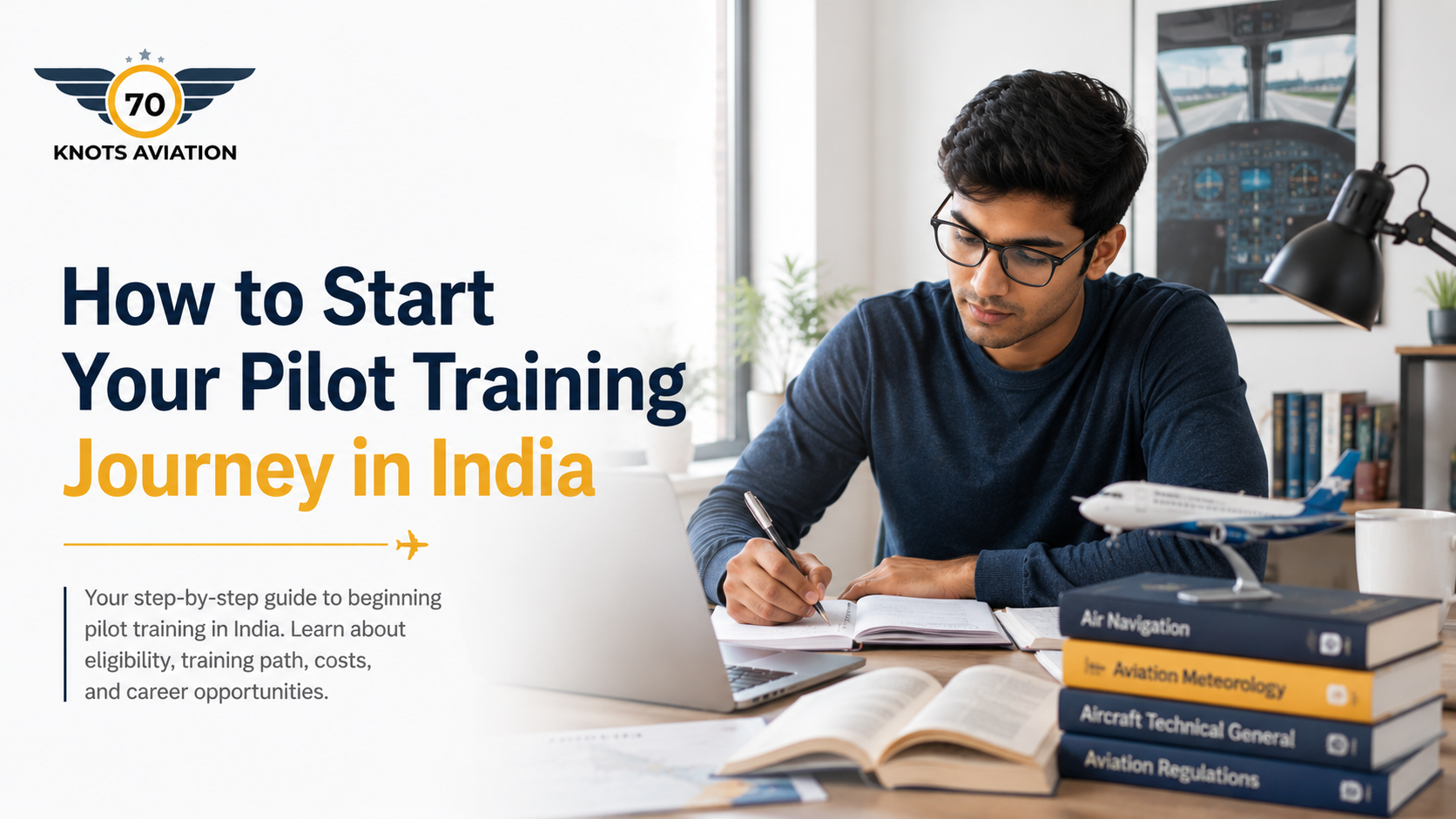
A career as a pilot combines technical knowledge, practical skills, discipline, and a strong sense of responsibility. For students who dream of flying commercial aircraft, the journey begins long before entering a cockpit. Understanding the educational requirements, medical standards, examinations, flight training, and career pathway can help students prepare more effectively.
For anyone researching How to become a pilot, the first step is to understand that pilot training is a structured process. Students need to complete different stages of theoretical and practical training while meeting the requirements established by aviation authorities.
70Knots Aviation provides educational guidance for students who want to understand aviation careers, pilot training, DGCA examinations, and the skills required to progress in the industry.
Becoming a professional pilot requires preparation at both academic and practical levels. Students should begin by understanding the requirements for the licence they want to pursue.
The journey generally involves:
Because aviation regulations can change, students should always confirm current requirements through official DGCA sources before making important training decisions.
Students interested in professional pilot training should pay close attention to their educational qualifications. Subjects such as Physics and Mathematics can be particularly important for students pursuing professional aviation pathways.
Aviation training involves calculations, navigation concepts, weather information, aircraft systems, and regulatory knowledge. Therefore, a good academic foundation can make theoretical training easier.
Students who feel that they are weak in mathematics or physics should not immediately assume that aviation is unsuitable for them. Instead, they can work on their fundamentals before beginning advanced aviation studies.
Medical fitness is an important part of becoming a professional pilot. Aviation involves demanding responsibilities, and pilots must meet prescribed medical standards.
Students should consider completing the relevant medical assessment early in their planning process. This can help them understand whether they meet the applicable requirements before making significant investments in training.
Medical requirements can depend on the type of licence and aviation role, so students should consult an authorised aviation medical professional and verify the latest applicable regulations.
Theoretical knowledge plays a major role in pilot training. Students preparing for professional aviation careers will need to understand the examination requirements applicable to their chosen licence.
The DGCA Pariksha stage can involve subjects related to areas such as:
Students should approach these examinations as an essential part of their pilot education rather than simply as tests that need to be passed.
A consistent study routine can help students manage aviation subjects more effectively.
Students should:
Strong theoretical knowledge can later support practical decision-making during flight training.
Ground studies provide the knowledge required to understand aviation, while flight training teaches students how to apply that knowledge in an aircraft.
During practical training, students gradually develop skills related to aircraft handling, communication, navigation, take-offs, landings, emergency procedures, and operational awareness.
Training is normally conducted progressively. Students begin with fundamental skills and gradually take on more complex flying tasks as their competence develops.
An important lesson for aspiring pilots is that flying is not about rushing through the training programme. Safety, consistency, and competence should remain the priorities.
Financial planning is one of the most important aspects of aviation education.
The pilot training cost in India can vary depending on several factors. There is no universal amount that applies to every student because training expenses can depend on the organisation, aircraft, location, flying hours, accommodation, examinations, medical expenses, and other requirements.
Before enrolling, students and parents should request a complete fee structure.
Possible expenses may include:
Students should also ask whether the advertised package includes all major expenses or whether certain charges are billed separately.
Pilot training can represent a significant financial commitment. Unexpected expenses can create difficulties if students do not plan in advance.
A better approach is to create an estimated budget covering both training and living expenses.
Students should also understand that training duration may vary. Weather, aircraft availability, scheduling, student performance, and other operational factors can influence the pace of training.
Many students search online for the Best pilot training institute in India when beginning their research.
However, students should avoid selecting an institute solely because it appears frequently in search results or has attractive advertisements.
Instead, compare training providers using practical criteria.
Verify the organisation's regulatory status and ensure that its training activities meet applicable aviation requirements.
Regular access to suitable aircraft is an important consideration because practical training depends on flying opportunities.
Qualified and experienced instructors can provide valuable guidance during both normal training and challenging stages of learning.
Students should ask how flight scheduling is managed and what happens if aircraft are unavailable or weather affects operations.
A transparent fee structure allows students to compare options more accurately.
Where possible, speak with current or former students about their experience. Their feedback may provide useful information about administration, scheduling, instructor support, and training quality.
A strong training environment should encourage students to develop safe and professional habits.
Important characteristics include:
The purpose of pilot training is not simply to complete a checklist. Students need to develop the confidence and competence required to operate within a highly regulated aviation environment.
Students often focus heavily on technical subjects and flying hours, but professional pilots also need strong personal and interpersonal skills.
Some important qualities include:
Pilots must communicate clearly with instructors, air traffic control, crew members, and other aviation professionals.
Aviation can involve rapidly changing situations. Pilots must learn how to assess information and make appropriate decisions.
Pilots need to continuously understand what is happening around the aircraft and anticipate possible changes.
Aviation follows detailed procedures. Students must develop the habit of following instructions and checklists accurately.
Modern aviation relies heavily on cooperation between pilots, cabin crew, air traffic controllers, engineers, dispatchers, and other professionals.
Students can avoid many problems by researching their training pathway before enrolling.
Some common mistakes include:
Good research before training can prevent many avoidable problems later.
For students entering the aviation field, reliable educational information can make the early stages less confusing.
70Knots Aviation focuses on helping aspiring pilots understand important aviation concepts, training requirements, examination preparation, and career-related information.
Students can use educational resources to build their understanding before making decisions about flight training.
The objective should always be to make decisions based on accurate information rather than unrealistic expectations about training, costs, or employment.
The first step is to understand the eligibility and medical requirements applicable to your desired pilot licence. Students should then plan their academic preparation and training pathway.
Training duration can vary between students and organisations. Weather, aircraft availability, scheduling, examination progress, and individual performance can affect the overall timeline.
Pilot training generally includes theoretical education and practical flight training. The exact structure depends on the licence and training organisation.
The pilot training cost in India varies depending on the training organisation, aircraft, location, flying hours, accommodation, examinations, and other expenses. Students should request a detailed fee breakdown before enrolling.
The DGCA Pariksha system is associated with applicable aviation examinations under DGCA's regulatory framework. Students should understand the examinations relevant to their particular licence.
Instead of relying on a single ranking, compare institutes based on regulatory compliance, aircraft availability, instructors, infrastructure, fees, scheduling, student feedback, and overall training quality.
Students should have the required academic qualifications, but being initially weak in mathematics does not necessarily mean they cannot learn aviation-related concepts. Consistent practice and proper academic preparation can improve understanding.
No. Pilots require extensive theoretical knowledge covering subjects such as regulations, navigation, meteorology, aircraft systems, and communication. Practical flying is only one part of professional preparation.
No. A licence is an important qualification, but airline recruitment can involve additional requirements, assessments, experience, and other eligibility criteria.
Choosing aviation as a career is a major decision, and students should approach the process with realistic expectations. Research the requirements carefully, understand the financial commitment, prepare seriously for theoretical examinations, and evaluate training organisations before enrolling.
If you are exploring How to become a pilot, start with reliable information and build your pathway step by step. Understand DGCA Pariksha, research the complete pilot training cost in India, and compare training providers carefully before deciding which organisation is suitable for you.
With proper preparation, discipline, and a strong commitment to learning, students can build a solid foundation for a professional career in aviation with guidance from educational platforms such as 70Knots Aviation.