English
 Arabic
 French
 Spanish
 Portuguese
 Deutsch
 Turkish
 Dutch
Dutch
 Italiano
 Russian
 Romaian
 Portuguese (Brazil)
 Greek
Greek
{Top Performer} Workday-Pro-Recruiting Exam Questions for Maximum Confidence
Crafts |
2026-08-04 12:17:54
 Social Networth OS
 Creator Commerce
 Launch Startup
 Global News
 Creator Award
 Talkfever App
TOON ALLES
Talkfever App
TOON ALLES

Upgrade to Pro
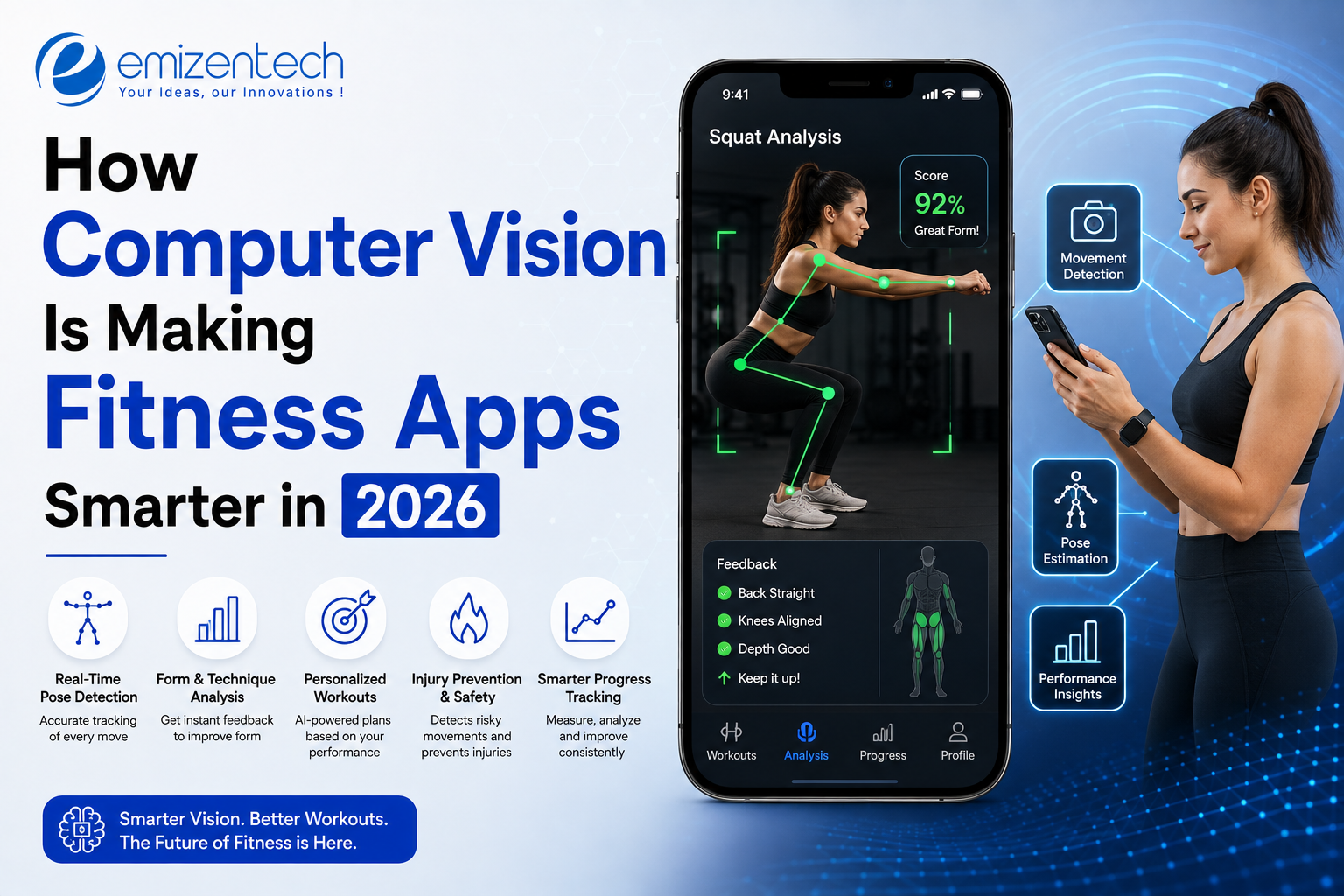
Imagine following a workout video at home and wondering whether your squat depth is correct or if your posture is putting unnecessary strain on your back. For many people, exercising without a trainer means relying on guesswork. While fitness apps have made workouts more accessible, users increasingly expect guidance that feels personalized and accurate.
This is where computer vision is changing the experience. By enabling apps to analyze body movements through a smartphone or device camera, computer vision helps users receive real-time feedback during workouts. Instead of simply tracking steps or calories, fitness apps can now evaluate movement quality, detect form issues, and provide more meaningful coaching.
As demand for intelligent fitness experiences continues to grow, computer vision is becoming a key technology shaping the future of digital fitness. This article explores how it works, why fitness apps are moving beyond traditional tracking methods, and the ways computer vision is making workouts smarter, safer, and more engaging in 2026.
Computer vision is a branch of artificial intelligence that enables computers and mobile devices to interpret and understand visual information from images and videos. In fitness apps, this technology uses a device's camera to analyze body positions, movements, and exercise patterns in real time.
When a user performs an exercise, the app identifies key body points such as shoulders, hips, knees, and elbows. It then tracks how those points move during a workout. By comparing movement patterns against predefined exercise models, the app can determine whether an exercise is being performed correctly and provide immediate feedback.
Unlike traditional tracking methods that primarily rely on wearables or manual inputs, computer vision allows fitness apps to understand how users move, making coaching more interactive and personalized.
Wearable devices remain valuable tools for tracking health and fitness data, but they have limitations when it comes to understanding movement quality and exercise technique.
These factors are encouraging developers to explore technologies that deliver deeper insights than traditional tracking methods alone.
Computer vision is helping fitness apps move beyond basic activity tracking by analyzing user movements in real time. These capabilities enable smarter coaching, better accuracy, personalized guidance, and a more interactive workout experience.
One of the most valuable applications of computer vision is its ability to identify incorrect exercise form while a workout is in progress. By monitoring body alignment and movement patterns, apps can alert users when adjustments are needed. This helps reduce the risk of injury and encourages safer workout habits.
Many users lose count during repetitive exercises, especially during high-intensity workouts. Computer vision can automatically detect completed repetitions by tracking movement cycles. This improves workout accuracy and removes the need for manual logging, creating a smoother exercise experience.
Computer vision allows fitness apps to learn from how users move. By analyzing performance trends, flexibility, and movement quality, apps can suggest exercises that match individual fitness levels and goals. This creates a more tailored fitness experience that evolves over time.
Beyond counting repetitions, computer vision can evaluate movement efficiency and consistency. Users can gain insights into workout quality, range of motion, and progress across training sessions. These insights help people identify areas for improvement and track long-term development.
Many fitness apps now aim to replicate aspects of personal training. Computer vision enables apps to observe workouts and provide guidance during exercise sessions. This creates a more interactive experience that feels closer to working with a real coach while remaining accessible from home.
Traditional fitness tracking often depends on wearable devices. Computer vision offers an alternative by using cameras to monitor workouts without additional hardware. This approach lowers barriers to entry and allows more users to access advanced fitness features using devices they already own.
Computer vision is already being applied across different fitness categories, demonstrating its practical value.
Many home fitness platforms use computer vision to analyze exercise movements and provide instant corrections. This helps users maintain proper form while following guided workout programs.
Yoga-focused applications use movement tracking to assess posture alignment and balance. Users receive feedback that helps improve precision and consistency during poses.
Strength training apps can monitor exercises such as squats, lunges, and deadlifts to evaluate movement patterns and support safer lifting techniques. These capabilities are becoming increasingly relevant in fitness mobile app development, where movement analysis can enhance digital workout experiences.
Rehabilitation programs increasingly use computer vision to monitor recovery exercises remotely. This allows patients to perform prescribed movements while receiving guidance outside clinical environments.
Computer vision provides several advantages that improve the overall fitness experience.
Users receive feedback based on actual movement rather than relying solely on workout completion metrics. This helps improve exercise quality and effectiveness.
Interactive feedback creates a more engaging experience. Users are often more motivated when they can see measurable improvements in their performance.
Advanced coaching features are becoming available through smartphones and tablets, reducing the need for specialized equipment or frequent trainer sessions.
Computer vision enables fitness apps to deliver individualized guidance to large numbers of users simultaneously, making personalized fitness support more widely available.
Although the technology has improved significantly, some challenges remain.
Lighting conditions, camera angles, and background distractions can affect movement detection and overall accuracy.
Users may have concerns about how video data is collected, processed, and stored. Transparent privacy practices remain important.
Not all devices offer the same processing capabilities. Older smartphones may struggle to support advanced real-time movement analysis features.
Future developments are likely to make fitness experiences even more intelligent.
As these technologies mature, fitness apps will become increasingly adaptive and responsive to individual user needs.
Computer vision is changing how fitness apps can support users by turning movement data into useful, real-time feedback. For businesses, this shift offers practical opportunities to create more helpful and engaging fitness experiences.
Computer vision is helping fitness apps move beyond basic activity tracking by enabling more personalized and interactive workout experiences. From analyzing exercise form to providing real-time movement feedback, it can help users train with greater awareness and consistency.
As smartphone cameras and AI capabilities continue to advance, features such as 3D motion tracking, predictive coaching, and augmented reality could make fitness apps even more responsive to individual needs. EmizenTech follows these developments as part of the broader evolution of fitness technology, where smarter tools are creating new ways for users to exercise, track progress, and stay engaged with their fitness goals.
Computer vision uses a device camera and AI algorithms to analyze body movements, identify exercise patterns, and provide feedback based on movement quality.
Not entirely. Computer vision and wearables serve different purposes. Wearables excel at tracking physiological metrics, while computer vision focuses on movement analysis and exercise form.
Modern systems can achieve high levels of accuracy, particularly when users exercise in well-lit environments with proper camera positioning.
Privacy depends on the app's policies and security practices. Reputable apps typically explain how data is processed and protected.
Various home workout, yoga, strength training, and rehabilitation applications use computer vision features to provide exercise tracking and movement analysis.