English
 Arabic
 French
 Spanish
 Portuguese
 Deutsch
 Turkish
 Dutch
Dutch
 Italiano
 Russian
 Romaian
 Portuguese (Brazil)
 Greek
Greek
Benefits of Digital Marketing for Online Business Leads
Other |
2025-03-27 14:25:46
 Social Networth OS
 Creator Commerce
 Launch Startup
 Global News
 Creator Award
 Talkfever App
Mostra tutti i risultati
Talkfever App
Mostra tutti i risultati

Passa a Pro
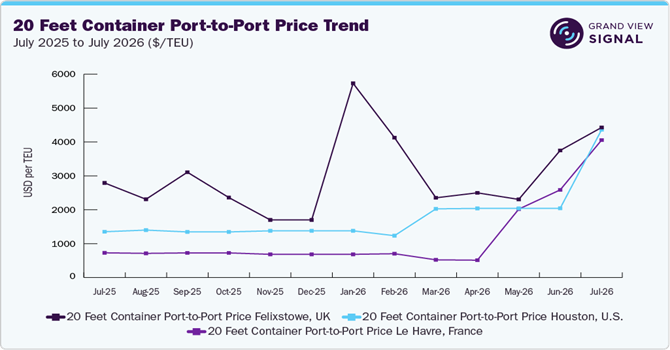
On March 26, 2024, a single vessel failure brought down Baltimore’s Francis Scott Key Bridge, locking the ninth-busiest U.S. port overnight and forcing thousands of auto and heavy-machinery shipments onto already congested East Coast intermodal hubs. Far from being an isolated accident, the event coincided with ongoing security blockades in the Red Sea and severe draft caps through the Panama Canal.
Within weeks, ocean freight schedules collapsed into a domino effect: container ships rerouted 14 extra days around Africa’s Cape of Good Hope, creating a phantom shortage of physical TEU boxes in Asian export hubs like Shanghai and Ningbo.
This is the reality of modern global commerce. Supply chains no longer experience temporary disruptions followed by a return to the normal baseline. Instead, persistent geopolitical friction, carbon regulatory fees, and infrastructure bottlenecks perpetually force shipping rates to rebaseline. For Beneficial Cargo Owners (BCOs) and logistics leaders, relying on annual contract RFPs or delayed month-end spot indices is no longer just ineffective; it is an operational liability.
Navigating these compounding cost pressures requires real-time lane visibility and proactive cost modeling rather than reactive spot booking. Operating as a SaaS-driven commodity pricing intelligence platform, Grand View Signal equips enterprise procurement and logistics executives with continuous cross-mode transparency, enabling decision-makers to anticipate capacity shifts and protect operating margins before supply chain shocks occur.
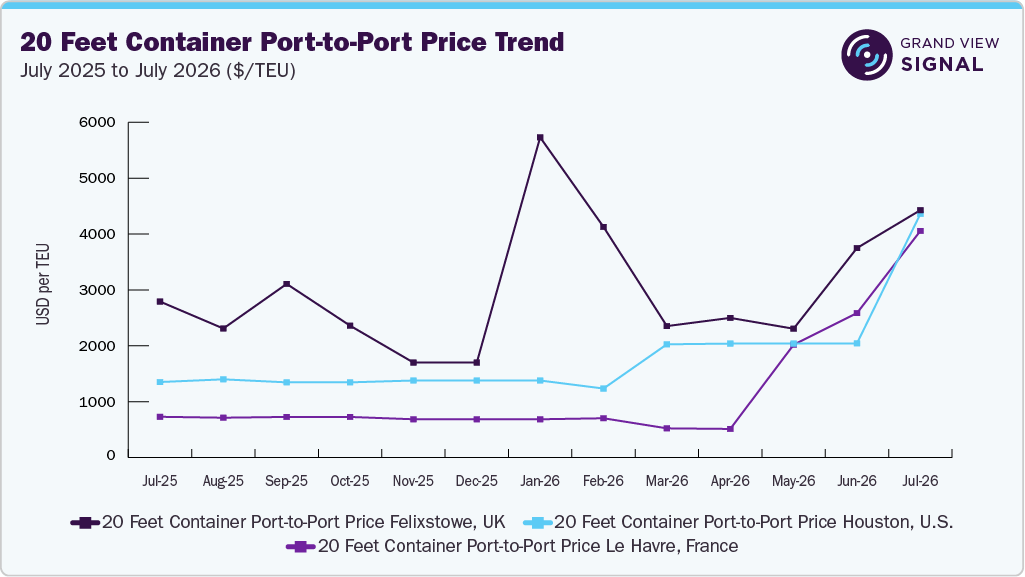
To survive this new climate, procurement leaders must look past localized rate spikes and understand three fundamental shifts redefining transportation cost structures:
Logistics friction no longer stays neatly in its lane. When security threats or canal capacity restrictions force ocean carriers to divert fleet capacity, ocean container rates spike first. But the shock waves move fast: urgent, high-value inventory immediately shifts to air cargo, causing air spot rates to skyrocket on belly-hold capacity squeezes. Once vessels finally dock at alternate ports, local drayage and Class I rail lines face sudden surges in volume, driving up inland chassis fees and demurrage charges. Measuring logistics cost today requires mapping how ocean, air, and domestic land freight dynamically impact one another.
This cross-modal friction is particularly evident in specialized shipping. For out-of-gauge, heavy machinery, and project cargo, port-to-port breakbulk rate trends from major hubs like Shanghai, China, serve as a critical leading indicator. As multi-purpose vessel (MPV) capacity gets squeezed by general cargo overflow, Shanghai port-to-port breakbulk tariffs experienced a 15.1% price drop in the last year, directly impacting baseline budgets for industrial, energy, and infrastructure equipment long before finished consumer goods feel the impact.
Schedule a free demo of Grand View Signal to get real-time preview of price fluctuations in the Freight Sector
Regulatory overhead is no longer an abstract corporate sustainability goal; it is an aggressive, line-item transport charge. Under maritime environmental mandates such as the EU’s Emissions Trading System (EU ETS) and regional low-emission zones, ocean lines and road fleets pass carbon compliance costs directly on to cargo owners via green surcharges. Shippers can no longer evaluate a trade lane purely on distance and fuel; total logistics spend now includes mandatory regulatory compliance penalties built into baseline carrier pricing.
While carriers adapt to volatility by issuing bi-weekly General Rate Increases (GRIs) and emergency Peak Season Surcharges (PSS), BCOs face a tough reality: cautious retail and industrial buyers refuse to absorb higher transport costs. Because enterprise shippers cannot easily pass unexpected logistics surcharges down to end consumers without risking market share, every unbudgeted container fee or air cargo premium comes directly out of enterprise gross margins.
Get historical, current, and forecast freight price assessments. Request Free Access to Grand View Signal
Thriving in an era of perpetual supply chain friction requires moving from reactive shipping management to predictive market intelligence. Waiting for a post-transit invoice to identify a carrier’s emergency surcharges, or relying on informal broker estimates, leaves procurement teams vulnerable to severe margin erosion.
Grand View Signal redefines how executives manage this global exposure by functioning as a unified, SaaS-driven commodity price intelligence platform. Instead of forcing supply chain leaders to react to market shocks after the fact, Signal connects cross-mode spot data, predictive risk modeling, and granular cost decomposition into a single operational interface. Procurement and logistics teams gain instant access to real-time market-referenced pricing across global sea, air, and land corridors, enabling them to benchmark forwarder quotes against true physical spot dynamics before issuing tenders.
Furthermore, by combining historical trend analysis with forward-looking risk radars, the platform anticipates carrier blanked sailings, port equipment bottlenecks, and rate spikes weeks before capacity tightens. By isolating raw freight tariffs from underlying fuel surcharges and green carbon compliance fees, Signal enables decision-makers with the precise data needed to negotiate transparent contracts, execute dynamic sea-air routing arbitrage, and turn transport uncertainty into a sustainable margin advantage.
Get detailed driver impact analysis on freight prices. Request Free Access to Grand View Signal
Read our latest article on how Grand View Signal can assist procurement team with EU PPWR compliance