English
 Arabic
 French
 Spanish
 Portuguese
 Deutsch
 Turkish
 Dutch
Dutch
 Italiano
 Russian
 Romaian
 Portuguese (Brazil)
 Greek
Greek
Who Can Apply for MA One Sitting Degree Programs? Eligibility Guide 2026
Literature |
2026-06-11 09:59:27
 Social Networth OS
 Creator Commerce
 Launch Startup
 Global News
 Creator Award
 Talkfever App
Mostra tutti i risultati
Talkfever App
Mostra tutti i risultati

Passa a Pro
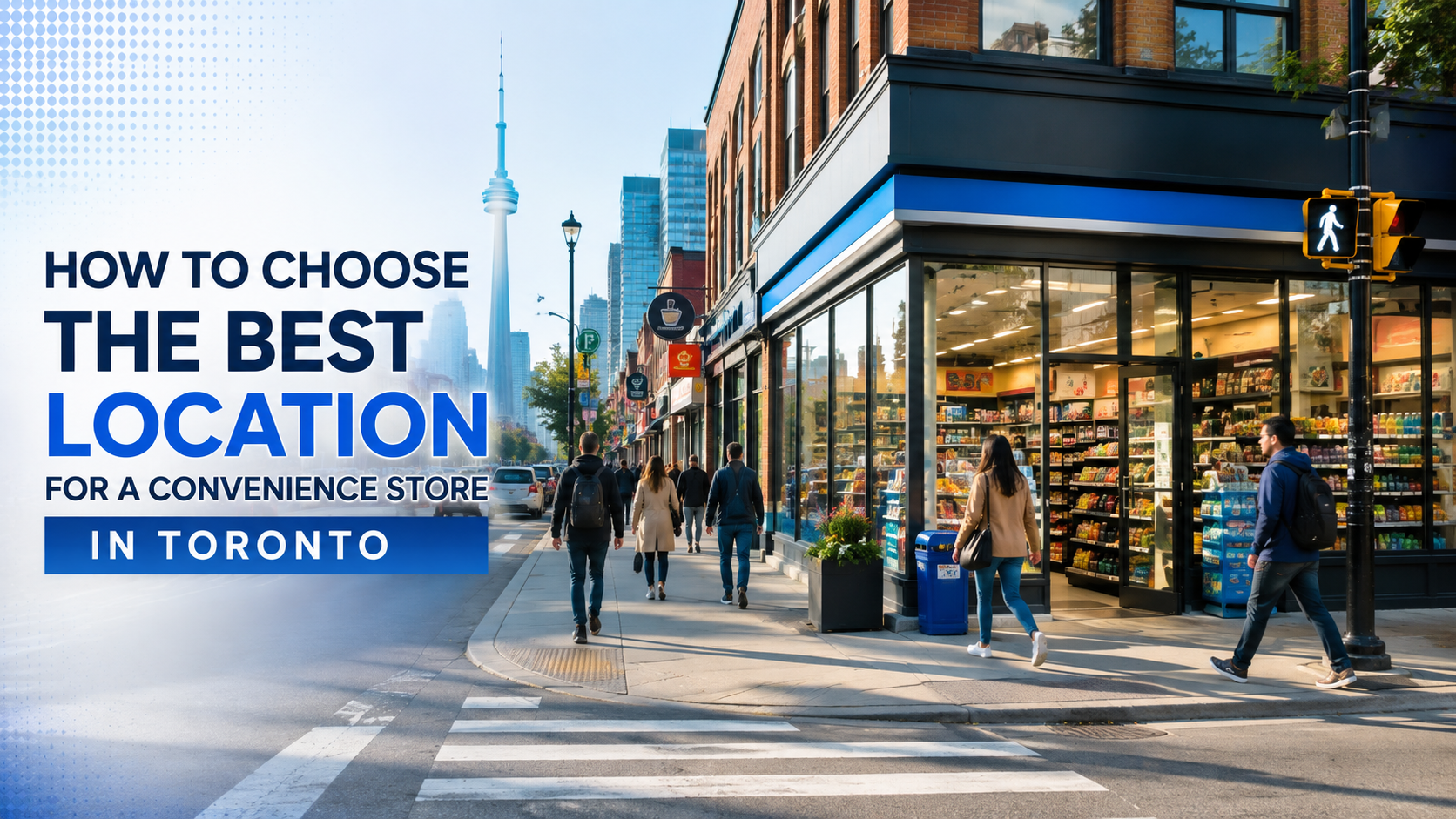
Most first-time store owners spend weeks agonizing over their shelving layout, their supplier list, their opening-week promotions. Then they sign a lease on a spot they only walked past twice. That order of priorities is backwards. Talk to anyone who has run a corner store in this city for more than a few years and they will tell you the same thing: the address decides almost everything else. Your rent, the type of customer who walks in, even how comfortably you can stay open late, all of it traces back to the corner you picked.
This guide breaks down what actually separates a location that works from one that quietly drains money for two years before you give up on it. It is built around how commercial site-selection teams evaluate retail spots, scaled down to what matters for an independently run convenience store.
A convenience store does not sell to people who planned a trip. It sells to people already moving through the neighbourhood: grabbing milk on the walk home, coffee before a shift starts, a lottery ticket on a lunch break. That is a completely different kind of demand than a destination shop that can pull customers from across the city. For a store built on impulse visits, the customer base basically has to already be within a short walk, or a five-to-ten-minute drive at most.
That is the real question behind every "best location" search: how many people pass this spot on foot each day, how easily can they get in and out, and who actually lives or works close enough to make this part of their routine? Nail those three, and the rest of the business plan has a fighting chance.
Foot traffic is about as close as retail gets to a sure thing. More people walking past means more people walking in, and that beats almost any amount of marketing spend. But raw pedestrian counts only tell half the story. A storefront hidden behind construction hoarding, or set back too far from the sidewalk, will underperform a much busier street simply because nobody notices it is there. A spot that is hard to see or awkward to reach will disappoint no matter how good the demographics around it look on paper.
This is especially true if you are planning to run a 24 hour convenience store near Toronto. Late-night visibility works differently than daytime visibility: good street lighting, a storefront that reads clearly after dark, and an approach that still feels safe and easy at 2am all matter as much as the daytime pedestrian count. A block that looks perfect at noon can feel deserted and uninviting after midnight, which changes who actually walks in during your latest hours.
Every neighbourhood shops differently. A store near a university leans hard into snacks, energy drinks, and late-night basics. A store tucked into a residential pocket sells more milk, bread, and everyday staples. When you are sizing up a block, population density, income levels, age mix, and whether the area is full of daytime office workers or evening residents all shape what actually sells. Downtown Toronto is a good example of how dense this city gets; the core holds something like 16,600 people per square kilometre, among the highest concentrations anywhere in the country. That kind of density means one well-placed store can realistically serve thousands of people nearby without either side needing a car.
However people reach your door, on foot, by transit, or by car, the approach matters more than most new owners expect going in. For a category built on impulse visits, easy entry and exit and a clear sightline from the street often end up mattering more than the demographic score itself. In a city like Toronto, that frequently comes down to choosing between a spot near a busy subway exit and a spot with easier street parking. Both can work; they just pull in different kinds of customers.
A convenience store almost never thrives completely on its own, but it also cannot survive squeezed between three others selling the exact same thing. The sweet spot is usually a block with businesses that bring people around without competing for the same basket: a pharmacy, a laundromat, or a coffee shop nearby all help more than they hurt.
Even a perfect corner is useless if the space is not zoned for retail. Before signing anything, confirm the address is properly zoned for commercial use, either through the City's zoning maps or by pulling a formal Zoning Applicable Law Certificate as part of your business licence application. Skipping this step is one of the most common, and most expensive, mistakes new operators make. A lease signed on unzoned space can mean months of delay, or scrapping the plan entirely.
Beyond zoning, a convenience store in Toronto generally needs a business licence, a health inspection through Toronto Public Health, and, if tobacco, lottery, or alcohol is part of the plan, provincial approval on top of that. Since September 2024, convenience and grocery stores across Ontario have been allowed to sell alcohol with the right licence from the Alcohol and Gaming Commission of Ontario, and that shift has genuinely changed how some locations get valued. A spot with strong evening foot traffic is worth more than it used to be.
Toronto retail rent has climbed fast, and it is worth knowing the numbers before you start comparing neighbourhoods. Citywide, average asking rents landed around $94 per square foot toward the end of 2025, with the best corridors going for multiples of that. Net lease rates across the wider Toronto region moved too, from roughly $25 per square foot in late 2024 to nearly $30 by late 2025. For a small independent operator, this is exactly why it is worth looking one block off the busiest corridor; you often catch a meaningful share of the same foot traffic for a fraction of the rent.
|
Location Type |
Foot Traffic |
Typical Rent |
Best Fit For |
|
Downtown core / near a subway |
Very high, all day |
High to very high |
24-hour or late-night operations, commuters |
|
Near a university or college |
High, swings with the semester |
Moderate to high |
Snacks, energy drinks, late-night basics |
|
Residential side street |
Steady, moderate |
Low to moderate |
Daily essentials, family staples |
|
Suburban strip plaza |
Moderate, car-dependent |
Moderate |
Households that need parking |
|
Industrial or office-heavy area |
High, weekdays only |
Moderate |
Lunch items, coffee, weekday commuters |
Picture two units, five minutes apart. Unit A sits right on a subway-adjacent corridor with heavy daytime traffic, but the rent sits near the top of that citywide $94-per-square-foot range. Unit B is one block off the main street, on a quieter residential road, at a fraction of the rent, and it already sees a steady stream of families and shift workers who treat that block as part of their daily route. On paper, Unit A looks like the obvious pick, until you realize the rent alone could take years to earn back on convenience-store margins. Unit B, with lower overhead and a dependable, walkable customer base, is often the more sustainable choice for a first-time owner. Catching that trade-off before the lease is signed, not after, is really the whole point of doing proper site evaluation.
If you are weighing that decision as part of a convenience store franchise in Toronto, ON, rather than going fully independent, it is worth knowing that site selection is usually built into the process. Infinity Mart, for instance, includes a dedicated site selection and approval stage for new franchise locations, so the trade-off above gets evaluated with you rather than left entirely on your shoulders.
Confirm the address is zoned for retail or food-related commercial use
Apply for a Zoning Applicable Law Certificate if zoning is not already confirmed
Count foot traffic at different times of day, not just on one visit
Check whether nearby businesses complement your store or compete with it
Look at the block's residential density and daytime working population
Confirm parking, transit access, and how easily customers can get in and out
Get a full breakdown of base rent plus taxes, maintenance, and insurance
Sort out licensing early if tobacco, lottery, or alcohol will be part of the plan
The strongest spots combine steady foot traffic, easy entry and exit, and a nearby population that passes by daily, whether that is residents or people at work. Busy transit corridors and dense residential side streets both work, depending on your rent budget and hours.
One block off a busy main corridor. Rents there are often meaningfully lower while you still catch a real share of the same foot traffic.
Yes. Since September 2024, convenience and grocery stores in Ontario can sell alcohol, but only with a licence from the Alcohol and Gaming Commission of Ontario.
It is non-negotiable. A great location is worthless if the address is not zoned for commercial retail, so confirming zoning or applying for that Zoning Applicable Law Certificate needs to happen before you sign anything.
There is no shortcut around walking the block. Foot traffic, visibility, who is actually in the neighbourhood, how easy the spot is to reach, and whether the zoning checks out all pull in different directions. The right site is usually the one that balances them, not the one that maxes out a single factor. Toronto's rents have climbed enough that the flashiest corner is not automatically the smartest bet; a quieter block with steady daily traffic and lower overhead often builds the more durable business. Whether you are scouting your first location, considering a 24 hour convenience store near Toronto, or exploring a convenience store franchise in Toronto, ON, treat this like its own project: walk the block at different times of day, get the zoning confirmed in writing, and run the rent numbers against realistic sales before you sign.