English
 Arabic
 French
 Spanish
 Portuguese
 Deutsch
 Turkish
 Dutch
Dutch
 Italiano
 Russian
 Romaian
 Portuguese (Brazil)
 Greek
Greek
Professional Roofing Estimating Services | Accurate & Fast Quotes
Home |
2026-08-17 15:50:17
 Social Networth OS
 Creator Commerce
 Launch Startup
 Global News
 Creator Award
 Talkfever App
Mostra tutti i risultati
Talkfever App
Mostra tutti i risultati

Passa a Pro
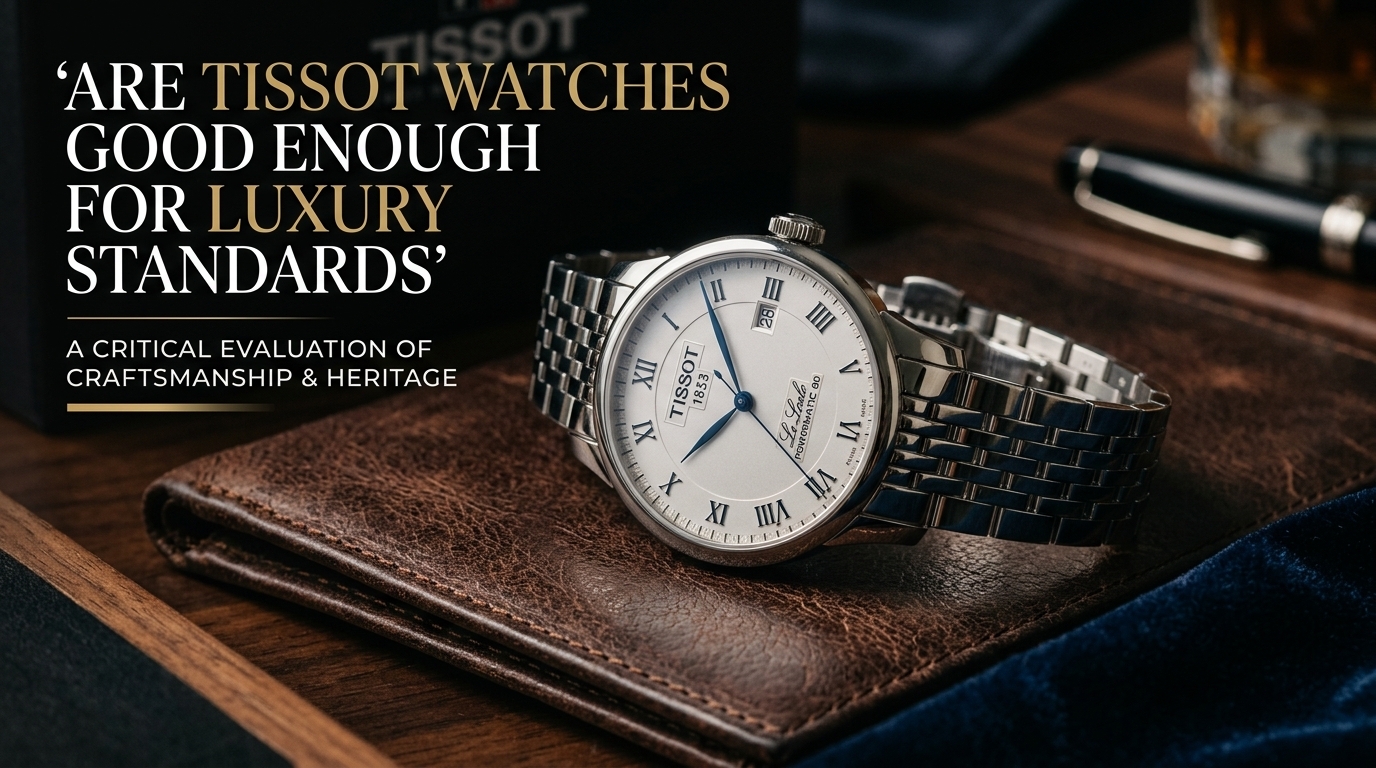
When buyers start hunting for a trustworthy Swiss timepiece, you know, without lighting up a five-figure budget, Tissot kind of pops up really fast. Watch people, and the more casual shoppers can go back and forth about where the brand actually sits, like, is it just affordable everyday wear, or is it “real” luxury horology territory? So if you’re asking, “Are Tissot watches good?" mainly to see if they can hang with modern luxury expectations, then honestly yeah, it’s a sensible place to start, I guess.
Tissot lands in this odd little sweet spot in the watch market. The brand was set up in Le Locle, Switzerland, way back in 1853, and for more than 170 years it has been turning out mechanical as well as quartz watches. Whether Tissot counts as true luxury mostly comes down to how you define luxury right now, because the watch world uses that word… a lot, and not always consistently.
If you want to compare Tissot to strict luxury standards, it helps to look at what the watches are made of and how they’re put together. High-end horology usually leans on four big ideas: movement engineering, material choices, how the case looks and feels, and the whole brand legacy.
Tissot operates under the Swatch Group umbrella, which is basically Switzerland’s largest watch conglomerate. That link matters because it gives Tissot pretty direct access to ETA, and that’s one reason the movements can be pretty consistent from model to model.
A clear example is the Powermatic 80 movement, which shows up in well-known lines like the PRX and the Gentleman. It’s an automatic movement with an 80-hour power reserve, so if you set the watch down Friday night, you can usually pick it up Monday morning, and it’s still running, without having to fully restart. Mechanically, it feels like the watch is doing a bit more than what you’d expect at its price level. And in higher-tier versions, you may also see silicon balance springs, which helps the watch hold up better against magnetic fields from everyday tech, like laptops or smartphones.
If you pick up a modern Tissot, you can often tell pretty quickly that the construction is decent. Tissot commonly uses 316L stainless steel for the case, which is known for solid corrosion resistance and normal day-to-day wear tolerance. A lot of models also go with scratch-resistant sapphire crystal, plus anti-reflective coatings so the dial stays readable when sunlight is being annoying.
Case finishing on newer releases has this “good, but not fussy” vibe. Brushed surfaces show up near polished bevels around the lugs and bezel. The bracelets typically use solid links, and the end-link fitment tends to feel tight, so you don’t really get that loose, rattly feeling people complain about on cheaper watches. It’s not the ultra-meticulous hand-polishing you’d see in the top luxury houses, but compared to what the price suggests, it still tends to feel better made than you’d assume.
To figure out where Tissot belongs, you pretty much have to compare it with brands most people already call luxury, like Rolex, Omega, or Tudor. You can also compare it with mid-range Swiss names like Hamilton and Longines, since they overlap with a lot of the same buyers.
Tissot offers genuine Swiss manufacturing without the kind of price jump that makes you question your life choices. A collector can get heritage, automatic mechanical options, and a clean look without paying an insane amount for the name alone. For daily wear, Tissot often feels like a value you can actually use, not just a concept on a product page.
The Tissot PRX Powermatic 80 is basically the poster child here. It blew up quickly because it brought that 1970s integrated-bracelet look to way more people. The waffle dial texture, the sharp case edges, and the sporty yet smooth profile often remind buyers of higher-priced watches, even if you’re not aiming for that luxury tier.
Still, Tissot isn’t built like a boutique microbrand. Mass production watchmaking means a lot of the work relies on automated precision machinery, and movement finishing can lean more “practical” than “hand-decorated.” Ultra-luxury watchmaking often depends on deeper finishing choices, handwork, custom-decorated movement parts, and precious materials like solid 18k gold or platinum.
Also, there’s the exclusivity factor. At the upper end, brands like Patek Philippe or Rolex generally produce in smaller quantities, and that can create limited-demand pressure. Then, secondary market interest tends to follow, where watches may hold value or even climb. Tissot makes far more units, so their models usually soften in price over time on the pre-owned market.
In the watch industry, Tissot is usually treated as an entry-level Swiss luxury brand. That basically means: no, it’s not chasing handcrafted haute horology, but it’s definitely above basic fashion watches and way above the most generic mass-market quartz options.
If you focus on the core physical stuff—reliable Swiss mechanical movements, sapphire glass to resist scratches, steel that feels properly sturdy, and balanced proportions—Tissot usually delivers what you’d expect from a quality Swiss timepiece. In a lot of cases it works like a bridge into mechanical watch culture for people who want durability and style without taking on the financial risk that comes with more expensive, status-driven brands.
Several specific collections demonstrate how well Tissot meets practical luxury standards:
Tissot PRX Powermatic 80: Highlights retro integrated-bracelet design, strong case geometry, and a textured dial that catches light effectively.
Tissot Gentleman Powermatic 80 Silicium: A versatile design suitable for formal or casual settings, featuring an antimagnetic silicon hairspring.
Tissot Seastar 1000: A robust dive watch offering 300 meters of water resistance, a ceramic bezel insert on select references, and a clear display case back.
Tissot Heritage Visodate: A clean dress watch drawing inspiration from 1950s designs, combining classic dial layouts with modern internal components.
Each model focuses on functional quality and solid engineering rather than artificial marketing prestige.
When you line up Tissot with luxury standards, it really comes down to what you expect. I mean, like, what does “luxury” even mean for you? If luxury is all handmade movements, gold cases, and those very long retail waiting list things, then yeah, Tissot is kind of outside that box. But if luxury is more about Swiss mechanical precision, high-grade materials, and the refined aesthetic details that stay looking sharp for decades, then Tissot actually fits pretty well. And when you’re asking, are Tissot watches good enough for serious collection standards, and you’re looking at real value on the wrist, the answer lands in a pretty simple yes, especially if you want honest Swiss craftsmanship rather than just the name.