English
 Arabic
 French
 Spanish
 Portuguese
 Deutsch
 Turkish
 Dutch
Dutch
 Italiano
 Russian
 Romaian
 Portuguese (Brazil)
 Greek
Greek
Presbyopia Treatment Market Opportunity Insights: Dominant Region Share and Trends Forecast to 2034
Uncategorized |
2026-03-16 07:56:21
 Social Networth OS
 Creator Commerce
 Launch Startup
 Global News
 Creator Award
 Talkfever App
See All
Talkfever App
See All

Upgrade to Pro
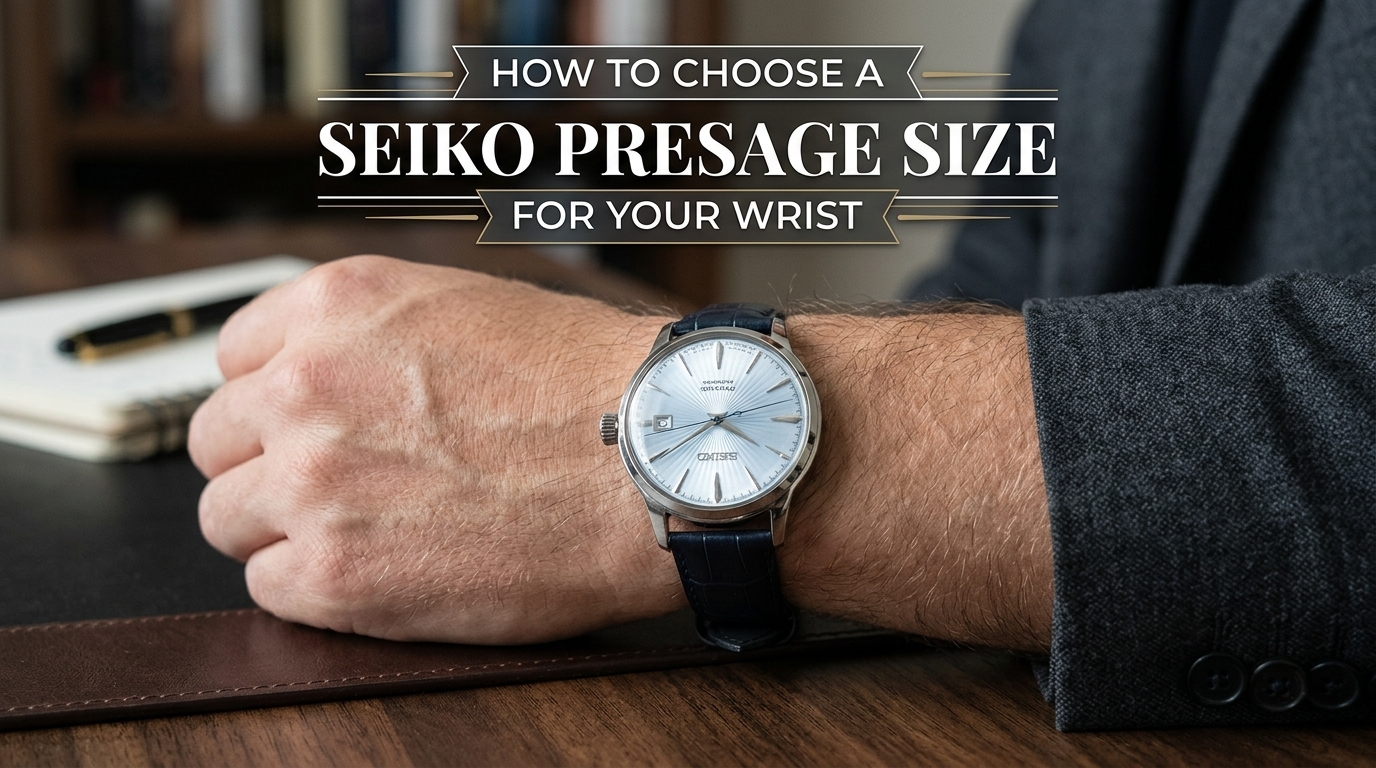
Finding a watch that sits comfortably on your wrist can turn an okay buy into some kind of daily go-to thing. The Seiko Presage lineup has picked up a strong rep for gorgeous dial textures and dependable Japanese mechanical movements, so it’s become a staple for dress watch people. Still, picking the right fit isn't really something you can do just from tidy catalog shots. A watch that looks “perfect” in a high-resolution photo might end up wearing oddly, like too big or somehow too small, depending on your wrist in real life. If you really pay attention to how the case diameter, the lug-to-lug distance, and the total thickness work together, you can usually pick something that rests naturally on the arm without feeling like it’s clinging over the edges or looking undersized, you know.
Wrist proportions are not exactly the same for everybody, honestly. Two people can both say they’ve got a 6.5-inch wrist, and yet the fit can still feel wildly different. A wrist that is flatter and wider usually handles a larger watch dial better, while a rounder wrist often ends up wanting a shorter lug-to-lug distance run. When you focus on those few measurements, you’re more likely to get a watch with real balance, strong comfort, and that good look that holds up during everyday wear.
Across this popular series, the models cover a lot of ground in size, from compact vintage-inspired options to dressier, more contemporary pieces. Most of the lineup lands somewhere in the 38 mm to 41.5 mm case diameter range, but some smaller mid-size models tend to sit roughly between 34 mm and 38 mm. Case diameter is definitely the first thing many buyers notice, but it’s only one piece of the bigger fitting puzzle, and that matters more than most people think.
To get a clear picture of how a watch wears, one needs to consider three distinct dimensions:
Case Diameter: Measured across the watch head from the nine o'clock position to the three o'clock position, excluding the winding crown. Classic Cocktail Time models generally measure around 40.5 mm, while traditional Japanese craftsmanship editions—such as enamel or porcelain dial variants—often measure around 39.5 mm to 40 mm. 5mm.
Lug-to-Lug Distance: This is the measurement from the tip of the top lug down to the tip of the bottom lug. Lug-to-lug determines how much vertical space the watch takes up across the arm. A watch with a 40mm diameter might feature a compact 45mm lug-to-lug, making it fit comfortably on smaller wrists. Conversely, straight or elongated lugs can make a smaller dial feel much wider on the arm.
Case Thickness: Mechanical movements require vertical clearance, especially when equipped with display case backs or domed crystals. Models in this lineup usually range between 11.8mm and 14mm in thickness. A thicker profile sits higher on the wrist, which affects how easily the watch slides under a shirt cuff.
Before comparing watch specs, getting an accurate measurement of the wrist is essential, really. The simplest method is to wrap a flexible tailor tape around the wrist bone where the watch normally sits. The tape should be snug against the skin, without digging in or leaving any slack.
If you do not have a flexible measuring tape around, a piece of string or even a strip of paper works just as well. Wrap the string around the wrist, mark the exact place where the end meets, then lay it flat over a ruler.
Past total circumference, noticing wrist shape also matters a lot for choosing watch proportions. Have a look at the top surface of the arm from straight above:
Flat Wrists: These offer a wider top surface area relative to total circumference. People with flat wrists can often wear watches with longer lug-to-lug spans without experiencing awkward lug overhang.
Round Wrists: These have a narrower top surface area relative to total circumference. People with round wrists generally benefit from shorter lug lengths and thinner profiles to keep the watch centered without constantly shifting.
Once accurate wrist dimensions are established, matching them to specific case profiles becomes a whole lot easier. Here is a breakdown, sort of, of how different wrist sizes mingle with typical watch proportions and the way they visually land on your arm.
People with smaller wrists often run into this issue where modern dress watches feel overly bulky, like they just… don’t behave. For wrists in this range, the ideal case diameter tends to sit between 34mm and 39mm. And lug-to-lug distance under 46 mm keeps the lugs contained in a safer way, inside the wrist edges instead of spilling out.
Compact models around 38mm tend to suit small wrists especially well. Their shorter lug design stops the strap from dropping down at some awkward right angle, so the leather or metal bracelet can contour smoothly around the skin without that “stuck out weird” look.
This is honestly the most common wrist size range, and it gives the greatest flexibility for watch collectors. Almost every standard model in the lineup tends to sit comfortably on a medium wrist.
Case diameters from 39mm to 41mm look natural here, and lug-to-lug measurements from 45mm to 48mm fit across the arm without feeling cramped. Wearers in this range can usually pick between slimmer dress pieces and slightly thicker power-reserve types, without worrying too much about overhang or those odd, off-proportion silhouettes.
If you’ve got larger wrists, full-sized models around 40.5 mm to 42 mm are often supported effortlessly. On a broader wrist, smaller 37mm options might look a bit undersized, while pieces with more prominent lug spans, like 48mm to 50mm, tend to fill out the arm in a more proportional way.
Thicker models, especially ones with complex movement features—calendar sub-dials or central power reserve indicators, for example—can balance nicely on larger wrists. They won’t usually look top-heavy or clumsy, because the wrist area has room to “absorb” the added presence.
Beyond just the straight millimeter measurements on a spec sheet, the physical construction details can shift how big a watch appears to the eye. In other words, it’s not just the numbers. It's also what the watch is made of and how it’s finished.
Dials and Bezel Width: Watches with thin bezels and large open dials wear bigger than their physical dimensions suggest. Many popular dress models feature narrow bezels that showcase light across the full dial surface, making a 40.5mm watch look closer to a 42mm piece on the arm.
Crystal Shape: Box-shaped or heavily domed crystals add vertical interest and vintage character. While a domed crystal increases total thickness on paper, the sloped edges soften the profile so the watch does not feel overly clunky or heavy.
Strap Style: A stiff leather strap can push the lugs upward, creating artificial overhang on smaller wrists. Soft leather or a flexible steel bracelet allows the watch head to settle closer to the skin, instantly improving fit and wearability.
Finding the ideal proportion really comes down to personal preference, clothing style, and that daily comfort feeling. If you compare wrist width with lug-to-lug length, not just the case diameter alone, then any buyer can pick a watch and go ahead with confidence, even if it’s a bit more fussy than you’d think. When the dimensions actually match your wrist profile pretty much on their own, a well-proportioned Seiko Presage ends up looking effortless, and it should feel comfortable for years to come.