English
 Arabic
 French
 Spanish
 Portuguese
 Deutsch
 Turkish
 Dutch
Dutch
 Italiano
 Russian
 Romaian
 Portuguese (Brazil)
 Greek
Greek
How EAP Services Support Better Mental Health at Work
Wellness |
2026-08-17 10:46:07
 Social Networth OS
 Creator Commerce
 Launch Startup
 Global News
 Creator Award
 Talkfever App
عرض كل النتائج
Talkfever App
عرض كل النتائج

ترقية الحساب
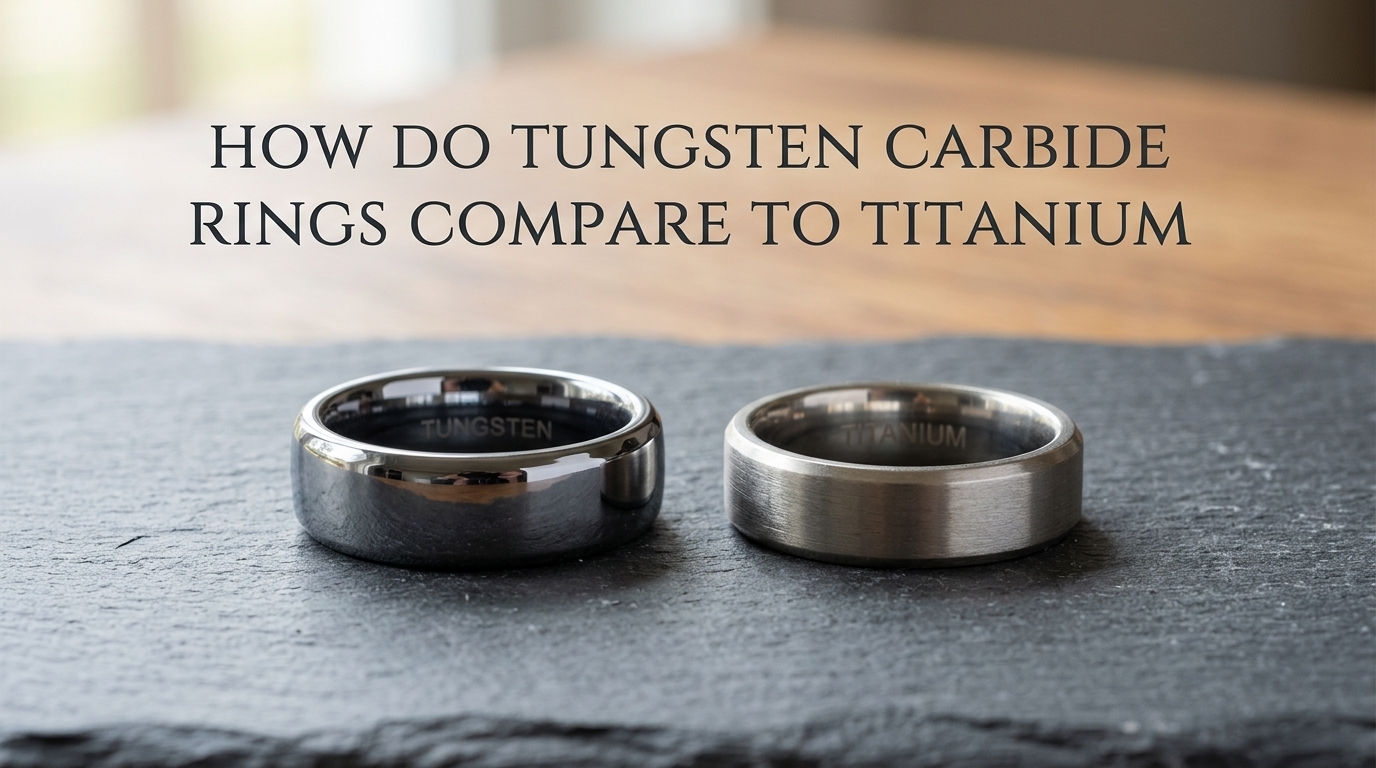
When you’re shopping for a wedding band, or even a kind of stylish daily accessory, it’s… kind of funny how gold and platinum aren’t always the first pick anymore. A lot of modern couples seem to lean toward more current materials, mostly because they give you that steady mix of durability and cost friendliness, without going full old school. In this more alternative space, titanium and tungsten carbide are kind of the big names, and it’s not only because they sound “technical” or fashionable. They both have a solid reputation for toughness, but the whole vibe is a little different, and so are the everyday habits they tend to match with.
So if you’re still stuck choosing, it usually comes down to what you care the most about in the ring, like how light it feels on your hand, how much scratch resistance you want, or that more reassuring, heavier weight you get when you wear it. Once you spot the key differences between titanium and tungsten carbide rings, the decision starts to feel clearer, and you end up more likely choosing something that actually lasts, a full lifetime even with real-life use not only for photos.
Tungsten is, you know, one of those rare metals that has a melting point so high it kind of feels unreal. Raw tungsten, on its own, is also pretty stubborn about being worked into jewelry stuff because it tends to be brittle. So manufacturers usually don’t leave it alone: they mix tungsten powder with carbon and then add a metallic binder, which is often nickel. That combo basically forms tungsten carbide, and yeah, it becomes a material that’s extremely hard and also very dense.
People like it mostly because it scratches so rarely. On the Mohs hardness scale, the one that goes from one to ten, tungsten carbide lands somewhere around eight to nine. For comparison, diamonds hit ten, and hardened steel is more like seven. With that level of hardness, a ring made from tungsten carbide keeps that polished, mirror-like look for years and years, even for someone who works with their hands daily, like all day.
Titanium is a chemical element that’s known for an impressive strength-to-weight balance. It was discovered in the late 1700s, and since then it’s been used a lot in aviation and in medical tech. But titanium jewelry isn’t like tungsten carbide, since titanium is usually formed into alloys that are mostly pure titanium, plus small amounts of aluminum or vanadium to boost strength, rather than being that fully synthesized compound.
In the jewelry world, you’ll see "commercial-grade titanium” or “aircraft-grade titanium” pretty often. It resists corrosion in a big way, so it usually won’t rust or tarnish when it’s around salt water, sweat, or everyday chemicals. It’s also hypoallergenic, meaning it’s a calmer choice for people with sensitive skin or folks who react to metals like nickel.
The first thing most people notice is weight. Titanium is light, like almost too light. It has the lowest density-to-strength ratio among metallic elements, so a titanium ring can feel close to weightless on the finger. Some wearers even forget they’re wearing it, which sounds good if you’re not used to jewelry or if you move around a lot during the day.
Then there’s tungsten carbide, which is kind of the opposite vibe—people call it heavy for a reason. Its density is close to gold or platinum, so it feels substantial, like there’s “presence” to it. A lot of people link weight with quality, so that extra heft becomes a steady reminder, not a nuisance.
And that weight shows up in daily comfort too. Some think titanium feels a little too “floaty,” like the ring might slide off without them noticing. Others get tired of tungsten’s heaviness, especially after hours of typing, lifting, or physical work. In the end, it’s more about personal feel. Both materials can also be made with a comfort-fit interior, meaning the inner area is slightly curved so it glides over the knuckle more easily, but the actual mass of the metal still stays different no matter what.
Even though both materials are tough compared to softer precious metals, they wear differently. Tungsten carbide is usually the best pick for scratch resistance. Because it’s so hard, it’s almost impossible to scratch during normal daily life. Unless you’re dealing with diamonds or other extremely hard minerals, it generally holds up. That’s why it’s popular with mechanics, construction workers, or anyone who lives near tools.
Titanium, on the other hand, while it’s very strong and resists bending, scratches more easily. Over time it tends to gather a patina of tiny surface marks, sometimes described as a satin finish. Those marks usually don’t weaken the ring, but they do change how it looks. The good side is a jeweler can often buff the surface to bring back the original appearance, while tungsten carbide often barely needs any touch-ups at all.
Still, there’s a trade. Tungsten carbide being super hard also means it’s kind of brittle. Drop a tungsten ring, especially onto tile or concrete with real force, and it can shatter. Titanium is more ductile, so instead of breaking into bits, it tends to bend under extreme crushing pressure. So, no, a titanium ring won’t "explode"; it just deforms more.
One important thing to check before buying is whether you can resize it. Neither material is resized the normal way a jeweler would resize gold or platinum. Their high melting points and overall hardness make cutting, reshaping, and soldering basically not practical with typical techniques. So if your finger size shifts over time, you’ll probably end up replacing the ring rather than resizing it.
In an emergency situation where a ring must be removed quickly, doctors and emergency responders use different methods for each metal. For a titanium ring, standard high-quality ring cutters can cut through the metal, although it takes more effort than cutting gold. For a tungsten ring, emergency personnel use a specialized vice grip tool to apply pressure until the ring safely cracks into pieces, which actually makes emergency removal clean and fast.
The metals also show subtle differences in their overall color. Titanium has that natural, medium-gray tone; it seems a tiny bit darker than white gold or platinum. Tungsten carbide, meanwhile, has a richer, deeper gunmetal gray shade, but it can also be polished into a brilliant, very reflective silver shine. Both materials can be dressed up with lots of different finishes, like brushed, matte, or hammered textures. They can even get coated with black, blue, or rose gold layers; however, those outer coatings can scratch off after some time, and then you end up seeing the natural metal underneath again.
In the end, choosing between these two modern options really comes down to your own lifestyle and how you feel about certain sensations. If you want a ring that feels close to weightless, stays resistant to corrosion, and won’t shatter, titanium is usually the better fit. If you prefer something that feels heavier and more premium in the hand, and you want a ring that stays completely free from scratches for a lifetime, tungsten carbide rings will match what you’re looking for. Either choice still delivers strong value, and both have that contemporary look that seems to hold up over time.