English
 Arabic
 French
 Spanish
 Portuguese
 Deutsch
 Turkish
 Dutch
Dutch
 Italiano
 Russian
 Romaian
 Portuguese (Brazil)
 Greek
Greek
Thane to Shirdi Taxi | Thane to Shirdi Cab
Sem categoria |
2026-04-06 12:03:19
 Social Networth OS
 Creator Commerce
 Launch Startup
 Global News
 Creator Award
 Talkfever App
Ver todos
Talkfever App
Ver todos

Atualizar para Plus
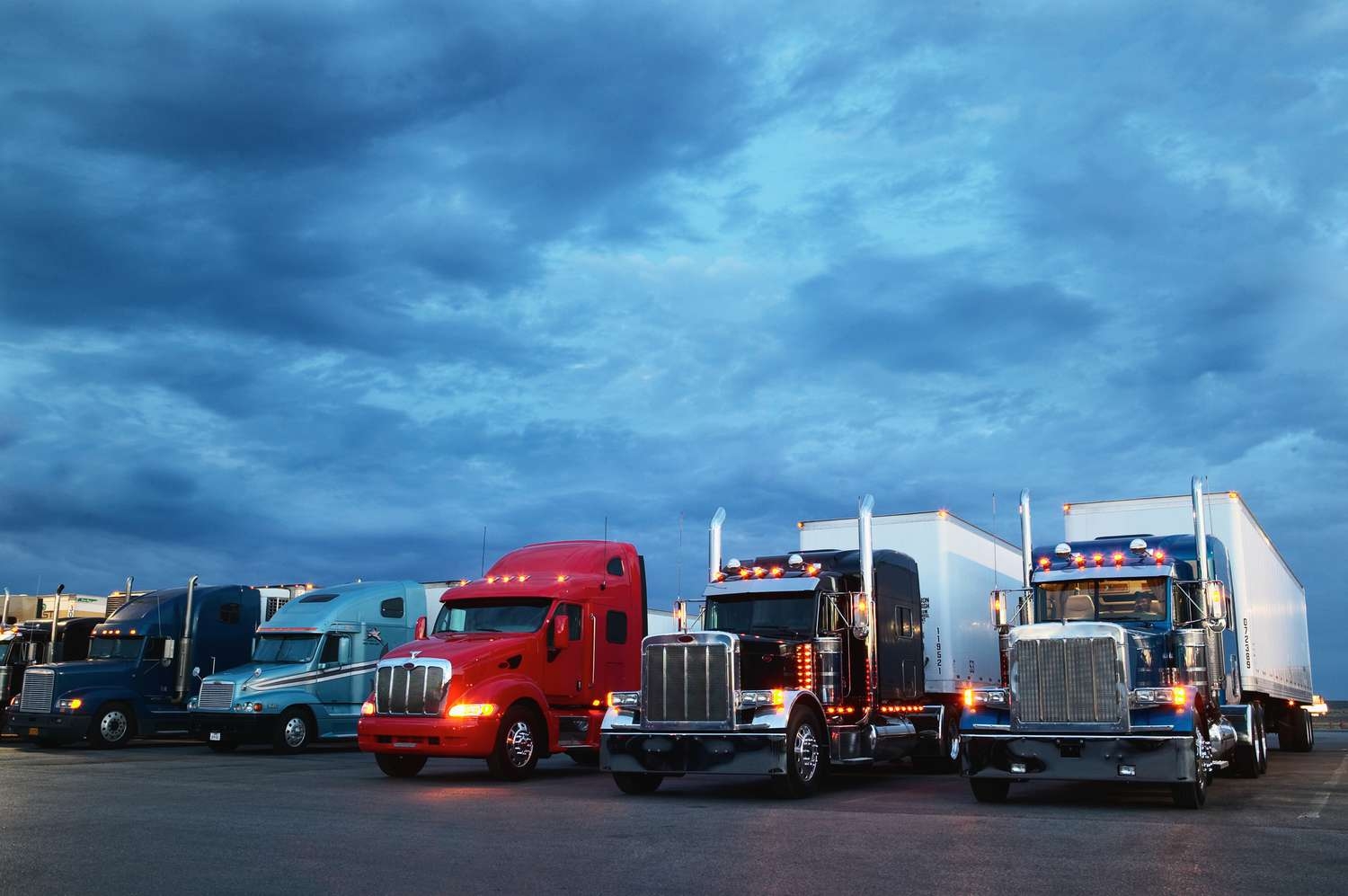
Freight transportation is an essential part of modern supply chains. Manufacturers need raw materials, retailers need inventory, construction companies need building supplies, and businesses across Canada depend on reliable transportation to move products between suppliers, warehouses, distribution centres, and customers.
As freight requirements become more diverse, businesses are no longer limited to a single transportation model. Depending on the size, weight, urgency, and characteristics of a shipment, companies can choose from different equipment and service options.
Among these solutions, truckload transportation remains an important choice for businesses moving substantial quantities of freight. Understanding how truckload transportation works and when it makes sense can help companies make more informed logistics decisions.
Truckload transportation generally involves dedicating the available trailer capacity to one customer's shipment or a primary shipment rather than combining numerous smaller shipments into a less-than-truckload network.
This approach can be particularly useful when a business has enough freight to make use of a significant portion of a trailer.
Instead of dividing a larger shipment across several smaller consignments, a company can arrange transportation designed around the complete load.
This can simplify scheduling and reduce the number of transfers that freight may experience during transportation.
Truckload transportation is commonly considered when shipment volume is relatively high or when the nature of the freight makes a dedicated trailer more practical.
Businesses may consider it when:
Large quantities of products need to move
Freight should travel directly between locations
The shipment is time-sensitive
Cargo requires specific equipment
Multiple pallets are being transported together
The business wants to minimize handling
A delivery schedule needs greater coordination
The exact requirements depend on the shipment and route.
One of the easiest ways to understand truckload transportation is to compare it with less-than-truckload shipping.
LTL transportation is designed for smaller shipments that do not require an entire trailer. Multiple customers' shipments can travel together and may pass through terminals during the journey.
Truckload transportation is more appropriate when the shipment occupies a substantial portion of the trailer or when direct movement is preferred.
Neither option is universally better.
A company shipping a few pallets may find LTL more practical, while a manufacturer moving a large quantity of goods may benefit from a truckload solution.
The right transportation model depends on the characteristics of the shipment.
Businesses should consider:
Shipment size
Weight
Number of pallets
Pickup location
Delivery destination
Required delivery timeframe
Cargo value
Handling requirements
Loading conditions
Equipment requirements
Understanding these factors before contacting a carrier can make it easier to identify an appropriate service.
For companies moving significant quantities of freight, truckload services can provide a practical transportation solution.
These services are designed around larger shipments and can support direct transportation between facilities, distribution centres, warehouses, construction sites, and other destinations.
The benefits can include simpler transportation coordination, reduced handling, and greater control over scheduling.
However, the suitability of a truckload service depends on the specific shipment.
Full truckload services are generally used when a single shipment requires the capacity of an entire trailer or when a shipper prefers to reserve the trailer for its freight.
This can be useful when cargo is large, heavy, high-value, or particularly time-sensitive.
For example, a manufacturer may need to move a large quantity of finished goods from a production facility to a distribution centre. Rather than splitting the freight into several smaller shipments, the company may choose a full truckload arrangement.
Not all truckload freight can be transported in a conventional enclosed trailer.
Construction materials, industrial machinery, steel, lumber, pipes, agricultural equipment, and oversized components may require open-deck equipment.
Flatbed trailers provide access from the sides and top, which can simplify loading with cranes or forklifts.
This makes flatbed transportation particularly useful for freight that is large, unusually shaped, or difficult to load through standard trailer doors.
Selecting the appropriate provider is an important part of freight planning.
A truckload company should ideally have the equipment, service coverage, transportation experience, and operational capabilities needed for the shipment.
Businesses should evaluate factors such as:
Equipment availability
Service coverage
Freight experience
Driver and fleet standards
Scheduling flexibility
Shipment tracking
Customer communication
Safety procedures
Delivery performance
Scalability
A provider that understands the company's freight requirements can potentially offer a smoother transportation experience.
Different types of freight require different equipment.
Dry vans are widely used for standard palletized freight that does not require open access.
Refrigerated trailers can be used for temperature-sensitive products.
Flatbeds are useful for construction materials, machinery, steel, and other freight requiring open-deck access.
Specialized trailers may also be necessary for unusually large or heavy cargo.
Before booking transportation, businesses should provide accurate information about cargo dimensions, weight, loading requirements, and destination so the carrier can determine the appropriate equipment.
One advantage of truckload transportation is the potential for fewer transfers.
A direct truckload shipment may travel from its origin to its destination without passing through the same number of terminals associated with some shared freight networks.
Fewer transfers can simplify the transportation process and may reduce handling exposure.
This can be particularly valuable for sensitive, high-value, or carefully packaged freight.
However, businesses should still confirm how the specific carrier manages loading, unloading, tracking, and delivery.
Truckload transportation is not an isolated service. It is part of a broader supply chain.
A shipment may move from a manufacturer to a warehouse, then from the warehouse to a regional distribution centre before reaching a retail location or customer.
Transportation schedules need to work with inventory planning, warehouse operations, production requirements, and customer commitments.
Businesses that coordinate these stages effectively can improve the overall flow of goods.
Manufacturing companies are among the businesses that may benefit from truckload transportation.
Manufacturers often move large quantities of raw materials, components, finished products, and equipment.
These shipments may have specific delivery schedules connected to production and inventory requirements.
A reliable truckload arrangement can help manufacturers coordinate transportation around their operational schedules.
Retailers and distributors also use larger freight shipments to replenish inventory.
A retailer may need to move products from a central warehouse to multiple regional facilities or stores.
Depending on shipment size, truckload transportation can be used for direct movement between locations.
This can support inventory availability and help businesses prepare for seasonal demand, promotions, and changes in customer purchasing patterns.
Construction companies frequently handle materials that are too large or heavy for conventional parcel or enclosed transportation.
Steel beams, lumber, concrete products, pipes, machinery, generators, and other equipment may require flatbed or specialized truckload transportation.
The loading flexibility of open-deck trailers can make these shipments easier to manage.
Businesses should ensure that the carrier understands the dimensions, weight, securement requirements, and delivery conditions before transportation begins.
Cargo securement is particularly important when transporting freight on flatbed equipment.
Loads need to be properly restrained to protect the cargo, driver, transportation equipment, and other road users.
The appropriate securement method depends on factors such as weight, dimensions, shape, and type of freight.
Businesses should work with transportation providers that follow applicable safety requirements and have experience handling the specific type of cargo being shipped.
Technology has changed how modern freight transportation is managed.
Digital tracking systems can provide businesses with greater visibility into shipment progress.
Transportation teams can use digital communication, GPS-based tracking, electronic documentation, and other logistics tools to coordinate shipments more efficiently.
For businesses with multiple truckload shipments, better visibility can support warehouse planning, inventory management, customer communication, and delivery scheduling.
Transportation costs depend on many factors, including distance, shipment size, weight, fuel costs, equipment requirements, route conditions, and market demand.
Businesses should avoid comparing carriers based solely on the headline transportation rate.
A lower quote may not include the same equipment, service level, tracking capabilities, or delivery flexibility.
When comparing providers, companies should consider the overall value of the transportation service.
Businesses with recurring freight requirements may benefit from developing a long-term transportation strategy.
Rather than arranging every shipment independently, companies can analyze shipment volumes, destinations, seasonal fluctuations, and equipment requirements.
This can help identify where truckload, LTL, flatbed, or other transportation models fit within the supply chain.
A transportation provider that offers multiple solutions may also make it easier to adjust the strategy as freight requirements change.
Before selecting a provider, businesses should ask practical questions.
Does the company have the appropriate equipment? Does it serve the required destinations? Can it accommodate recurring shipments? How does it track freight? What procedures are used for cargo securement? How does the company handle delivery delays?
It is also worth understanding the provider's experience with similar cargo.
An experienced carrier may be better positioned to anticipate transportation challenges and coordinate specialized shipments.
One of the most important points for businesses to understand is that truckload freight can take many forms.
A standard dry-van shipment may require a different approach from an oversized machinery load.
Similarly, a regular full-trailer shipment may have completely different requirements from a flatbed shipment involving construction materials.
The transportation method should therefore be selected based on the actual freight rather than simply the company's usual shipping preference.
The Canadian freight transportation industry continues to adapt as businesses seek greater reliability, visibility, flexibility, and efficiency.
Truckload transportation will remain an important part of this environment because large shipments continue to move through Canada's manufacturing, construction, retail, agriculture, and industrial sectors.
At the same time, specialized equipment such as flatbeds will remain essential for freight that cannot be handled through standard enclosed trailers.
Technology will likely continue improving tracking, scheduling, routing, and communication, while businesses will increasingly look for transportation providers that can support multiple logistics requirements.
Choosing the right freight transportation solution starts with understanding the shipment.
For businesses moving large quantities of goods, truckload transportation can provide direct movement, greater scheduling control, and efficient use of trailer capacity. When cargo requires open-deck access or specialized loading, flatbed transportation can provide additional flexibility.
Businesses considering truckload services should evaluate shipment size, equipment requirements, route, delivery timeframe, cargo characteristics, and overall logistics objectives.
For companies requiring a full trailer for a single shipment, full truckload services can offer a practical way to move freight between facilities while minimizing unnecessary transfers.
Ultimately, the right freight strategy is one that matches transportation methods to the actual requirements of the supply chain. By understanding the differences between truckload, LTL, flatbed, and specialized transportation, businesses can make more informed decisions and build freight operations that support reliable movement from origin to destination.
Truckload services are transportation solutions designed for larger shipments that require a substantial portion or the full capacity of a trailer.
Full truckload transportation generally involves reserving an entire trailer for one customer's shipment or a single primary load.
Truckload transportation may be suitable when a shipment is large, time-sensitive, requires direct movement, or occupies a significant amount of trailer capacity.
Truckload transportation is designed for larger shipments, while LTL combines smaller shipments from multiple customers within a shared transportation network.
Flatbeds are commonly used for construction materials, machinery, steel, lumber, pipes, industrial equipment, and other freight that may require open-deck loading.
Businesses should compare equipment, service coverage, safety procedures, experience, tracking, communication, pricing, and the provider's ability to handle the specific type of freight being shipped.