English
 Arabic
 French
 Spanish
 Portuguese
 Deutsch
 Turkish
 Dutch
Dutch
 Italiano
 Russian
 Romaian
 Portuguese (Brazil)
 Greek
Greek
Small Cell 5G Network Market Benefits from Rising Smart City Projects
Other |
2026-07-08 06:08:13
 Social Networth OS
 Creator Commerce
 Launch Startup
 Global News
 Creator Award
 Talkfever App
Tout voir
Talkfever App
Tout voir

Mise à niveau vers Pro
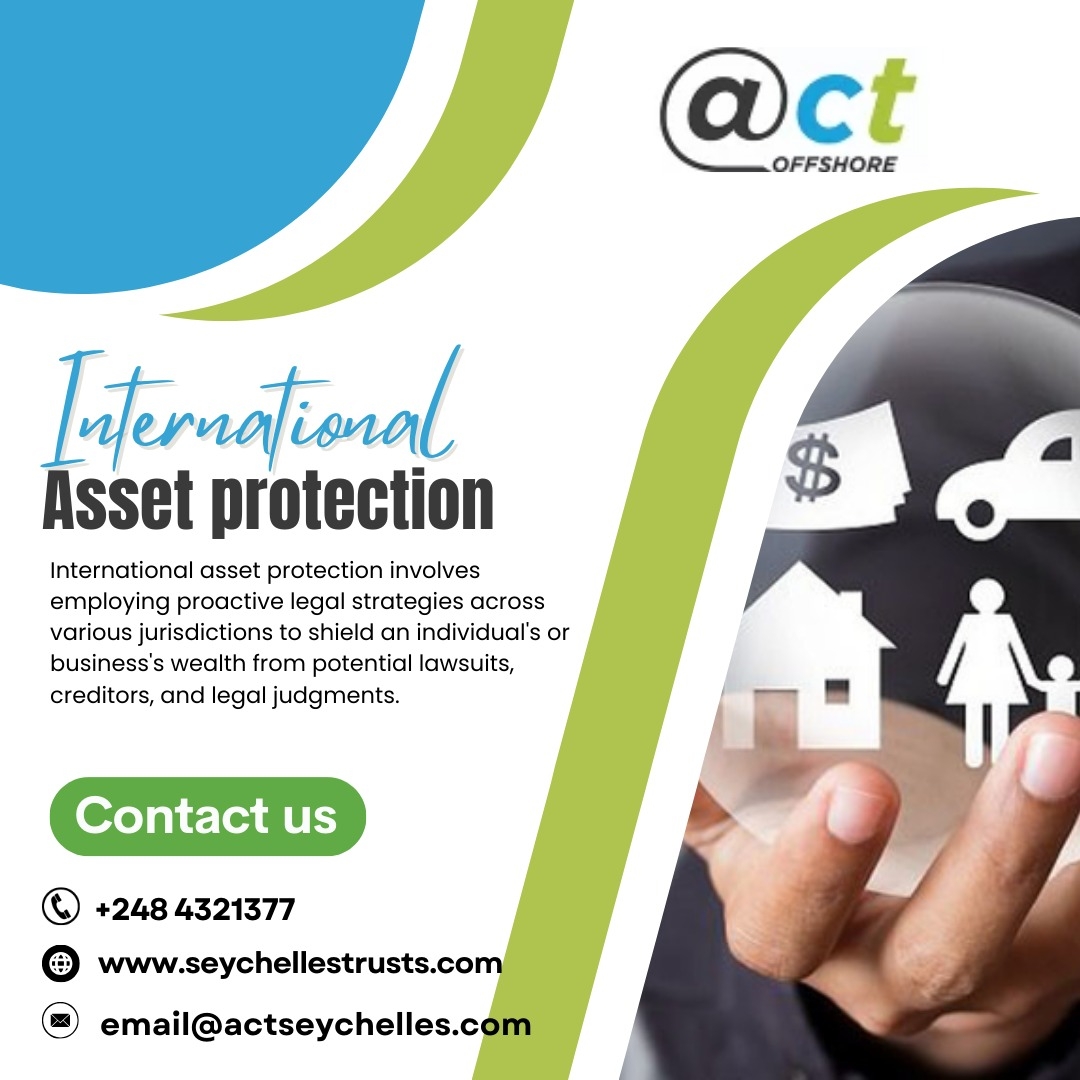
As businesses expand internationally and families spread their investments across different countries, managing wealth can become increasingly complicated. Entrepreneurs may own companies in several jurisdictions, investors may hold international portfolios, and families may have beneficiaries living in different countries. In these situations, International Asset Protection can form part of a broader strategy for organizing wealth, managing risks, and planning for future generations.
Asset protection should be approached as lawful advance planning, not as a way to hide assets, avoid taxes, or defeat legitimate creditors. Modern international financial systems place strong emphasis on beneficial ownership, tax transparency, and information exchange.
International asset protection refers to legally structured arrangements designed to manage and protect eligible assets from certain future risks while supporting broader financial and estate-planning objectives.
Depending on the circumstances, a structure may involve:
The appropriate solution depends heavily on the person's residence, citizenship, asset location, business activities, family circumstances, and applicable laws.
There is no universal international structure that provides protection in every situation.
Business owners and investors can face a variety of financial risks. These may include commercial disputes, business liabilities, professional claims, family succession issues, or unexpected changes in personal circumstances.
Good planning attempts to separate different categories of risk rather than placing every asset under the same ownership arrangement.
For example, an entrepreneur might operate a business through a company while holding certain long-term family investments through a separate structure.
This can create clearer boundaries between operating activities and long-term wealth planning.
Trusts are among the structures commonly considered in international wealth planning.
A basic trust arrangement involves:
Settlor → Trustee → Trust Assets → Beneficiaries
The settlor establishes the trust and transfers eligible assets to the trustee. The trustee then administers those assets according to the trust deed and applicable law.
Depending on the jurisdiction and structure, a trust may provide a framework for:
International trusts can be complex because multiple legal systems may apply. The laws governing the trust do not necessarily override the laws of the settlor's home country or the countries where assets and beneficiaries are located.
A private foundation can also form part of an international wealth structure.
Unlike a traditional trust, a foundation is generally established as a separate legal entity under the law of its jurisdiction.
A foundation may be considered for:
The choice between a trust and foundation depends on the desired governance model, jurisdiction, assets, beneficiaries, and tax considerations.
Holding companies can sometimes be combined with trusts or foundations.
For example:
Family Founder
↓
Trust or Foundation
↓
Holding Company
↓
Business Interests / Investments
The holding company may own shares in operating businesses or investment entities, while the trust or foundation provides a longer-term ownership and succession framework.
This type of structure can help separate ownership from day-to-day business operations.
However, each layer introduces additional administration, compliance, and potential tax considerations. A structure should therefore be created because it serves a genuine purpose, rather than simply because it contains multiple entities.
One of the most important principles of asset protection is advance planning.
Creating a structure after a lawsuit, creditor claim, insolvency event, or known liability has already emerged can create serious legal problems. Transfers may be challenged if they are intended to improperly defeat legitimate claims.
Effective planning generally begins when there is no immediate dispute and when the person remains financially solvent.
The structure should also be supported by proper documentation and genuine administration. Legal professionals increasingly emphasize that an international trust should be treated as a long-term governance structure rather than a simple financial product.
Jurisdiction selection is an important part of international planning.
Rather than choosing a jurisdiction solely because of low fees or marketing claims, consider:
Does the jurisdiction have established laws governing trusts, foundations, companies, or other relevant structures?
Long-term wealth structures require a predictable legal and political environment.
Professional trustees, corporate administrators, and other fiduciaries should operate within an appropriate regulatory framework.
The structure should be assessed against the laws of the countries where the settlor, beneficiaries, assets, and potential legal disputes are connected.
A reputable jurisdiction should have clear procedures for beneficial ownership, anti-money-laundering compliance, and international information exchange.
A common misconception is that international asset protection automatically creates tax benefits.
It does not.
Moving assets or establishing an offshore structure may create additional tax and reporting obligations. Depending on the jurisdictions involved, income, gains, distributions, ownership interests, and trust arrangements may need to be reported.
The OECD notes that international tax transparency standards include exchange-of-information rules and automatic exchange frameworks such as the Common Reporting Standard (CRS).
Therefore, asset protection planning should always be coordinated with tax planning.
International structures are not necessarily anonymous.
Global standards increasingly require authorities and financial institutions to identify beneficial owners and controlling persons. The OECD reports that beneficial ownership information plays an important role in international tax transparency and information exchange.
This means individuals considering trusts, foundations, or holding companies should be prepared to provide appropriate identification and source-of-wealth information to regulated service providers.
Privacy and confidentiality are different from concealing ownership.
Business owners often have greater exposure to commercial risks than individuals with only passive investments.
A carefully designed structure may separate:
For example, an entrepreneur may keep operational activities within an operating company while using a separate holding structure for long-term investments.
This does not eliminate business risk, but it can create clearer ownership and governance arrangements.
Families with significant wealth often need more than a simple inheritance plan.
A family may have:
A trust or foundation can potentially establish rules for how certain assets are managed and distributed over time.
Cross-border succession planning is particularly important because different jurisdictions can apply different inheritance, tax, and reporting rules. Recent guidance on international estate planning highlights the need to consider the jurisdictions of both assets and beneficiaries.
The cheapest structure may not be the most appropriate or sustainable.
Asset planning should generally be completed before known disputes or liabilities arise.
International structures can create tax and reporting obligations in multiple countries.
A structure that exists only on paper while the original owner continues to treat the assets as personal property may face legal challenges. Proper independence and administration matter.
Trust deeds, corporate documents, financial records, beneficiary information, and transaction records should be maintained properly.
International transparency standards have significantly increased reporting and beneficial-ownership requirements.
A sensible planning process can begin with the following steps:
1. Identify your assets
Prepare a complete list of business interests, investments, property, and other significant assets.
2. Identify potential risks
Consider business liabilities, professional risks, succession concerns, family circumstances, and other legitimate planning considerations.
3. Review jurisdictions
Determine which countries' laws may affect the structure.
4. Choose the appropriate vehicle
Consider whether a trust, foundation, holding company, or another arrangement fits the objectives.
5. Obtain legal and tax advice
Cross-border structures should be reviewed by professionals familiar with the relevant jurisdictions.
6. Establish the structure properly
Complete documentation, due diligence, asset transfers, and registrations as required.
7. Maintain the structure
Continue meeting tax, reporting, governance, and regulatory obligations.
International Asset Protection can be an important component of long-term wealth and succession planning for individuals, entrepreneurs, and families with international assets. Trusts, foundations, holding companies, and other structures can provide different forms of ownership, governance, and asset management.
However, effective planning is not about simply moving assets offshore. It is about creating a legally defensible structure with a genuine purpose, appropriate administration, accurate documentation, and compliance with the laws of every relevant jurisdiction.
With careful planning and professional legal and tax advice, international wealth structures can be designed to support long-term family objectives while respecting modern transparency and reporting requirements.