English
 Arabic
 French
 Spanish
 Portuguese
 Deutsch
 Turkish
 Dutch
Dutch
 Italiano
 Russian
 Romaian
 Portuguese (Brazil)
 Greek
Greek
Why Is Combustion Timing Control Unlocking the Full Potential of Homogeneous Charge Compression Ignition Engines?
Music |
2026-06-16 12:49:05
 Social Networth OS
 Creator Commerce
 Launch Startup
 Global News
 Creator Award
 Talkfever App
δες τα όλα
Talkfever App
δες τα όλα

Upgrade to Pro
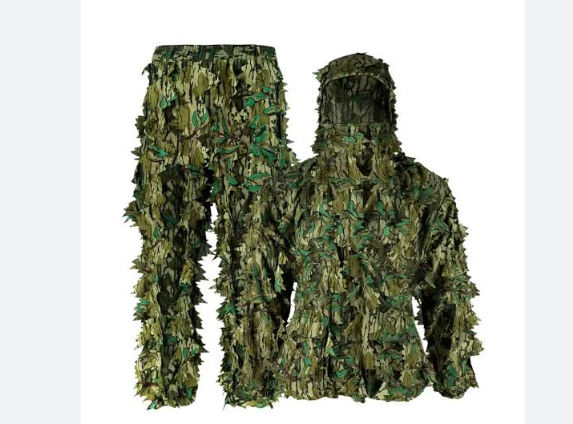
Leafy suit camo is a specialized approach to outdoor camouflage that combines natural-looking colors with three-dimensional fabric elements. Unlike traditional camouflage clothing that depends mainly on printed patterns, leafy designs introduce irregular shapes and physical texture to the outer surface of the garment. This can help break up the recognizable outline of a person when used in suitable vegetation. Hunters, wildlife observers, photographers, and other outdoor enthusiasts may benefit from this type of clothing when spending extended periods in woodland, brush, grassland, or mixed natural environments.
Choosing leafy suit camo involves more than selecting a pattern that looks convincing in a photograph. Outdoor users need clothing that fits their environment while providing practical comfort, mobility, breathability, and durability. Hunters may move through dense vegetation before remaining stationary, while wildlife observers may spend hours waiting quietly in one location. Weather conditions can also change during an outing, making layering and fabric selection important. Understanding these factors can help customers select camouflage clothing that supports their specific activity rather than relying on appearance alone.
Three-dimensional camouflage adds physical depth to an otherwise conventional clothing surface. Leaf-shaped panels, irregular fabric elements, and layered textures can create a less uniform silhouette that interacts with surrounding vegetation. In a natural setting, where leaves, branches, grass, and shadows already produce complex visual patterns, these elements can complement the environment. The effectiveness of any camouflage clothing still depends on positioning, lighting, movement, distance, and the surrounding terrain. For that reason, a leafy garment should be viewed as part of an overall outdoor strategy. Selecting a design that matches the dominant colors and textures of the intended environment is more important than choosing the most elaborate-looking option.
The most appropriate camouflage pattern depends on where the garment will be used. Dense woodland may contain darker greens, brown branches, shadows, and layered foliage, while open fields can feature lighter grass and more exposed ground. Brush and transitional areas may contain a mixture of vegetation and earth tones. Seasonal changes can alter these conditions considerably, so users who spend time outdoors throughout the year should consider how their preferred locations change over time. A versatile pattern may be practical for people who regularly visit different habitats, whereas a more specialized design may suit someone who repeatedly operates within one landscape. Examining the actual environment before purchasing can provide a much better basis for selecting suitable camouflage.
The construction of a leafy camouflage garment can have a significant effect on its usability. Three-dimensional elements should be securely attached without adding unnecessary weight or bulk. Fabric selection should correspond with the expected climate, with breathable lightweight materials often being preferable for warm conditions and roomier construction potentially being more useful when additional layers are required. Buyers should examine stitching, seams, closures, cuffs, and adjustment points for practical quality. Fit is also important because outdoor clothing should allow comfortable walking, crouching, sitting, and reaching. Excessively loose material may catch on branches, while restrictive clothing can make movement uncomfortable. A well-balanced garment should combine visual texture with a construction that remains practical during extended use.
Comfort becomes increasingly important when outdoor clothing is worn for several hours. A suitable leafy garment should allow natural movement without creating unnecessary weight or restricting the wearer. Breathability can help manage heat and moisture during periods of activity, while sufficient room for base layers can improve flexibility in cooler weather. Noise is another consideration for hunters and wildlife observers. Fabric that produces excessive rustling during movement can become distracting, particularly when navigating vegetation or changing position. The garment's leafy elements should also remain manageable rather than becoming tangled easily. A comfortable fit and controlled movement can make the overall outdoor experience more practical and less demanding.
Leafy camouflage can be useful for activities that require users to spend time within natural environments while minimizing obvious visual disruption. Hunters may use this type of clothing when moving through vegetation or remaining stationary, while wildlife photographers and observers may value its irregular texture when working near natural habitats. The garment should be selected according to the specific environment rather than treated as universally effective. Color, texture, movement, and positioning all influence the overall result. Users should also consider their complete setup, including footwear, gloves, headwear, face coverings, and equipment, because highly contrasting accessories can affect the visual consistency of the clothing system.
Outdoor conditions can change quickly, which makes adaptable clothing especially valuable. A lightweight leafy outer layer can be combined with suitable base clothing during mild weather, while colder conditions may require additional insulation underneath. Wind and rain may require a separate protective layer depending on the environment and activity. Buyers should ensure that the leafy garment accommodates necessary layers without becoming restrictive. Ventilation should also be considered because excessive heat can reduce comfort during active movement. Treating the camouflage garment as one component of a complete layering system allows users to adjust their clothing to changing conditions while maintaining practical mobility.
Outdoor camouflage clothing can encounter branches, thorns, soil, moisture, and repeated abrasion. For frequent users, durable construction can therefore be just as important as camouflage design. Stitching should be secure, and three-dimensional elements should remain firmly attached during normal field use. After an outing, users should inspect the garment for loose pieces, damaged seams, worn areas, or accumulated debris. Following appropriate cleaning instructions is particularly important for specialized garments because aggressive washing or drying methods may affect fabric and attached camouflage elements. Proper storage between uses can also help preserve the garment's shape and condition. Buyers should consider both durability and maintenance when evaluating the long-term usefulness of a camouflage suit.
Leafy suit camo can provide a practical combination of three-dimensional texture, visual disruption, and outdoor functionality when matched correctly to the environment. Its effectiveness is influenced not only by the pattern but also by terrain, lighting, movement, positioning, and seasonal vegetation. Buyers should therefore evaluate fabric weight, fit, breathability, quiet movement, durability, weather adaptability, and compatibility with other equipment before making a decision. The best camouflage garment is one that supports the user's actual activity without creating unnecessary restrictions. With careful selection and appropriate preparation, a quality leafy camouflage suit can become a dependable part of an outdoor clothing system for hunting, wildlife observation, and other nature-based activities.