English
 Arabic
 French
 Spanish
 Portuguese
 Deutsch
 Turkish
 Dutch
Dutch
 Italiano
 Russian
 Romaian
 Portuguese (Brazil)
 Greek
Greek
Express Air Cargo Services Market Research Report Highlighting 8.62% CAGR Growth
Music |
2026-06-03 13:39:18
 Social Networth OS
 Creator Commerce
 Launch Startup
 Global News
 Creator Award
 Talkfever App
TOON ALLES
Talkfever App
TOON ALLES

Upgrade to Pro
Finding the right pasta making machine price is an important step for anyone planning a commercial pasta manufacturing business. However, the price of pasta machinery cannot be judged by capacity alone. Automation, construction materials, production requirements, pasta varieties, drying integration, and the overall configuration of the production line can all influence the investment.
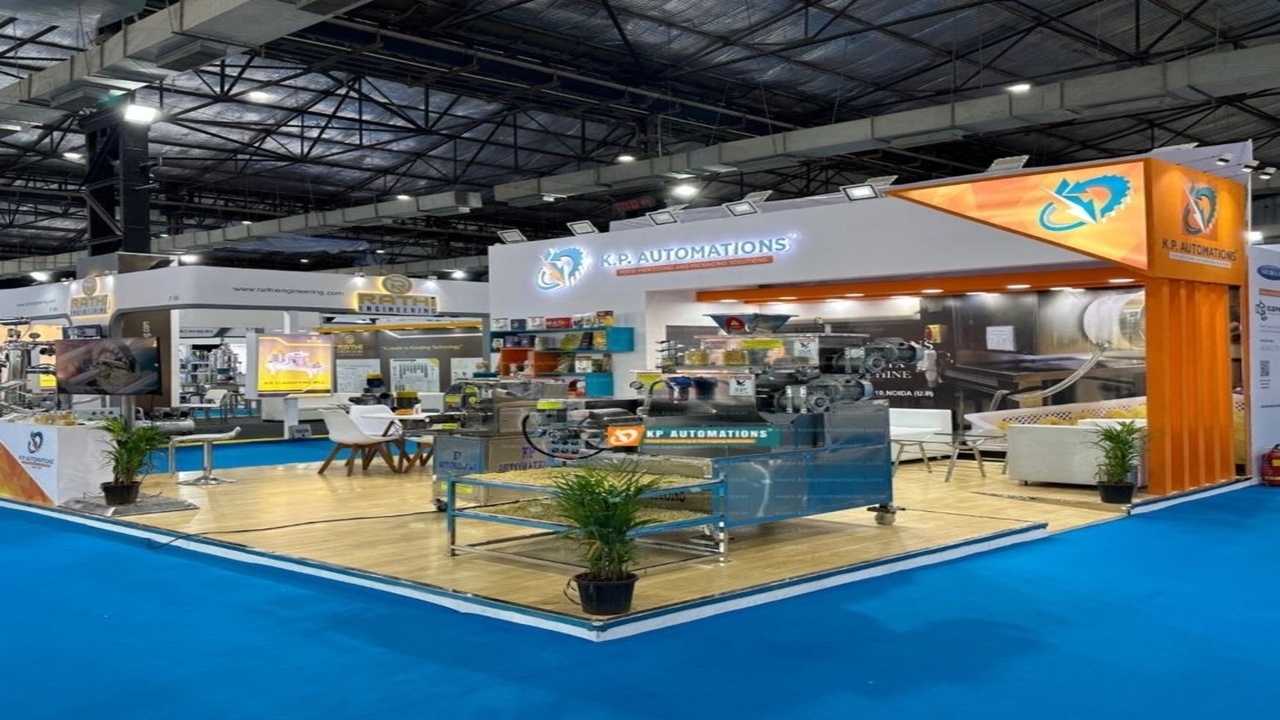
For businesses planning a new pasta plant or expanding an existing facility, understanding these factors can make equipment selection more practical and cost-effective. KP AUTOMATIONS manufactures pasta processing machinery in Noida and offers different configurations for commercial and industrial production.
Production capacity is one of the biggest factors influencing pasta making machine price. A machine designed for a smaller production facility will generally have different specifications from equipment intended for continuous industrial manufacturing.
Current KP AUTOMATIONS listings show examples across several capacity levels. Its listed machines include a 50 kg/hr model at approximately ₹4.5 lakh, a 200 kg/hr pasta making machine at approximately ₹10 lakh, and a 500 kg/hr automatic model at approximately ₹18.9 lakh. These figures illustrate why buyers should specify their required production output before comparing quotations.
For larger projects, the investment can increase substantially because the production system may include extrusion, drying, conveying, cooling, and other integrated equipment.
Automation is another important consideration when evaluating pasta making machine price. Semi-automatic equipment can require more operator involvement, while automatic and fully automatic systems are designed to reduce repetitive manual operations.
KP AUTOMATIONS lists automatic and fully automatic machines with different production capacities. Its fully automatic pasta machine range includes configurations designed for commercial production, while larger systems can be integrated with continuous drying and other processing stages.
For manufacturers operating multiple shifts, automation can provide value through improved process consistency and reduced manual intervention. The appropriate automation level should therefore be determined according to production volume and operating requirements.
A single pasta machine and a complete pasta production line are not the same investment. A standalone machine may handle extrusion and shaping, while a complete facility can include dough preparation, extrusion, cutting, drying, cooling, conveying, and packaging.
For example, KP AUTOMATIONS lists a 200 kg/hr automatic pasta processing line at approximately ₹12 lakh, while a pasta macaroni machine with continuous drying is listed at approximately ₹1 crore for a 1,000 kg production configuration.
This difference demonstrates why buyers should clearly define whether they need an individual machine, a processing line, or a complete turnkey plant.
Construction materials can also affect equipment investment. Food-processing machinery needs to withstand regular cleaning, continuous operation, and demanding production environments.
KP AUTOMATIONS listings specify stainless-steel construction, including SS 304, on several pasta machine models. Some listed machines also use bronze dies for pasta extrusion.
For commercial buyers, construction quality should be evaluated alongside capacity and automation rather than treating the initial machine quotation as the only purchasing criterion.
Drying is an essential stage of commercial pasta production. Freshly extruded pasta must undergo controlled moisture reduction before it can be prepared for storage and packaging.
A production facility may therefore require static drying equipment or a continuous dryer depending on its production model. KP AUTOMATIONS states that its equipment range includes dryers and continuous drying systems for long and short pasta production.
When calculating the overall project investment, buyers should establish whether drying equipment is included in the quoted price or needs to be purchased separately.
The type of pasta being produced can influence the machinery configuration. Manufacturers producing short-cut products may have different requirements from businesses producing spaghetti or other long-cut varieties.
KP AUTOMATIONS lists equipment capable of supporting products such as macaroni, fusilli, shell pasta, elbow, penne, vermicelli, and spaghetti, depending on the machine configuration.
Businesses planning multiple product categories should discuss die requirements and changeover arrangements with the machinery supplier before finalizing the investment.
A machine's purchase price is only one part of its long-term cost. Maintenance, spare components, servicing, energy consumption, and downtime can all influence the actual economics of production.
Manufacturers should ask about the availability of pasta machine parts and technical assistance before purchasing equipment. Keeping important replacement components available can help reduce interruptions when routine maintenance is required.
A reliable supplier should also be able to provide guidance on machine operation and maintenance requirements.
Instead of choosing machinery solely according to the lowest quotation, manufacturers should compare the complete specification. Production capacity, automation, material construction, power requirements, drying integration, product flexibility, installation, and after-sales support should all be considered.
For example, KP AUTOMATIONS currently lists several different machine configurations, ranging from smaller production equipment to high-capacity industrial systems. The published prices therefore provide useful examples, but the final investment should be confirmed according to the exact configuration and project requirements.
KP AUTOMATIONS is based in Noida, Uttar Pradesh, and provides pasta processing machinery for commercial and industrial manufacturers. Its listed portfolio includes pasta making machines, automatic systems, processing lines, dryers, and related equipment.
The company states that it provides equipment ranging from smaller-scale setups to industrial pasta production lines and offers installation and commissioning support for its machinery.
KP AUTOMATIONS
G.B D-372, D Block, Sector 10, Noida, Uttar Pradesh – 201301
Phone: +91-9310738142
Email: kpautomations372@gmail.com
Website: https://pastamachines.in/
The best machinery investment is not necessarily the machine with the lowest purchase price. It is the system that provides appropriate capacity, reliable operation, manageable maintenance, and room for future business development.
A manufacturer producing 50 kg per hour has very different requirements from a factory targeting 500 kg per hour or more. Similarly, a business producing several pasta varieties may need a more flexible configuration than a manufacturer focused on a single product.
Careful capacity planning can therefore prevent both underinvestment and unnecessary expenditure.
Pasta making machine price varies significantly according to capacity, automation, machine configuration, construction, product requirements, and the inclusion of drying or other downstream equipment. Current KP AUTOMATIONS listings demonstrate this range, with individual machines and complete processing systems available at different price levels.
For manufacturers planning a commercial pasta business, the right approach is to identify production requirements first and then request a machine configuration that matches those objectives.
KP AUTOMATIONS can be contacted to discuss production capacity, pasta varieties, automation requirements, and the appropriate machinery configuration for a new or expanding pasta manufacturing facility.
Production capacity, automation, machine design, stainless-steel construction, pasta shape requirements, drying equipment, and the overall production-line configuration can influence pasta making machine price.
KP AUTOMATIONS currently lists a 200 kg/hr automatic pasta making machine at approximately ₹10 lakh per piece. The final quotation can vary according to the required configuration and specifications.
Generally, greater automation can increase the initial equipment investment. However, automated systems can reduce manual intervention and support consistent commercial production.
It depends on the selected configuration. Some pasta production systems can be supplied with integrated continuous drying equipment, while other machines may be purchased separately.
Yes. KP AUTOMATIONS lists pasta machinery across multiple capacity levels, including smaller systems and higher-capacity industrial configurations.
The most accurate approach is to contact KP AUTOMATIONS with your required production capacity, pasta varieties, automation preference, and factory requirements so the appropriate configuration can be quoted.