English
 Arabic
 French
 Spanish
 Portuguese
 Deutsch
 Turkish
 Dutch
Dutch
 Italiano
 Russian
 Romaian
 Portuguese (Brazil)
 Greek
Greek
Report on Biodegradable Garbage Bag Manufacturing Plant Setup with Cost Analysis and Requirements
Other |
2025-04-23 04:31:57
 Social Networth OS
 Creator Commerce
 Launch Startup
 Global News
 Creator Award
 Talkfever App
عرض كل النتائج
Talkfever App
عرض كل النتائج

ترقية الحساب
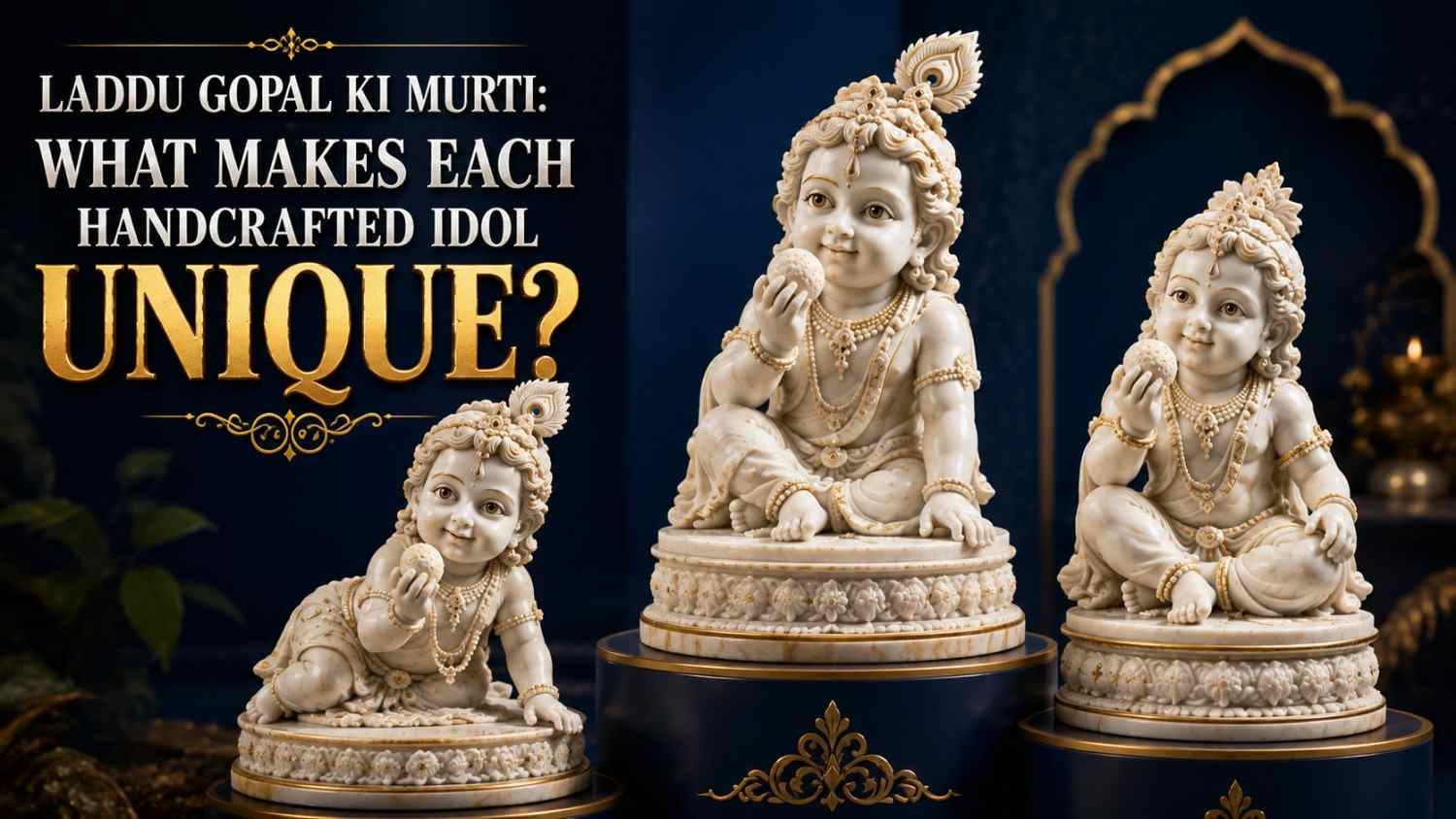
A handcrafted Laddu Gopal Ki Murti is more than a religious sculpture created from marble. Each idol reflects a combination of natural stone characteristics, artisan skill, design choices, and detailed finishing. Even when two murtis follow a similar design, subtle differences in carving and surface texture can make each one distinct.
This individuality is one of the most appealing aspects of handcrafted marble sculpture. Rather than producing identical pieces through a standardized process, artisans work directly with each marble block and adapt their techniques according to its characteristics.
So, what makes every handcrafted Laddu Gopal idol unique?
The uniqueness of a handcrafted murti begins with the marble itself.
Natural marble can vary slightly in:
Grain
Texture
Veining
Surface character
Density
Natural markings
These characteristics mean that artisans may need to adjust their carving approach from one piece of stone to another.
Even when the same design is followed, the natural properties of the marble can give the finished sculpture a slightly different appearance.
Hand carving is not a completely mechanical process.
An experienced sculptor makes decisions throughout the carving process based on the stone, design, and level of detail required.
The artisan determines how much material should be removed and how individual features should be refined.
Small differences in these decisions can influence:
Facial expression
Ornament definition
Clothing details
Body proportions
Surface finish
This is why handcrafted sculptures can have an individual character that standardized production cannot easily reproduce.
The face is one of the most noticeable areas of any devotional sculpture.
Artisans carefully work on features such as:
Eyes
Nose
Lips
Cheeks
Facial proportions
Expression
Even small variations in carving can change the overall appearance of the face.
The artisan must remove material gradually because excessive carving can permanently alter the proportions.
This makes facial sculpting one of the most skill-intensive parts of creating a Laddu Gopal murti.
Traditional Laddu Gopal designs can include elaborate crowns, jewelry, decorative borders, and other ornamental elements.
These details require precision and patience.
Depending on the design, artisans may individually refine:
Crown patterns
Necklace details
Garment borders
Decorative motifs
Other ornamental elements
The depth and sharpness of these carvings can vary slightly from one handcrafted piece to another, contributing to its unique appearance.
Not every Laddu Gopal murti follows exactly the same design.
Variations may occur in:
Posture
Crown style
Ornamentation
Base design
Clothing patterns
Decorative elements
Some designs emphasize simplicity, while others feature extensive ornamental carving.
These choices allow customers to select a murti that suits the style and scale of their home mandir.
Size can influence how much detail an artisan can incorporate into a sculpture.
A larger murti may provide more surface area for intricate ornamentation and decorative patterns.
A smaller idol requires greater precision because the artisan has less physical space in which to create facial and ornamental details.
This means that creating a highly detailed smaller murti can be particularly demanding.
After the main carving is complete, the surface undergoes refinement and finishing.
The artisan works to smooth rough areas while preserving the sharpness of the carved details.
Polishing can influence the way light interacts with the marble surface and can make the sculpture appear more refined.
The final appearance therefore depends not only on the original carving but also on how carefully the surface is finished.
Hand polishing gives artisans an opportunity to inspect the surface closely.
They can identify areas that need additional refinement while making sure that important carved features remain visible.
The goal is to create a balanced finish across the sculpture without making delicate details appear overly smooth.
This final attention to the surface contributes to the character of the completed idol.
Even when an artisan follows the same design, several variables can create differences.
These include:
Natural marble variations
Hand-carving pressure
Individual tool movements
Detail refinement
Polishing techniques
Final finishing decisions
As a result, two murtis based on the same basic design can still have subtle differences.
For many buyers, this individuality is an important part of the appeal of handmade sculpture.
Traditional marble carving relies heavily on the artisan's understanding of proportion, tools, stone behavior, and finishing.
Rather than depending entirely on automated production, the sculptor uses experience to determine how the stone should be shaped.
This approach preserves a connection between the finished idol and the craftsmanship involved in making it.
If you are evaluating a handcrafted murti, look beyond the overall photograph.
Pay attention to:
Facial symmetry
Eye and expression detailing
Crown carving
Ornament definition
Clothing patterns
Base design
Surface finish
Overall proportions
These details can help you understand the amount of craftsmanship involved in a particular piece.
Not necessarily.
Handcrafted individuality does not mean poor finishing or careless carving.
A professionally crafted murti should still have carefully considered proportions, clean detailing, a stable structure, and an appropriate surface finish.
Small variations that result from natural marble or manual carving are different from accidental defects.
The distinction is important when evaluating handmade craftsmanship.
For many buyers, the attraction comes from the combination of devotional significance and traditional artistry.
A handcrafted murti offers:
Individual character
Detailed carving
Natural marble qualities
Artisan-led finishing
Traditional sculptural appeal
Rather than looking identical to every other piece, each idol can have subtle characteristics that make it personally distinctive.
A Laddu Gopal murti can become the visual centerpiece of a home prayer space.
When selecting one, consider the size and design of the mandir as well as the overall aesthetic of the surrounding space.
A carefully chosen marble idol can complement traditional wooden elements, marble surfaces, brass accessories, or a simpler contemporary prayer setup.
The goal is to create a balanced environment where the murti remains the primary focus.
The uniqueness of a handcrafted idol comes from several elements working together.
The marble provides the foundation.
The artisan determines the form.
Hand carving creates the details.
Polishing reveals the surface.
Finishing gives the sculpture its final character.
None of these stages is completely separate from the others. Each contributes to the appearance of the finished Laddu Gopal Ki Murti.
Every handcrafted Laddu Gopal Ki Murti is unique because it combines the natural characteristics of marble with individual artisan decisions. Differences in stone texture, carving, facial details, ornamentation, proportions, and finishing can give each idol its own visual character while maintaining the traditional design.
For those who appreciate this combination of natural stone and skilled craftsmanship, working with an experienced marble murti manufacturer in Jaipur can provide access to handcrafted devotional sculptures created with traditional techniques.
The appeal of a handmade Laddu Gopal is ultimately found in these small differences. Each piece represents not only a design but also the stone, skill, and craftsmanship that went into creating it.
Natural marble varies from block to block, while manual carving and finishing also introduce subtle differences in facial features, ornaments, proportions, and surface texture.
No. A professionally handcrafted murti should have clean carving and balanced proportions. Natural variations and minor artistic differences are part of handmade craftsmanship, while structural defects are a separate issue.
Facial expressions, crown patterns, ornaments, clothing details, posture, base design, and surface finishing can all contribute to its individuality.
Smaller sculptures can require considerable precision because artisans have less surface area for facial and ornamental details.
Natural marble can have differences in texture, grain, density, and markings. These characteristics can influence how the finished sculpture looks after carving and polishing.