English
 Arabic
 French
 Spanish
 Portuguese
 Deutsch
 Turkish
 Dutch
Dutch
 Italiano
 Russian
 Romaian
 Portuguese (Brazil)
 Greek
Greek
Baijnath Taxi Service | Baijnath Cab Service From ₹9/Km - BookUrTaxi
Networking |
2026-03-20 06:35:25
 Social Networth OS
 Creator Commerce
 Launch Startup
 Global News
 Creator Award
 Talkfever App
Mostra tutti i risultati
Talkfever App
Mostra tutti i risultati

Passa a Pro
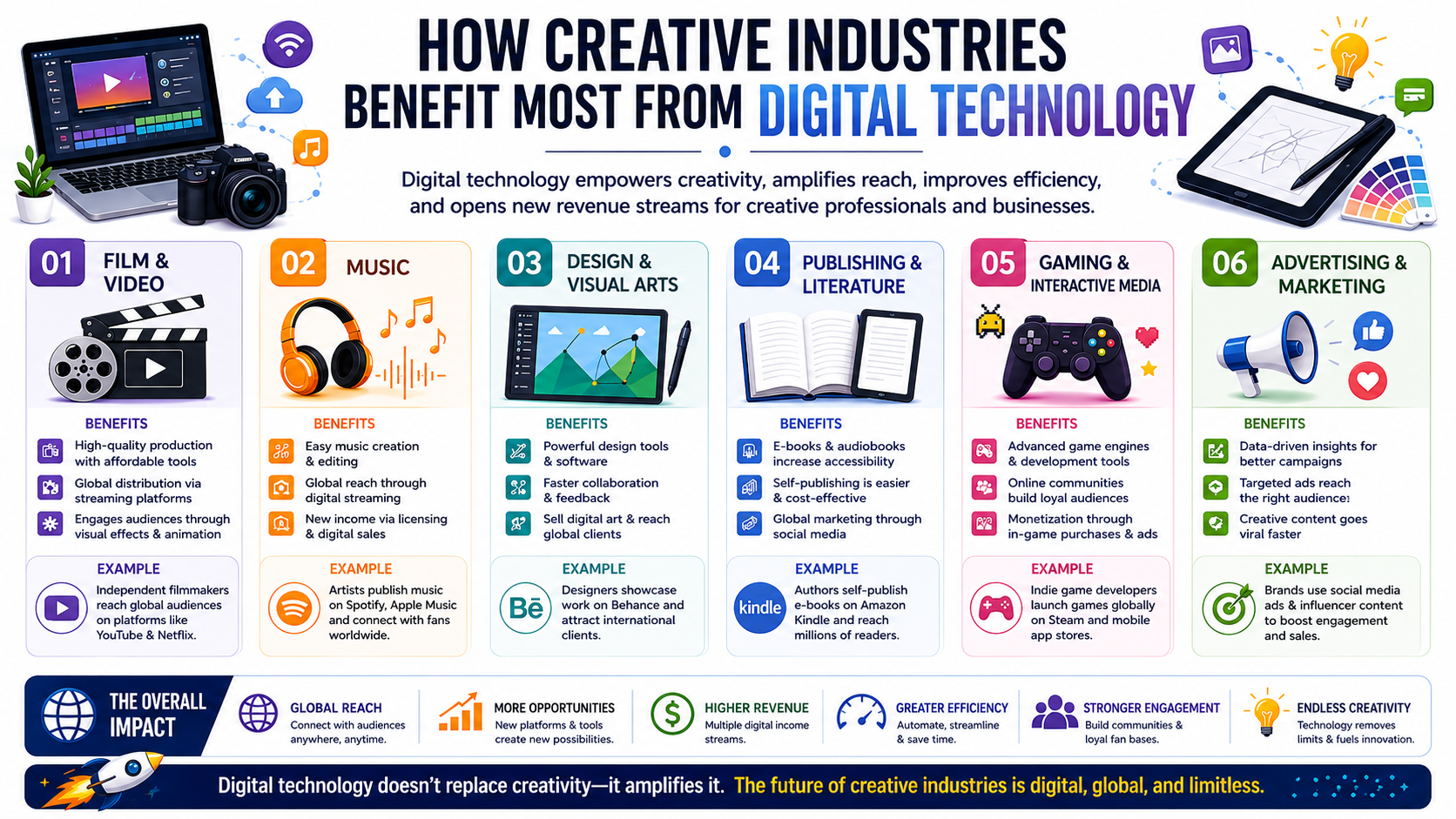
You must have seen that everything depends on technology today.
Industries don’t operate the way they did in the past. They use digital tools supported by AI to perform their tasks.
As a research analyst, I’ve personally surveyed several companies to analyze how they improve their tasks using AI software.
One thing that I’ve learned from interviewing employees is that they have shifted their focus from time-consuming work. AI machines handle them while the employees dedicate their energy to areas that truly matter.
I’ve documented my analysis to convince you that technology doesn’t replace your creative potential—it gives freedom to create the best experiences that inspire others.
The biggest shift technology has made is how you share your ideas with the world. Today, geographical boundaries no longer exist. You build meaningful connections with people across continents remotely.
These are two basic ways you can digitally connect with your audiences:
You don’t need to rely on galleries or publishers to promote your work anymore. Artists and creators are now selling their digital products through online mediums.
Many creatives have told me that they protect their digital assets through non-fungible tokens. This allows them to earn royalties whenever their digital art or virtual work is resold while maintaining complete ownership and digital signature.
In contrast, independent artists receive their revenues via personal blogs, online marketplaces, and subscription channels. You can also attract a loyal audience by building impactful relationships while enjoying a good portion of your earnings.
There was a time not long ago when technology replaced static images with virtual simulation. The replication of a real-world environment with 3D computers left the world astounded.
Today, the ever-evolving technology has taken over the virtual world with Augmented Reality (AR). It is a unique technology that adds interactive 3D elements onto the real view. This awe-inspiring discovery allows consumers to experiment with artwork around their homes before they make a deal. They also feel confident about their next purchase.
Moreover, smart creators host virtual galleries to showcase their creativity around the clock instead of waiting to book a slot in local exhibitions. This allows them to interact with visitors from different countries at the same time.
Let me tell you one striking strategy that one of the business CEO confided in me. They pitch 3D portfolios and interactive presentations to overseas clients via digital meetings. This engaging activity helps their clients observe their work from multiple perspectives.
It requires a focused mind to create impactful work that reflects your unique talent. The less time you spend on repetitive tasks, the more effort you’ll invest in creativity.
Digital automation has taken over most routine tasks that put other important tasks on hold.
For example, you can automatically:
Rename files
Organize folders alphabetically
Update cloud backups
Sync documents across different devices
Create version histories
Mix plugins by audio tools for a song recording studio
In most of my in-person interviews with professionals, I deduced that many consider artificial intelligence (AI) their helper. When I think of it now with their perspectives, it is somehow true.
You can easily prompt AI to create your mood boards, explore visual ideas from different angles, organize your thoughts, and develop raw blueprints. This can be your starting point. However, the final creative decision will always be yours.
Students can apply the same approach to academic projects by using digital tools to organise research, develop initial ideas and manage complex tasks. When they need additional guidance with challenging coursework, Thesis Writing Help can also support them in understanding requirements and structuring their work effectively.
Digital collaboration is not limited to creative professionals. Students can also use online platforms to communicate with tutors, researchers and subject specialists while working on demanding academic projects. This is particularly useful for students who need Dissertation Writing Help Germany, as online academic support allows them to access guidance, discuss ideas and manage their work without being restricted by location.
For example, instead of searching “music studio near me,” you can remotely collaborate with singers, audio specialists, and producers without physically going anywhere.
Here is a list of creative tools that you may wanna look into:
Figma for designing
Adobe Creative Cloud for group projects
Notion for project planning
Miro for general meetings
Frame.io for video feedback
Slack for team communication
The best part about digital transformation is you can change how you earn.
I’ve learned that you use data to understand consumer demand and adjust pricing as per the current stats. The value of digital assets like templates, illustrations, and photography varies depending on market trends, seasons, and needs.
Most business and product owners now use subscription-based models, which you must be familiar with. A common example is a Spotify or Netflix subscription, where owners generate millions with online streaming rather than one-time purchases.
Do you know that you can expand your single creation into several products? Yes, this is possible.
During my survey, one artist showed me how she evolved her original painting into different formats.
She had her work adapted into:
Digital prints
Phone wallpaper
Desktop background
Social media templates
3D illustration
Merchandise designs
The context of data here is the information gathered around your creative product. Most individuals consider it as something that restricts their artistic freedom. However, I believe the opposite.
It doesn’t dictate your creativity. It helps you analyze how people absorb what you present.
You can track your audience response using analytical tools. These tools reveal valuable information about your reach and user engagement.
For example, visual data tools like heatmaps use color gradients to identify which products receive the most attention and where visitors spend most of their time on your digital platform.
One of the best ways you can implement this is by running A/B tests on different versions of original projects, landing pages, or promotional designs to explore which idea gets meaningful results.
You must also use trend analysis tools to seek new opportunities before they lose their original value. From popular color themes to content structures, what’s trending in the market helps you understand customer needs better.
I’m absolutely not saying to allow these trends to overpower your creative uniqueness. This market awareness only informs you about how you should execute your decisions. The final call always remains at your end.
The bottom line is that AI and digital technology will evolve to perform automated tasks. However, they can’t replace original intellectual and creative minds.