 English
 Arabic
 French
 Spanish
 Portuguese
 Deutsch
 Turkish
 Dutch
Dutch
 Italiano
 Russian
 Romaian
 Portuguese (Brazil)
 Greek
Greek
Customs Clearance Services: The Key to Hassle-Free International Shipping
Other |
2025-01-04 09:12:26
 Social Networth OS
 Creator Commerce
 Launch Startup
 Global News
 Creator Award
 Talkfever App
Ver todos
Talkfever App
Ver todos

Atualizar para Plus
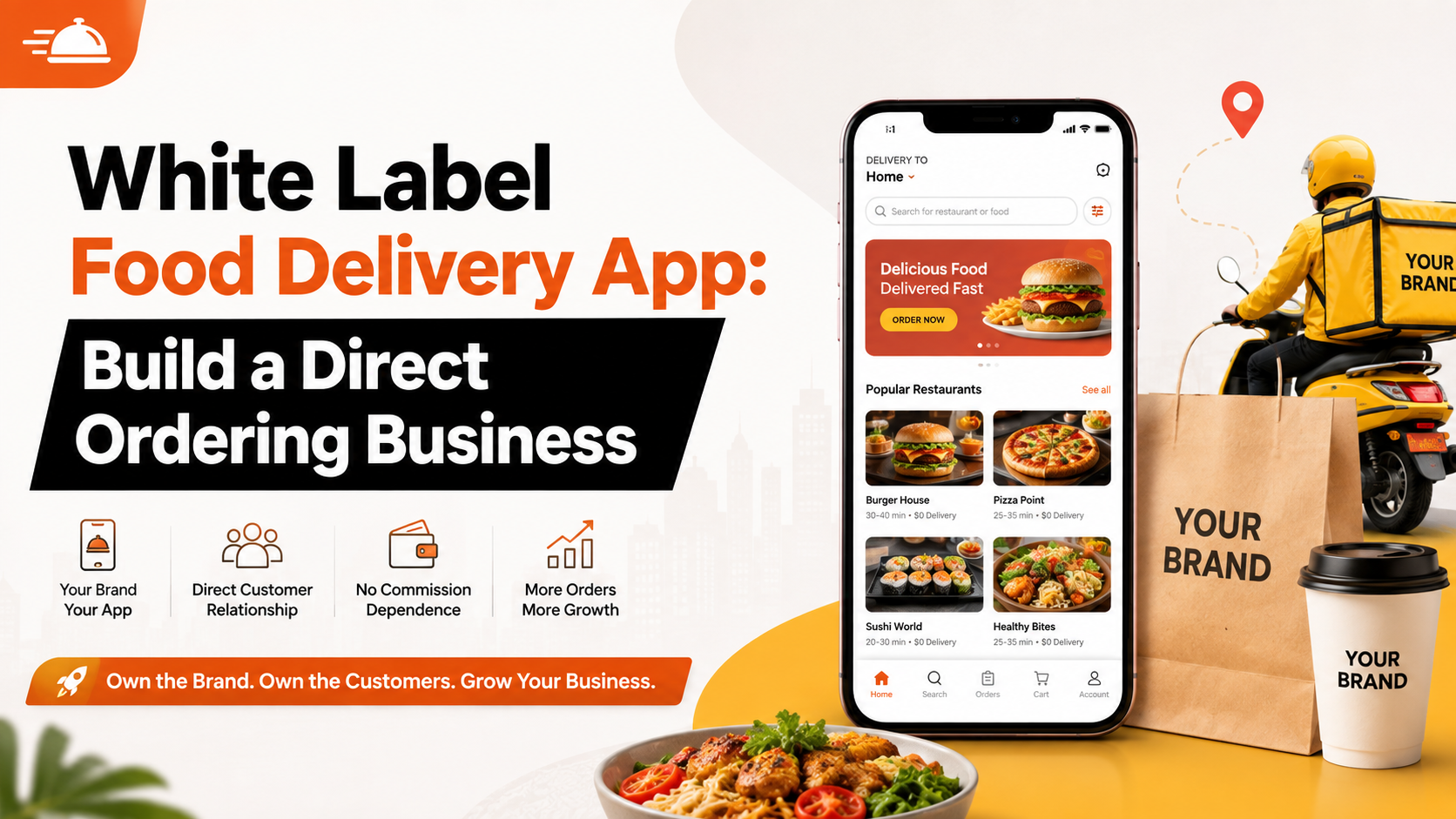
Food delivery is no longer only about getting meals from restaurants to customers. In 2026, the bigger business opportunity is owning the digital relationship behind every order. A white label food delivery app gives restaurant groups, food entrepreneurs, cloud kitchens, and delivery businesses a way to build their own branded ordering channel while keeping the customer experience under their control.
The market continues to expand, particularly in India, where online food delivery is benefiting from smartphone adoption, digital payments, restaurant digitization, and expansion beyond major metropolitan markets. Industry forecasts also point to strong growth through the coming years.
But growth alone doesn't guarantee profitability. Operators now face a more important question: How can they turn increasing order volume into a stronger, more valuable business?
Third-party delivery marketplaces remain powerful for restaurant discovery and customer acquisition. However, dependence on external platforms can create challenges around commissions, promotions, customer ownership, and brand differentiation.
That is why direct ordering is becoming an important part of restaurant technology strategies.
A white label food delivery app allows a business to create an ordering experience under its own brand, rather than sending customers into a crowded marketplace. The business can control its menu presentation, promotions, loyalty strategy, customer communication, and ordering journey.
This trend is particularly relevant for restaurant chains, QSR brands, franchises, cloud kitchens, multi-location restaurants, and food delivery entrepreneurs.
Recent industry data shows how closely delivery and dine-in relationships are becoming connected. DoorDash's 2026 restaurant trends research found that 74% of consumers surveyed said a dine-in visit later led them to order delivery from that restaurant, while 62% said a delivery order later led them to dine in.
The takeaway is clear: restaurants are no longer managing separate delivery and dine-in customers. They are building one broader customer relationship across multiple channels.
A successful platform should support business growth—not simply reproduce the basic functions of a food ordering marketplace.
A modern solution can include:
Branded customer app and website
Multi-restaurant and multi-location management
Real-time order tracking
Delivery partner management
Digital payments
Loyalty and rewards
Promotional campaigns
Customer analytics
Order and revenue reporting
Menu and inventory management
Admin and restaurant dashboards
The real advantage comes from connecting these capabilities into one ecosystem.
For example, a restaurant can identify repeat ordering patterns, create targeted promotions, offer loyalty rewards, and encourage customers to reorder directly through its own platform.
That turns an ordering app into a customer-retention and revenue-growth channel.
One of the biggest industry shifts in 2026 is the role of AI in restaurant discovery.
DoorDash's 2026 report found that 22% of surveyed consumers had already used AI to choose a restaurant, while only 39% of restaurant operators had optimized their listings to appear in AI-driven discovery.
This creates a new challenge for food businesses.
Having an app is no longer enough. Businesses need accurate menus, useful restaurant information, strong customer reviews, quality images, and structured digital content that can help them remain discoverable across traditional search and emerging AI-driven experiences.
A forward-looking food delivery platform can therefore become part of a broader digital strategy—not just a place to process orders.
Another major shift is the move from acquisition-focused discounts toward long-term customer retention.
Industry research indicates that loyalty programs can influence ordering frequency, while customers increasingly respond to relevant rewards and personalized offers.
This gives restaurant businesses an opportunity to build their own loyalty ecosystem instead of relying entirely on marketplace promotions.
A branded platform can support reorder suggestions, personalized offers, membership programs, reward points, referral campaigns, and targeted notifications.
The objective is simple: make the second order easier to win than the first.
More orders do not automatically mean more profit.
Delivery businesses must balance customer acquisition costs, commissions, delivery expenses, driver availability, promotions, refunds, and operational efficiency.
This is where first-party technology can provide greater control.
Instead of depending exclusively on external marketplaces, businesses can develop a mix of third-party discovery + direct ordering + loyalty + customer retention.
That hybrid approach can help restaurants continue benefiting from marketplace visibility while gradually building a direct customer base.
At the same time, delivery operations are becoming more technology-driven. Automation, smarter dispatching, demand forecasting, AI-based recommendations, and route optimization can help businesses manage increasing order volumes without simply increasing operational complexity.
The next stage of food delivery is not simply about delivering faster. It is about creating a stronger digital relationship between restaurants and customers.
A white label food delivery app gives businesses the foundation to build that relationship under their own brand, adapt the ordering experience to their market, and develop revenue strategies around direct customers.
Whether you operate a restaurant chain, cloud kitchen, food marketplace, or are planning to enter the delivery market, the opportunity is to build an ecosystem that grows with your business.


