English
 Arabic
 French
 Spanish
 Portuguese
 Deutsch
 Turkish
 Dutch
Dutch
 Italiano
 Russian
 Romaian
 Portuguese (Brazil)
 Greek
Greek
HDD Glass Substrate Market Faces Downturn as Storage Industry Transforms by 2034
Dance |
2026-05-07 07:33:32
 Social Networth OS
 Creator Commerce
 Launch Startup
 Global News
 Creator Award
 Talkfever App
Mostra tutti i risultati
Talkfever App
Mostra tutti i risultati

Passa a Pro
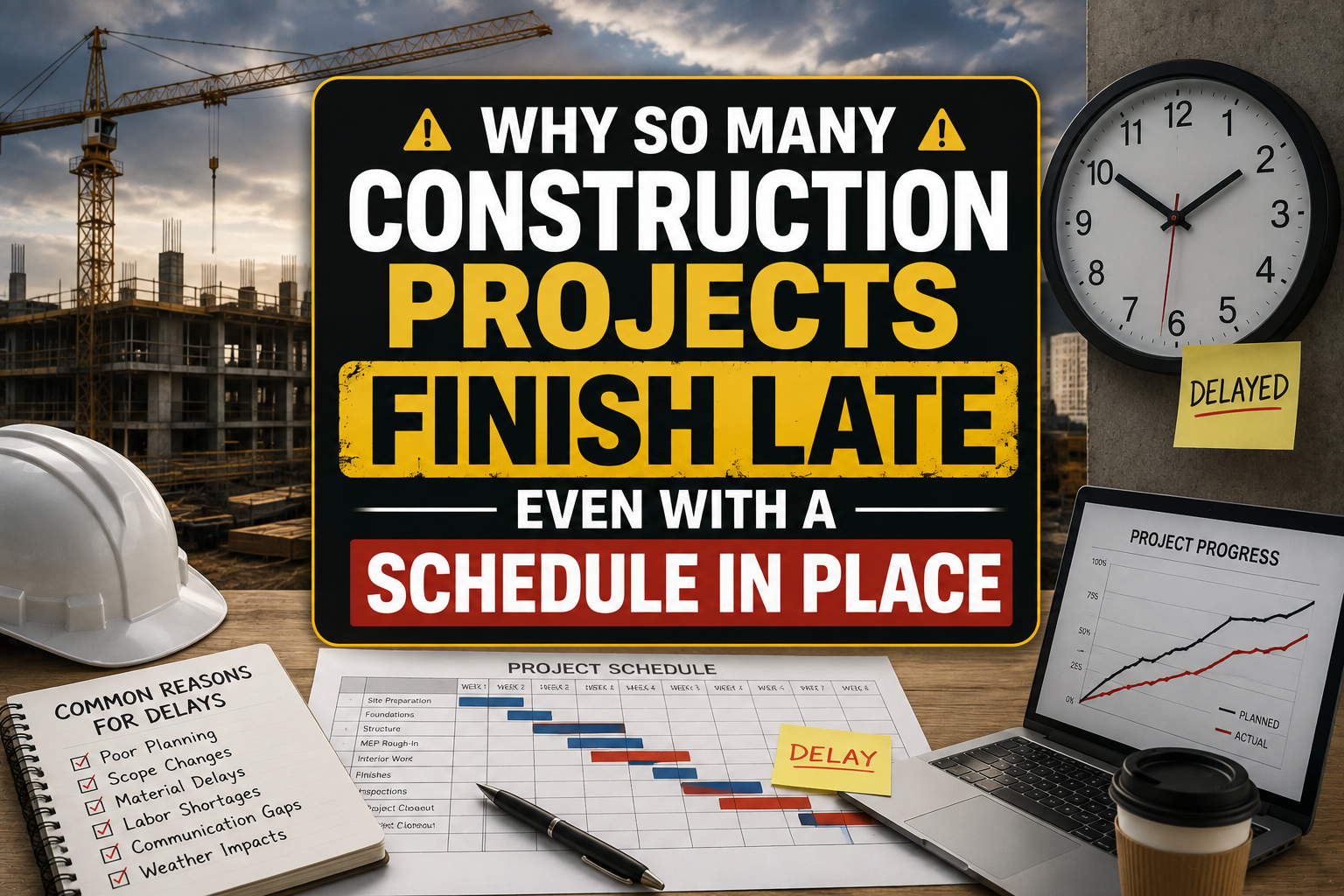
Almost every construction project starts with a schedule. A Gantt chart gets built, milestones get marked, and everyone signs off on a completion date. And yet delays are still the norm rather than the exception across the industry. That gap between "having a schedule" and "actually finishing on time" usually comes down to one thing: most schedules show what needs to happen, but very few actually show what happens if any single piece of it slips. That distinction is the entire reason the critical path method exists.
Most basic project schedules are really just task lists with dates attached. They tell you drywall starts on a certain day and framing needs to be done by another day, but they don't tell you which of those tasks actually has zero room for delay and which ones have days of buffer built in. Without that distinction, every delay looks equally urgent, even when most of them aren't.
On any real job site, some tasks can slip by a few days without affecting the final completion date, while others push the entire project back the moment they're late. Treating every task as equally critical means either constant, unnecessary panic or worse missing the delays that actually matter until it's too late to recover.
The critical path is the chain of tasks that has no float, no room to slip without pushing back the entire project's finish date. Once that path is identified, project managers know exactly where their attention and resources need to go first.
Tasks that fall outside the critical path have float, meaning they can shift within a certain window without affecting the overall timeline. Understanding which tasks have float and which don't lets a project manager make smarter trade-off decisions instead of treating the entire schedule as equally fragile.
Construction tasks rarely happen in isolation; foundation work has to finish before framing starts, rough electrical work has to happen before drywall closes the walls up. A proper critical path schedule maps these dependencies explicitly, so a delay in one trade's work is immediately visible in how it affects everyone downstream.
On projects involving several subcontractors working in sequence, knowing exactly which trade's delay will cascade into the rest of the schedule is the difference between a manageable hiccup and a full-blown timeline collapse.
The bigger and more phased a project is, the more a simple task list stops being useful. Critical path scheduling scales in a way that basic scheduling tools don't, especially on commercial or multi-building projects.
When disputes arise over who caused a delay and what it actually cost the project, a documented critical path schedule provides the clearest evidence of cause and effect something a simple calendar-based schedule can't offer.
A critical path is only as accurate as the task breakdown underneath it. Vague, oversized task categories make it much harder to identify the true critical path and easier to miss dependencies.
A CPM schedule built once at the start of a project and never updated stops reflecting reality within weeks. Real projects need the schedule revisited as work actually progresses, so the critical path can shift as conditions change.
A schedule that assumes unlimited labor and equipment availability will look great on paper and fall apart in practice. Realistic scheduling has to account for what crews and machinery are actually available when the plan says they're needed.
The difference between a project that finishes on time and one that doesn't often isn't effort or budget; it's whether anyone actually knew, in advance, which tasks could absorb a delay and which ones couldn't. A basic schedule tells you what's supposed to happen. A critical path schedule tells you what actually matters if something goes wrong.
For a deeper look at how this method works in practice on real construction projects, this guide on CPM scheduling breaks down the process, the tools involved, and how it's used for everything from routine sequencing to delay claims and time impact analysis.