English
 Arabic
 French
 Spanish
 Portuguese
 Deutsch
 Turkish
 Dutch
Dutch
 Italiano
 Russian
 Romaian
 Portuguese (Brazil)
 Greek
Greek
How do currency fluctuations affect the game economy in cheap poe 2 currency?
Games |
2025-04-16 06:24:02
 Social Networth OS
 Creator Commerce
 Launch Startup
 Global News
 Creator Award
 Talkfever App
δες τα όλα
Talkfever App
δες τα όλα

Upgrade to Pro
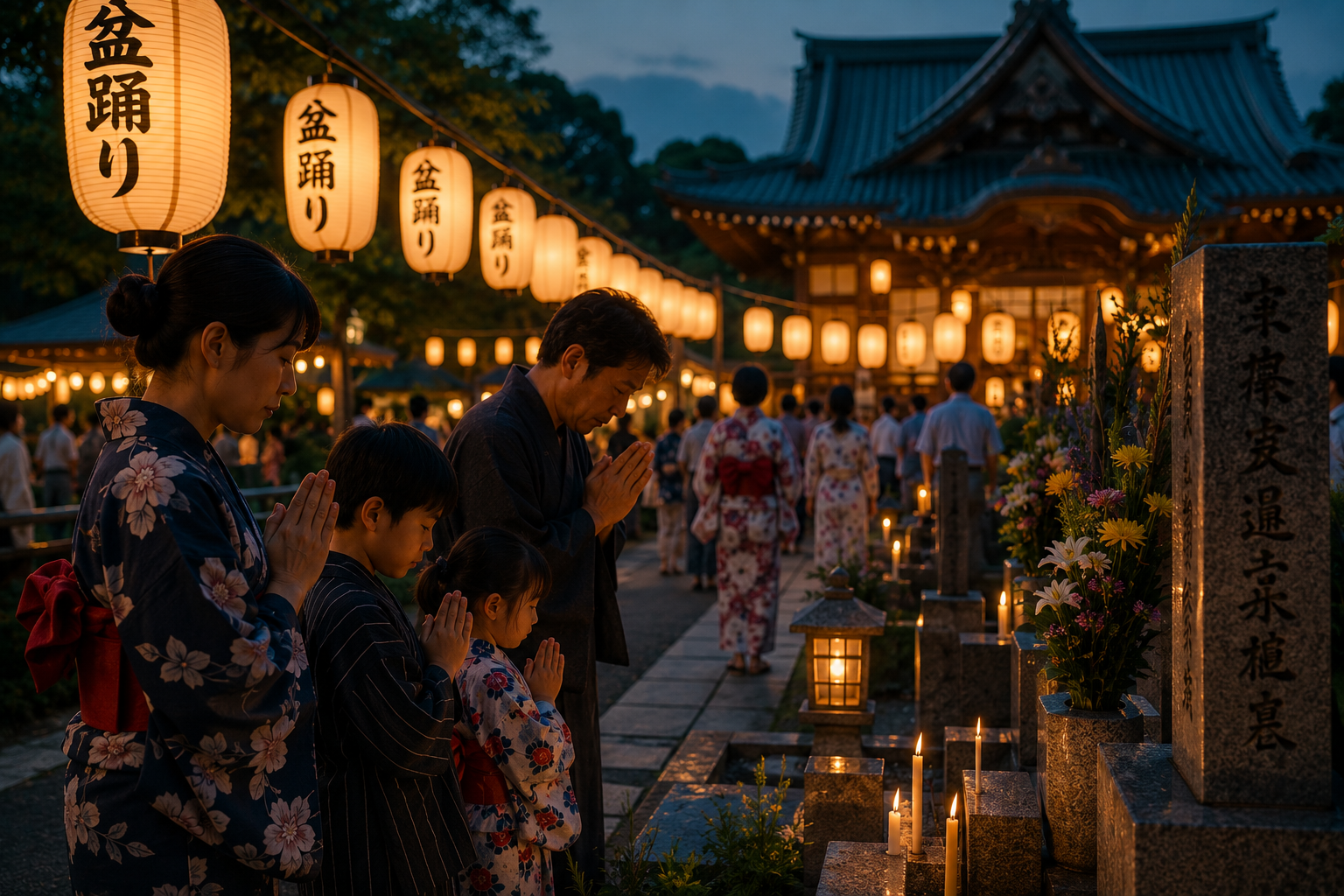
Every culture has moments when people pause to remember where they came from.
In Japan, Obon is one of those moments.
Observed across the country, Obon is a traditional occasion associated with remembering ancestors, returning to family roots and spending time with relatives. For many people, it is a period of visiting family graves, making offerings, returning to their hometowns and participating in local customs that have been passed from one generation to the next.
But Obon is about more than remembering those who came before.
It reflects a broader idea that remains deeply relevant today: the present is shaped by the generations that came before us, and the future depends on what we choose to carry forward.
For NEC, a company with its roots in Japan and a history spanning more than a century, that idea of continuity offers a meaningful connection between cultural heritage and the way organisations think about the future.
Obon, also known simply as Bon, is a traditional Japanese observance with Buddhist influences centred on the remembrance of ancestors.
In much of Japan, Obon is observed around the middle of August, generally from August 13 to 16. However, the timing and customs differ across regions.
During the period, families may return to their hometowns, clean family graves, make offerings and gather with relatives. There is also a traditional belief that ancestral spirits return to the world of the living during Obon.
Different communities observe the occasion in different ways.
Lanterns may be used to welcome or guide ancestral spirits. Families may visit graves together. Communities may organise Bon Odori, traditional dances associated with the Obon season.
The details vary, but the central theme remains consistent:
remembering, respecting and maintaining a connection with those who came before.
Modern life rarely encourages people to stop.
Work moves quickly. Technology changes rapidly. Families may live in different cities or even different countries. Younger generations can grow up far from the places where their parents and grandparents lived.
Obon creates a reason to pause.
For many families, it is a time to return home and reconnect with relatives. It can also be a time to reflect on family history and the people whose experiences helped shape the lives of those living today.
That makes remembrance more than an act of looking backwards.
It can provide perspective.
The choices, sacrifices, knowledge and values of earlier generations often become part of the foundation for the next generation.
Obon gives people an opportunity to recognise that connection.
One of the most recognisable aspects of Obon is the movement of people back towards their family and ancestral homes.
Japan's major cities can become noticeably quieter as people travel to their hometowns during the period.
This annual movement has a significance beyond travel.
Returning home creates a physical connection to family history.
A grave, a house, a neighbourhood or a familiar landscape can carry memories that cannot easily be recreated elsewhere.
In an increasingly digital world, this physical connection has its own importance.
Technology can connect people instantly.
But traditions such as Obon remind us that connection is not always about communication. Sometimes it is about place, memory and presence.
Lanterns are among the most recognisable symbols associated with Obon.
In traditional practices, lanterns may be used to welcome ancestral spirits at the beginning of the observance and guide them back at its conclusion. Some communities also hold Toro Nagashi, in which lanterns are floated on rivers or other waterways.
The symbolism is simple.
A light appears, provides direction and eventually disappears.
Yet the memory remains.
That idea resonates beyond the religious traditions associated with Obon. People continue to influence the lives of others even after they are no longer physically present.
Their lessons remain.
Their values remain.
Their stories remain.
In this sense, remembrance becomes a form of continuity.
Obon is not solely a solemn occasion.
In many parts of Japan, the season is also associated with Bon Odori, traditional community dances accompanied by music.
People gather in public spaces, often around a raised platform, and participate in dances whose styles vary from one region to another.
This combination of remembrance and celebration is significant.
Obon acknowledges loss, but it also celebrates life.
Older generations pass customs to younger ones. Children learn dances that their parents and grandparents may have performed. Communities come together around traditions that might otherwise gradually disappear.
The tradition survives because people continue to participate in it.
That is perhaps one of the most important ideas within Obon:
continuity is not about keeping the past unchanged. It is about carrying meaningful things forward.
Tradition and innovation are sometimes presented as opposites.
Obon suggests a different way of looking at them.
The observance has existed for generations, yet the way it is experienced has changed across time and differs between communities.
The core meaning can remain while the expression evolves.
The same principle can be seen in many aspects of Japanese society.
Preserving something does not necessarily mean refusing to change it.
It can mean understanding what gives it value before deciding how it should evolve.
For NEC, whose history stretches back to its establishment in Japan in 1899, this idea of continuity has a natural relevance.
Over more than a century, NEC has operated through enormous changes in telecommunications, computing and digital technology.
The technologies have changed.
The world around them has changed.
Yet the organisation has continued to evolve while carrying forward principles and experience accumulated across generations.
NEC's history provides an interesting example of how continuity can work within a modern technology organisation.
Founded in Tokyo in 1899, NEC has experienced technological transitions that would have been difficult to imagine at the time of its establishment.
Telecommunications evolved.
Computing emerged.
The internet transformed communication.
Cloud technologies and artificial intelligence are now reshaping industries once again.
An organisation cannot survive that kind of change simply by repeating what worked in the past.
It has to adapt.
But adaptation does not mean abandoning everything that came before.
Experience, institutional knowledge, relationships and values can provide a foundation from which new ideas develop.
This is where the broader philosophy behind Obon offers an interesting perspective for NEC.
Respect for the past and preparation for the future do not have to compete with each other.
They can reinforce one another.
The connection between Obon and business should not be forced.
Obon is a cultural tradition, not a corporate concept.
But the values reflected in it—remembrance, respect, continuity and responsibility across generations—have relevance far beyond family life.
Organisations are also built over time.
Employees contribute knowledge that others inherit.
Leaders make decisions whose consequences may extend beyond their own tenure.
Ideas developed decades ago can influence technologies created today.
Customers, communities and society shape how companies evolve.
For a long-established organisation such as NEC, history is therefore not simply a record of past events.
It is part of the context in which the organisation understands its present responsibilities and future direction.
Technology is often associated with speed.
New products appear.
New platforms emerge.
Entire industries can change within a few years.
Artificial intelligence is accelerating that pace even further.
But the faster technology changes, the more valuable long-term thinking can become.
Without perspective, innovation can become an endless pursuit of what is new.
With perspective, organisations can ask better questions:
What have we learned?
What should we preserve?
What should we change?
What responsibility do we have to the people who will come after us?
These are not purely technological questions.
They are questions about continuity.
And that is where a tradition such as Obon remains surprisingly relevant.
Perhaps the most meaningful aspect of Obon is the pause it creates.
For a short period, attention shifts away from everyday routines and towards family, memory and the people who shaped previous generations.
There is value in that pause.
The future is often discussed as though it begins from today.
In reality, it does not.
Every individual, family, community and organisation carries something forward from the past.
Understanding that history can provide a stronger foundation for deciding what comes next.
For NEC, its Japanese heritage is part of that story.
More than 120 years of technological development represent not only changes in products and industries, but also generations of people contributing knowledge, experience and ideas.
That history continues to influence the organisation as it responds to today's technological and social challenges.
Obon ultimately offers a simple but powerful reminder.
We inherit more than possessions from the generations before us.
We inherit stories.
Knowledge.
Values.
Responsibilities.
And sometimes, traditions that help us understand our place within a much longer story.
The same principle can apply to organisations.
A company may change its technologies, markets and ways of working, but its understanding of its history can help shape how it approaches the future.
For NEC, whose roots are firmly connected to Japan, Obon provides a natural moment to reflect on that relationship between heritage and progress.
The lesson is not that the past should determine the future.
It is that the future is stronger when the past is understood.
Obon brings families together to remember where they came from.
In a broader sense, it reminds us that continuity is created one generation at a time.
We receive something from those who came before.
We decide what is worth preserving.
We adapt what needs to change.
And eventually, we pass something forward to the generation that follows.
That may be the enduring meaning of Obon—and a principle that remains relevant far beyond the traditions of Japan.