English
 Arabic
 French
 Spanish
 Portuguese
 Deutsch
 Turkish
 Dutch
Dutch
 Italiano
 Russian
 Romaian
 Portuguese (Brazil)
 Greek
Greek
Secure Your Valuables With KeepSecure’s Smart Locker Solutions
Other |
2026-08-28 08:59:41
 Social Networth OS
 Creator Commerce
 Launch Startup
 Global News
 Creator Award
 Talkfever App
Hepsini Gör
Talkfever App
Hepsini Gör

Upgrade to Pro
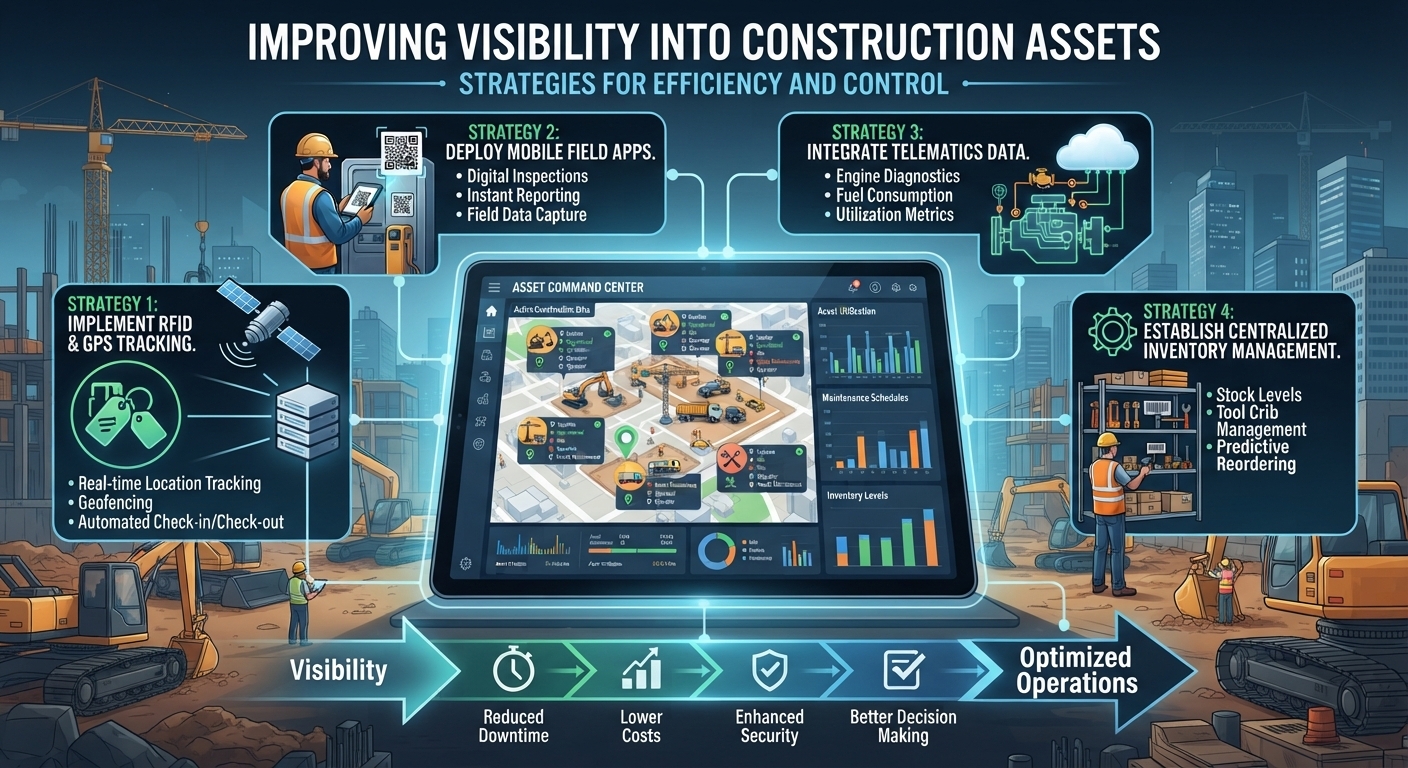
Construction companies manage a wide range of valuable resources throughout the project lifecycle. Heavy equipment may receive most of the attention, but contractors also depend on generators, trailers, compressors, tools, attachments, vehicles, pumps, surveying equipment, and specialized assets.
As projects expand and more assets move between locations, keeping accurate records becomes increasingly difficult. When teams cannot determine where an asset is, who is using it, or whether it is available, operational inefficiencies can quickly develop.
Construction asset tracking software provides a centralized approach to organizing asset locations, assignments, condition, availability, transfers, and maintenance information.
Construction assets represent valuable investments. Managers need accurate answers to questions such as:
What assets does the company own?
Where are they located?
Which project is using them?
Who is responsible for them?
Are they available?
Do they require maintenance?
When answers are difficult to obtain, employees may spend unnecessary time searching for equipment or arranging replacement resources.
A complete asset record may include:
Asset identification
Equipment type
Make and model
Current location
Project assignment
Availability
Condition
Maintenance status
Transfer history
Responsible team
Keeping these details in one place improves visibility and reduces reliance on disconnected records.
Construction assets may be handled by multiple employees and project teams. Assignment records provide a clearer understanding of responsibility.
Managers can see:
Who is using an asset
Which project has it
When it was assigned
Where it was previously located
When it was transferred
This becomes especially useful when an asset is missing, damaged, or incorrectly assigned.
Portable tools and smaller assets can be particularly difficult to manage. They may be moved between crews and jobsites regularly.
Without clear records, equipment can become difficult to locate. Tracking asset assignments and movement helps establish a history that can support better accountability.
While tracking cannot eliminate every loss, it can reduce uncertainty and improve recovery efforts when something goes missing.
Not every asset receives equal use. Some equipment is in constant demand while other resources may sit unused for extended periods.
Reviewing asset information can help identify:
Frequently used assets
Underutilized equipment
Idle resources
High-demand assets
Assets shared across multiple projects
This can help contractors allocate resources more effectively.
Poor visibility can contribute to unnecessary purchases. A project manager may request a piece of equipment that the company already owns simply because the existing asset's location is unknown.
Before purchasing additional equipment, managers can review current resources and determine whether an existing asset can be:
Transferred
Shared
Reassigned
Returned from storage
This can help improve capital efficiency.
Construction assets frequently move between projects. Each transfer creates the need to update location and assignment information. A structured transfer process can capture:
Origin
Destination
Transfer date
Project
Asset condition
Responsible personnel
Keeping this information current reduces confusion and helps managers maintain accurate records.
An asset may be physically available but still unsuitable for use because it requires servicing. Connecting asset records with maintenance information provides greater visibility into equipment readiness. Managers can distinguish between assets that are:
Ready
Assigned
Under maintenance
Awaiting inspection
In storage
Out of service
This supports more accurate project planning.
Asset management involves:
Project managers
Equipment coordinators
Maintenance personnel
Warehouse teams
Field supervisors
Operations managers
When departments use different information sources, discrepancies can occur. A centralized asset management process provides a common reference point that improves communication and reduces conflicting records.
Asset tracking can improve inventory planning by showing what resources are currently available and where they are located.
This helps managers determine whether new equipment is actually required or whether existing resources can satisfy the demand.
Accurate information can support better decisions about:
Purchasing
Renting
Reallocating
Replacing
Selling
Retiring assets
Construction assets move through different stages over time.
These may include:
Acquisition
Deployment
Active use
Transfer
Maintenance
Storage
Reassignment
Replacement
Maintaining information throughout this lifecycle helps contractors understand asset history, condition, and utilization.
Asset information is useful for more than operational management. It can also support financial planning.
Managers may review:
Asset age
Maintenance costs
Utilization
Purchase value
Replacement requirements
Project demand
This information can help determine whether an asset continues to provide value or should be replaced.
Construction companies may periodically need to confirm that recorded assets match physical resources.
An organized tracking process can make these audits easier by providing current records that can be compared against equipment physically present at different locations.
This can help identify:
Missing assets
Incorrect locations
Duplicate records
Outdated assignments
Equipment that should be removed from records
Regular reviews help maintain data accuracy.
Managing assets manually becomes increasingly difficult as the number of projects and resources increases.
Construction asset tracking software provides a structured framework that can support growing inventories across multiple locations.
Centralized asset records help companies maintain consistency even when equipment is constantly moving between projects.
Contractors can improve asset management by:
Consistent identification simplifies tracking.
Records should change when equipment moves.
Assignments should identify who or which project is using an asset.
Availability should reflect equipment condition.
Periodic audits can identify outdated information.
Better asset visibility can provide:
Improved accountability
Reduced equipment loss
Better utilization
Fewer duplicate purchases
Improved maintenance coordination
Faster resource allocation
Better project planning
More accurate inventory
Stronger financial decisions
Construction businesses depend on valuable assets to keep projects productive, but those assets become increasingly difficult to manage as companies expand. Without accurate information, contractors may lose time searching for equipment, purchase duplicate resources, or struggle to understand which assets are available.
Construction asset tracking software helps create a centralized view of asset locations, assignments, condition, availability, movement, and maintenance.
With better visibility, contractors can strengthen accountability, improve utilization, reduce unnecessary spending, and make more informed decisions throughout the asset lifecycle. For growing construction businesses, better asset visibility can become an important part of improving operational control.