English
 Arabic
 French
 Spanish
 Portuguese
 Deutsch
 Turkish
 Dutch
Dutch
 Italiano
 Russian
 Romaian
 Portuguese (Brazil)
 Greek
Greek
RSGoldFast RuneScape gold:RuneScape's Future Uncertain After Monetization Backlash
Games |
2025-02-26 01:48:24
 Social Networth OS
 Creator Commerce
 Launch Startup
 Global News
 Creator Award
 Talkfever App
δες τα όλα
Talkfever App
δες τα όλα

Upgrade to Pro
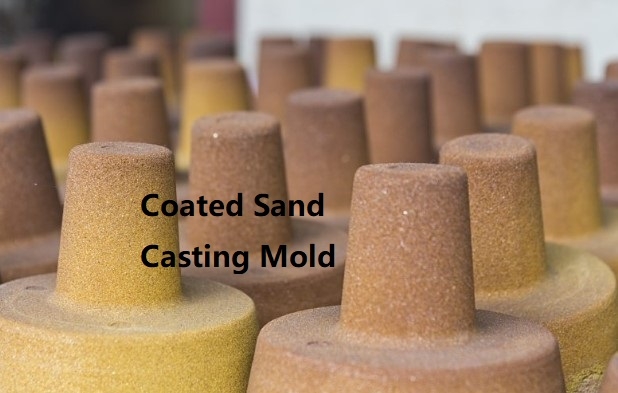
In metal casting, choosing the right Coated Sand Casting Mold can make a noticeable difference in surface appearance, cavity stability, dimensional consistency, and overall production control, while a properly prepared Coated Sand Casting Mold can help manufacturers handle complex casting shapes and improve the interaction between molten metal and the mould surface. Compared with untreated sand surfaces, coated moulds can provide an additional barrier between the metal and moulding material. This makes the process worth considering for manufacturers producing machinery components, industrial parts, housings, brackets, and other cast products.
Sand moulding is widely used because it can accommodate a broad range of component sizes and geometries. The moulding material can be formed around a pattern to create the cavity required for the final metal component.
A coating applied to the cavity surface can provide additional control during pouring. It may help create a smoother interface and reduce direct interaction between molten metal and the sand. Depending on the coating system and casting conditions, this can contribute to a cleaner casting surface.
However, coating should not be viewed separately from the rest of the moulding process. Sand quality, permeability, compaction, moisture control, coating thickness, drying conditions, and pouring temperature can all influence the final result.
A consistent preparation procedure is therefore important. When moulds are prepared under controlled conditions, production teams have a better opportunity to achieve repeatable casting quality.
The quality of the finished casting begins with an accurate pattern and cavity. If the mould does not reproduce the intended geometry correctly, dimensional problems may appear before the casting even reaches machining or finishing.
Pattern design should consider shrinkage, machining allowance, draft requirements, wall thickness, and the overall structure of the component. These factors influence how the cavity is formed and how easily the finished casting can be removed.
Coating application should also follow the geometry of the cavity. Uneven application may produce differences in surface conditions, while excessive coating can affect permeability or other mould characteristics.
For complex components, close attention should be given to narrow sections, corners, deep cavities, and transitions. These areas may behave differently during filling and solidification.
Accurate preparation can help reduce unnecessary finishing work. When the casting surface and dimensions are closer to the intended requirements, manufacturers may spend less time correcting avoidable mould-related defects.
Different foundries have different equipment, production volumes, and casting requirements. A practical solution should therefore take the actual production environment into account.
Chinahzjx focuses on equipment and machinery solutions for industrial applications. For casting-related projects, buyers can review the required component size, metal type, production volume, moulding method, and expected surface quality before selecting suitable equipment.
Customization can be useful when standard equipment does not fully match a particular production process. Larger castings, specialized components, or different moulding arrangements may require adjustments to equipment configuration.
Technical communication is particularly important during customized projects. Product drawings, casting samples, production targets, machine dimensions, and process information can help suppliers understand the application more clearly.
A suitable equipment configuration should not only meet the immediate production requirement. It should also be practical for operators, accessible for maintenance, and compatible with the planned workflow.
Surface quality depends on several stages of casting. Mould preparation, coating application, pouring conditions, cooling, shakeout, and finishing can all affect the appearance of the final component.
The coating itself should be selected according to the metal alloy and process conditions. Different metals require different thermal and chemical considerations, so there is no universal coating approach for every application.
Drying is another important step. If the coating does not reach an appropriate condition before pouring, moisture or insufficient bonding may create unwanted casting problems.
Production consistency also depends on repeatable mould preparation. Operators should follow established procedures for sand mixing, coating, drying, inspection, and storage.
When producing large quantities of similar components, even small differences in preparation can become noticeable. Maintaining consistent operating practices can therefore help reduce variation between production batches.
Manufacturers can also monitor recurring casting defects and use production records to identify potential relationships between mould preparation and final product quality.
Casting efficiency involves more than achieving a good first result. Equipment and moulding systems need to remain practical during repeated production.
Regular inspection can help identify wear, contamination, or mechanical problems before they cause unexpected downtime. Components that experience frequent movement or contact should receive particular attention.
Cleaning and maintenance schedules should be based on production intensity and equipment requirements. Keeping working areas and moulding equipment in suitable condition can support more stable operation.
Energy consumption and material usage may also influence long-term production costs. Manufacturers should consider how equipment fits into the entire workflow rather than evaluating a single process step in isolation.
For new casting projects, it can be useful to evaluate the complete production chain, including pattern preparation, moulding, coating, pouring, cooling, shakeout, finishing, inspection, and storage.
A carefully managed coated sand process can provide flexibility for a wide range of metal components while offering useful control over cavity surfaces. By combining accurate patterns, suitable sand, appropriate coatings, controlled preparation, and reliable equipment, manufacturers can work toward consistent casting results and efficient production. Companies interested in casting machinery and related industrial solutions can learn more at https://www.chinahzjx.com/ .