English
 Arabic
 French
 Spanish
 Portuguese
 Deutsch
 Turkish
 Dutch
Dutch
 Italiano
 Russian
 Romaian
 Portuguese (Brazil)
 Greek
Greek
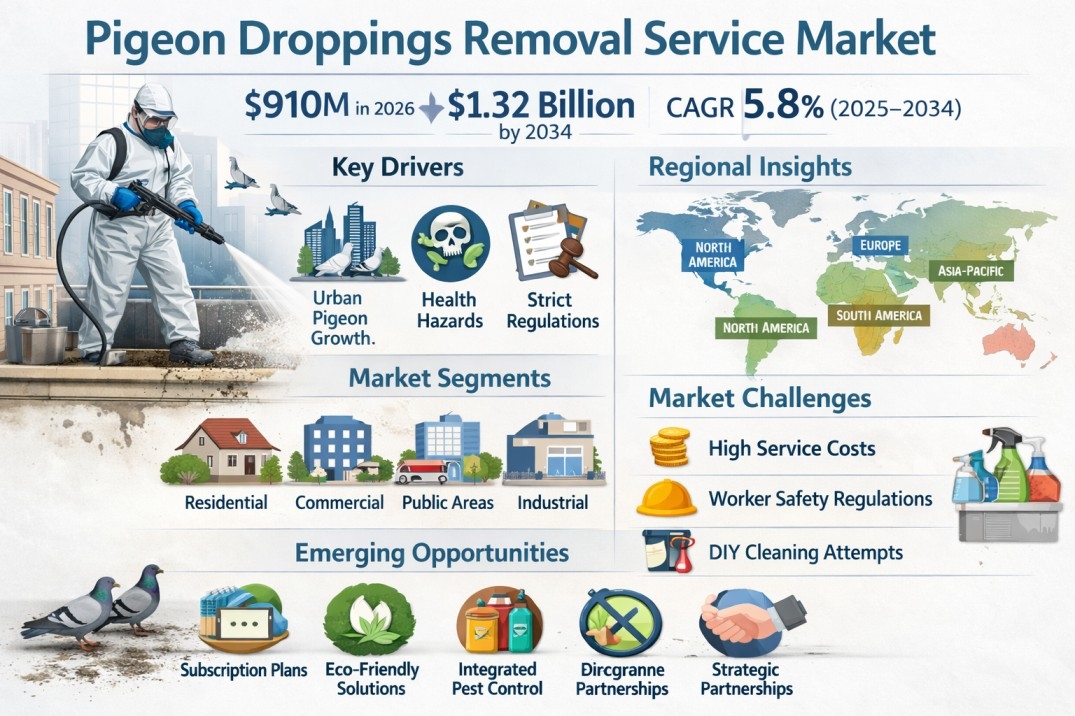
Pigeon Droppings Removal Service Market Growth Outlook 2025–2034 with 5.8% CAGR Fueled by Regulatory Compliance Needs
Uncategorized |
2026-04-14 12:26:13
 Social Networth OS
 Creator Commerce
 Launch Startup
 Global News
 Creator Award
 Talkfever App
See All
Talkfever App
See All

Upgrade to Pro
Every software team eventually faces the same question. Should this be tested manually, or should it be automated? The answer isn't as simple as picking one approach and sticking with it forever. Manual and automated testing each have distinct strengths, and the most effective testing strategies use both in a way that plays to those strengths. Understanding when to reach for each one can save teams significant time, money, and frustration. For learners looking to build practical expertise in testing methodologies, a Software Testing Course in Chennai at FITA Academy can provide a strong foundation in both manual and automated testing approaches.
Manual testing is exactly what it sounds like. A human tester interacts with the application directly, clicking through screens, entering data, and observing the results to check whether the software behaves as expected. There's no script running the steps; a person is doing it in real time, using judgment and intuition along the way.
This hands-on approach makes manual testing particularly good at catching issues that are hard to define programmatically, like confusing layouts, awkward user flows, or visual glitches that a script might not notice.
Automated testing replaces the human tester with a script that runs predefined steps and checks the outcome against expected results. These scripts can be executed repeatedly, on demand, and at scale, often as part of a continuous integration pipeline. Tools like Selenium, Cypress, Playwright, and Appium are commonly used to automate browser and mobile app testing, while frameworks like JUnit and pytest handle unit and integration testing.
Once written, an automated test can run in seconds and be reused indefinitely, making it well suited for repetitive, high-volume, or performance-sensitive testing scenarios.
Manual testing shines in situations where human judgment adds real value.
Exploratory testing. Testers can wander off the expected path, try unusual inputs, and discover edge cases that a script would never think to check.
Usability evaluation. Only a human can judge whether an interface actually feels intuitive or confusing.
Ad hoc and one-off testing. For features that will only be tested once or twice, writing an automated script may not be worth the investment.
Early-stage development. When a UI is still changing rapidly, automated tests can become outdated almost as fast as they're written.
Automation earns its value in different scenarios.
Regression testing. Re-running the same checks after every code change is tedious for a human but trivial for a script.
Repetitive test cases. Login flows, form validations, and other repeated actions are ideal candidates for automation.
Performance and load testing. Simulating thousands of concurrent users simply isn't feasible manually.
Continuous integration pipelines. Automated tests can run on every commit, catching bugs within minutes instead of days.
|
Factor |
Manual Testing |
Automated Testing |
|
Setup time |
Minimal |
Requires script development |
|
Execution speed |
Slower |
Fast, especially at scale |
|
Best for |
Exploratory, usability, one-off tests |
Regression, repetitive, performance tests |
|
Maintenance |
None |
Scripts need updates as the app changes |
|
Cost over time |
Increases with repeated cycles |
Higher upfront cost, lower long-term cost |
|
Human insight |
High |
Limited to what's scripted |
Rather than treating this as an either-or decision, most mature testing strategies apply a mix based on the nature of the test.
A useful rule of thumb is to automate anything that will be run repeatedly and has a clearly defined expected outcome. Login flows, checkout processes, and API responses fall into this category. Meanwhile, anything requiring subjective judgment, like whether a redesigned page feels intuitive, is better suited to manual testing.
Team size, release frequency, and budget also play a role. A team shipping code multiple times a day benefits enormously from a strong automated regression suite, since manual testing simply can't keep pace. A smaller team working on an early-stage product with a UI still in flux might lean more heavily on manual testing until the interface stabilizes enough to justify writing automated scripts.
Many teams find success using the testing pyramid as a guide, automating a large base of fast unit tests, a smaller layer of integration tests, and a thin top layer of end-to-end tests, while reserving manual testing for exploratory sessions and usability reviews. This structure keeps automated test suites fast and maintainable while still leaving room for human insight where it matters most.
It's also worth revisiting this balance periodically. As an application matures and its core flows stabilize, more manual test cases can often be converted into automated ones, freeing up testers to focus on new features and edge cases instead of repeating the same checks release after release.
Manual and automated testing aren't competitors, they're complementary tools. Automated testing handles repetitive, high-volume work efficiently and consistently, while manual testing brings human judgment to areas where it truly matters. The right approach isn't about choosing sides, it's about understanding what each method does best and applying both where they fit into your team's workflow and product goals. For learners looking to strengthen their software testing skills, a Software Training Institute in Chennai can provide practical exposure to both testing approaches and help build a well-rounded understanding of quality assurance practices.