English
 Arabic
 French
 Spanish
 Portuguese
 Deutsch
 Turkish
 Dutch
Dutch
 Italiano
 Russian
 Romaian
 Portuguese (Brazil)
 Greek
Greek
Sailboat Market Research Statistics, Top Manufactures And Forecast 2032
Other |
2025-05-02 09:59:38
 Social Networth OS
 Creator Commerce
 Launch Startup
 Global News
 Creator Award
 Talkfever App
See All
Talkfever App
See All

Upgrade to Pro
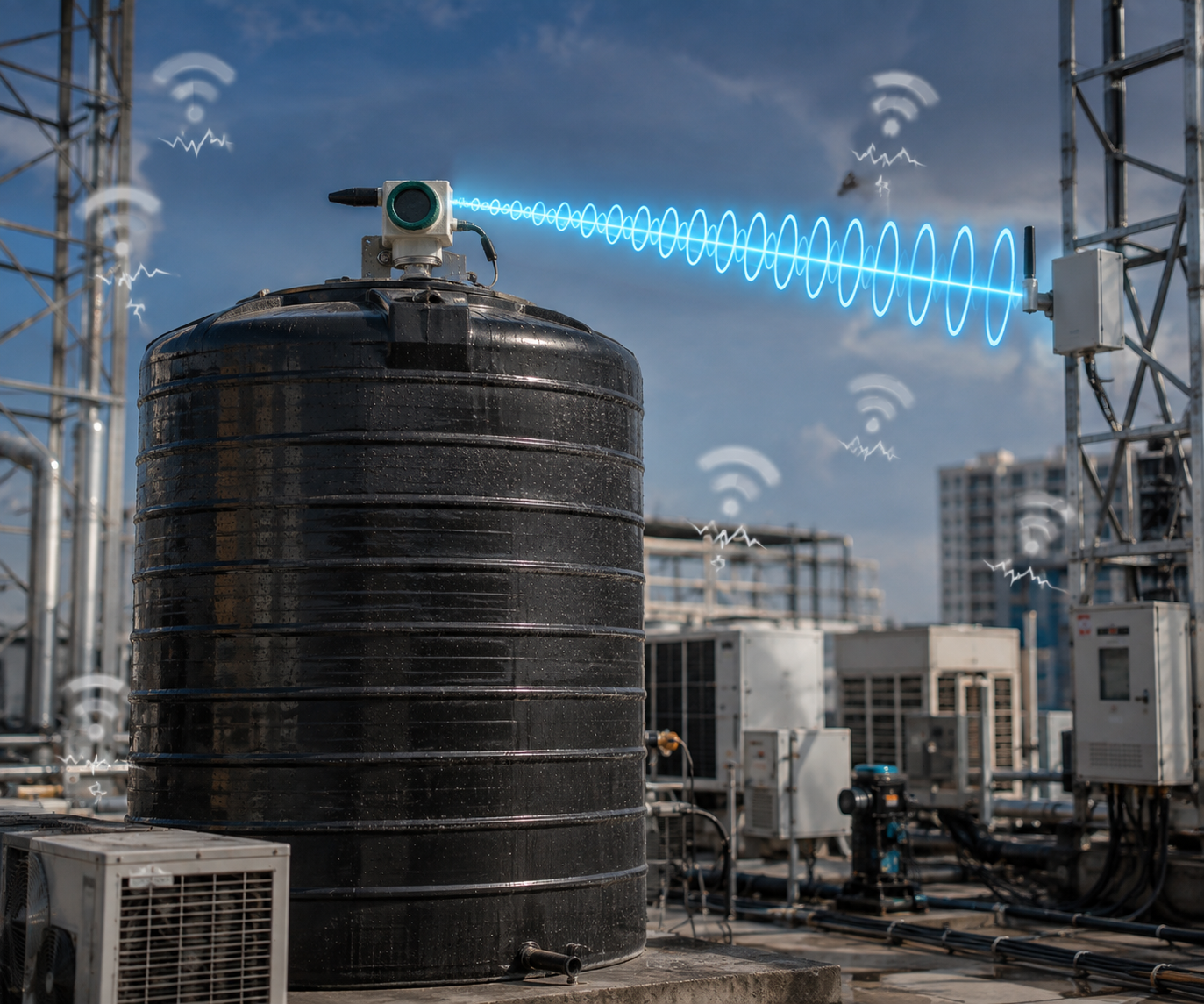
Reliable communication is essential when monitoring water tanks located across rooftops, commercial buildings, industrial facilities, or large campuses. Signal interference, physical obstructions, and long distances can affect wireless communication and result in delayed or missing tank-level data.
For these applications, a LoRa radar level sensor can provide a practical combination of non-contact water-level measurement and long-range wireless communication. When properly designed, Long Range Water Tank Monitoring can give facility teams better visibility across tanks without depending on extensive communication cabling.
Water tanks are often installed in challenging environments. Rooftops may contain concrete structures, pipes, pumps, electrical equipment, and other obstacles that can affect wireless signals.
Common challenges include:
Long distances between tanks and gateways
Reinforced concrete walls
Multiple floors between sensor and gateway
Metal structures and equipment
Poor sensor or gateway positioning
Other wireless signals operating nearby
If communication becomes unreliable, the monitoring platform may receive incomplete or delayed tank-level information.
A LoRa radar level sensor combines two important technologies.
Radar measurement: Measures the water surface without physically touching the water.
LoRa communication: Transmits the measured data over a long wireless distance to a gateway.
This makes the combination useful for tanks where both reliable level measurement and long-range connectivity are required.
A typical setup can work as:
Water tank → Radar level sensor → LoRa wireless transmission → Gateway → Monitoring platform
Don't select a sensor based only on the advertised maximum range.
Actual communication performance can depend on:
Building construction
Gateway height
Sensor installation position
Antenna configuration
Terrain
Physical obstructions
For Long Range Water Tank Monitoring, evaluate the expected distance and surrounding environment before installation.
Communication technology is only one part of the system. The sensor must also provide dependable water-level measurements.
A non-contact radar sensor should be suitable for the tank's:
Measurement height
Installation position
Water-level range
Internal environment
The sensor should have a clear measurement path toward the water surface whenever possible.
Even a long-range wireless sensor can perform poorly if installed incorrectly.
Avoid positioning the sensor where pipes, ladders, tank walls, or other structures can interfere with the measurement path.
Similarly, the LoRa antenna should be positioned appropriately for communication with the gateway.
Gateway placement is especially important for Long Range Water Tank Monitoring.
A strategically positioned gateway can improve connectivity with multiple tank sensors.
For a large commercial campus, for example, one gateway may potentially communicate with sensors installed across several buildings, depending on the site conditions and network design.
Many remote water-level sensors are battery powered.
For rooftop tanks and difficult-to-access locations, long battery life can reduce maintenance requirements.
When comparing sensors, check:
Battery capacity
Reporting frequency
Expected battery life
Power-saving features
Environmental operating conditions
Not every water tank requires the same measurement frequency.
A building that needs periodic level updates may use a different reporting interval from a facility requiring near-real-time monitoring.
The sensor should allow a reporting frequency appropriate to the application while maintaining reasonable power consumption.
Rooftop and industrial tanks can expose sensors to demanding conditions.
Buyers should consider whether the sensor is designed for the expected:
Temperature
Humidity
Dust
Rain exposure
Outdoor installation conditions
A suitable enclosure and installation method can help protect the equipment.
A reliable system isn't achieved by the sensor alone. Installation and network planning are equally important.
Consider these practices:
Position the gateway strategically: Place it where it has good communication paths to multiple sensors.
Mount the sensor correctly: Ensure the radar has a clear measurement path toward the water.
Minimize physical obstructions: Avoid unnecessary barriers between the sensor and communication equipment.
Assess the site before deployment: Test communication at actual tank locations rather than relying entirely on theoretical specifications.
Monitor communication status: A good monitoring platform should identify when a sensor stops communicating.
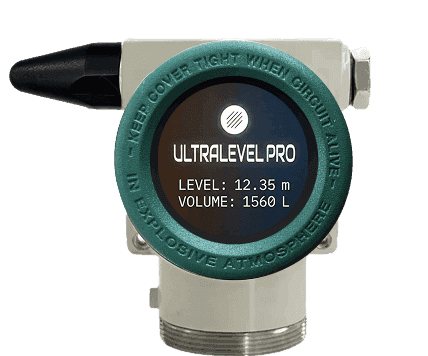
A LoRa radar level sensor becomes more useful when multiple sensors are connected to a centralized platform.
For example, a commercial facility could monitor:
Rooftop tank levels
Underground storage tanks
Process water tanks
Multiple building tanks
Pump status
Instead of checking each tank individually, facility teams can view the information from one monitoring interface.
Yes, depending on the system architecture.
Tank-level data can be used to define operating thresholds.
For example:
Low level detected → Data transmitted → Controller receives information → Pump starts → Tank fills → High level detected → Pump stops
This can help reduce manual pump operation and support more consistent water management.
Signal interference and long distances can make conventional wireless tank monitoring difficult, especially across large commercial or industrial facilities.
A well-designed LoRa radar level sensor addresses both sides of the problem: radar provides non-contact water-level measurement, while LoRa provides long-range wireless connectivity.
For reliable Long Range Water Tank Monitoring, buyers should evaluate more than just the sensor's advertised range. Measurement performance, gateway placement, installation conditions, power consumption, environmental protection, and communication reliability all need to be considered.
With the right sensor and network design, remote water tanks can be monitored more reliably without depending on extensive wiring or short-range wireless connectivity.