 English
 Arabic
 French
 Spanish
 Portuguese
 Deutsch
 Turkish
 Dutch
Dutch
 Italiano
 Russian
 Romaian
 Portuguese (Brazil)
 Greek
Greek
Generic Drugs Market Demand Surges with Rising Chronic Disease Burden Worldwide
Causes |
2026-06-30 09:36:58
 Social Networth OS
 Creator Commerce
 Launch Startup
 Global News
 Creator Award
 Talkfever App
Alle anzeigen
Talkfever App
Alle anzeigen

Upgrade auf Pro
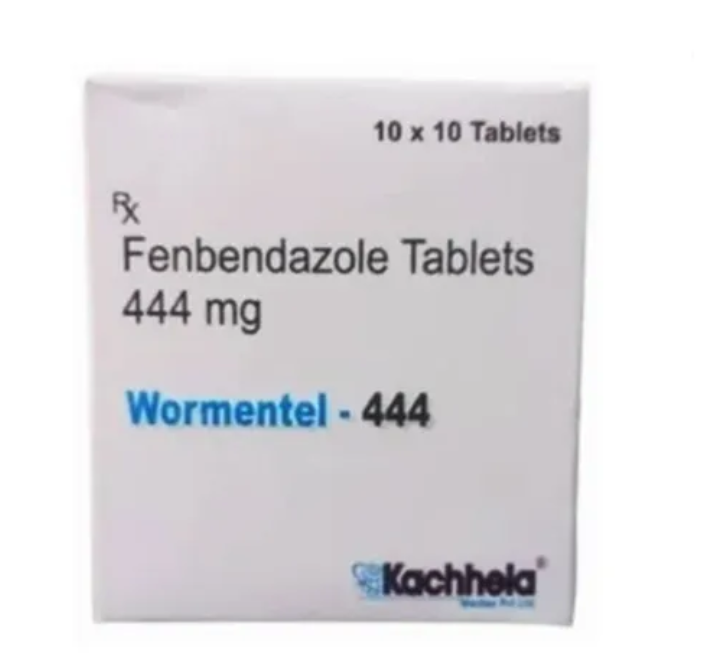
Learn about fenbendazole tablets, their veterinary uses, parasite control, how they work, and important information about responsible use.
Fenbendazole tablets are an anthelmintic (deworming) medicine used in veterinary medicine to control certain parasitic worm infections in animals. Fenbendazole belongs to the benzimidazole group of antiparasitic medicines and works by interfering with structures that parasites need to absorb nutrients and survive. Veterinary products containing fenbendazole are used for different animal species, with the approved parasites and directions depending on the specific product and label.
Fenbendazole is a broad-spectrum veterinary anthelmintic. Depending on the formulation, it may be used against certain gastrointestinal worms and other susceptible parasites in animals. Australian veterinary regulations require antiparasitic products to make claims only for parasites and life-cycle stages for which effectiveness has been demonstrated.
The 444 mg strength shown in the product image is a fenbendazole tablet formulation. However, the appropriate use of a particular strength depends on the animal species, body weight, parasite being treated and the product's approved directions. Veterinary medicines should therefore be used according to the relevant product label and veterinary advice.
Fenbendazole works primarily by affecting tubulin and microtubules in susceptible parasites. This disrupts important cellular functions and reduces the parasite's ability to absorb nutrients, ultimately leading to its elimination.
Because different parasites and animal species can require different treatment approaches, fenbendazole should not be treated as a one-size-fits-all deworming medicine.
Fenbendazole is used in veterinary medicine for the treatment and control of susceptible parasitic worms. Approved uses vary according to the product. For example, Australian veterinary labels describe fenbendazole products for certain roundworms, stomach worms, intestinal worms and lungworms in livestock and particular parasites in horses.
For dogs and cats, the exact parasite claims also depend on the registered product. The APVMA specifies that veterinary anthelmintic labels should identify the parasites against which the product has been tested and shown to be effective.
One important point should be made clear: fenbendazole is not an approved human medicine in Australia. The Therapeutic Goods Administration has stated that fenbendazole has not been evaluated for safety, quality and efficacy for human use and that its human pharmacokinetics and safety have not been established through adequate clinical evidence.
Fenbendazole has attracted attention because laboratory and animal research has investigated whether it might have anticancer properties. However, laboratory findings do not establish that a medicine is effective or safe as a cancer treatment in people. Research published in PubMed has also noted the need for proper human clinical trials before fenbendazole could be considered for such uses.
For this reason, fenbendazole should not be presented as a proven treatment for cancer or other human diseases.
The correct veterinary deworming treatment depends on several factors, including the animal's species, weight, parasite type and the formulation being used. Veterinary medicines are evaluated and labelled for specific animals and conditions. The APVMA maintains information about registered veterinary chemical products and their approved uses in Australia.
If fenbendazole has been recommended for an animal, the product label and veterinarian's instructions should be followed rather than adapting a dose intended for another animal or product.
Fenbendazole tablets are established veterinary antiparasitic medicines with applications against susceptible parasitic worms in animals. Their use should be based on the particular product's approved indications and veterinary guidance. Although fenbendazole continues to be discussed in research relating to human cancer, current evidence does not establish it as an approved or proven human cancer treatment.
https://www.genericmedsaustralia.com.au/products/fenbendazole-444-mg


